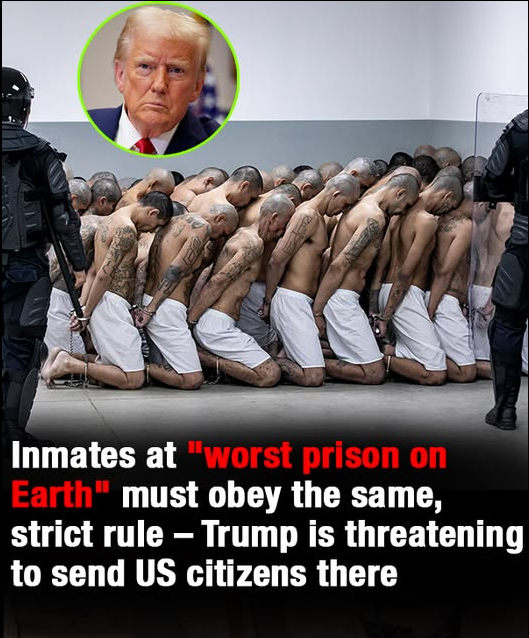
Inmates at “worst prison on Earth” must obey the same, strict rule – Trump is threatening to send US citizens there
El Salvador’s Terrorism Confinement Center (CECOT) has earned a fearsome reputation as one of the harshest maximum-security prisons in the world. Built in 2023 under President Nayib Bukele as part of a sweeping anti-gang crackdown, the mega-prison can hold up to 40,000 inmates. It features extreme isolation, overcrowding, minimal amenities, and iron-fisted control.
The facility sits in Tecoluca, about 70 km east of San Salvador. It symbolizes Bukele’s “iron fist” approach, which dramatically cut homicide rates but drew sharp criticism from human rights organizations over due process and conditions. Inmates wear identical white uniforms, heads shaved every five days for uniformity and to prevent concealment. They spend roughly 23.5 hours a day locked in cells holding 65–80 people each, sleeping on bare metal bunks without mattresses. Meals consist of basic items like rice, beans, eggs, or pasta—eaten by hand, as utensils are banned to avoid weaponization.
The strict rule dominating daily life is enforced silence and absolute obedience. Inmates face severe punishment, including beatings, for speaking loudly, talking out of turn, or violating minor protocols like shower timing. Communication with the outside world is virtually nonexistent—no visits, no phone calls, limited or no recreation, and only minimal Bible access in cells. Prisoners get about 30 minutes outside cells for exercise or supervised activities in windowless corridors. Surveillance is total via cameras and guards. Many describe entering as stepping into “hell,” with reports of routine brutality, incommunicado detention, and little medical care.
Human Rights Watch and others have documented allegations of torture, overcrowding, lack of due process, and deaths in Salvadoran prisons under the state of exception. The government maintains these measures are necessary to neutralize gang threats like MS-13 and Barrio 18, which once terrorized the country. Officials frame CECOT as a place where “terrorists” go and “never leave.”
Trump’s Threat and the “Homegrowns” Debate
This prison gained renewed global attention in 2025 amid the second Trump administration’s aggressive immigration and crime policies. The U.S. deported hundreds of alleged gang members and criminals—primarily Venezuelans and others—to CECOT as part of deals with Bukele. Reports emerged of flights continuing despite court orders in some cases, sparking legal battles over due process.
During meetings with Bukele, President Trump publicly floated extending the arrangement to U.S. citizens, particularly “homegrown” violent repeat offenders. He remarked that Bukele would “have to build about five more places” and expressed that he would pursue it “in a heartbeat” if legal, citing cost savings and deterrence value. Bukele offered to house dangerous American criminals for a fraction of U.S. incarceration costs.
White House statements clarified any such move would target only the most egregious violent offenders and depend on legality. Critics, including Democrats, the ACLU, and some Republicans, called the idea blatantly unconstitutional. Sending U.S. citizens abroad for punishment would likely violate due process rights, the Eighth Amendment’s ban on cruel and unusual punishment, and other protections, as U.S. courts lack jurisdiction overseas and inmates would lose access to American legal recourse.
Legal experts note that while the U.S. can deport non-citizens, expatriating citizens for imprisonment raises profound constitutional issues. Some cases already involved errors, like the wrongful deportation of individuals with U.S. ties, leading to court interventions. Senators and advocacy groups demanded the administration reject any such transfers outright.
Life Inside CECOT: A Daily Grind of Control
A typical day for an inmate starts in dim, overcrowded cells. Guards conduct frequent searches, sometimes with force for perceived infractions like unauthorized speech. The enforced silence fosters an eerie atmosphere—hollow stares, minimal movement, constant monitoring. No education, work programs, or recreational facilities exist for inmates; those are reserved for staff. Outdoor access is nonexistent for most, contributing to physical and psychological strain.
Former detainees and leaked accounts describe arrival rituals involving aggressive handling, head shaving, and warnings of permanent confinement. Some reported weight loss, untreated illnesses, and abuse. Defenders argue the system works: El Salvador’s streets are safer, gangs dismantled, and potential criminals deterred. Supporters of Bukele’s model, including some U.S. conservatives, praise the results-oriented toughness over “soft” Western rehabilitation-focused prisons.
Critics counter that mass arrests swept up innocents alongside the guilty, with little recourse. International observers call CECOT a “concrete and steel pit” prioritizing isolation over justice. Videos of shackled arrivals in white uniforms, paraded for cameras, underscore the spectacle of total submission.
Broader Implications
Trump’s comments tapped into public frustration with crime, repeat offenders, and border security. Polls often show support for harsh measures against violent criminals, especially gang members. However, exporting citizens raises slippery-slope fears: What defines “violent enough”? Who decides? How does one ensure humane treatment abroad?
The proposal highlights tensions between sovereignty, human rights, and effective crime control. El Salvador’s model delivered security gains at a steep cost in liberties. Replicating elements in or via the U.S. system would face massive legal, diplomatic, and ethical hurdles.
As of now, no confirmed transfers of U.S. citizens to CECOT have occurred, and legal challenges would likely block them. Yet the rhetoric itself amplified attention on the prison’s grim reality. Inmates there obey one overarching rule: total submission to the system, with no room for resistance, noise, or hope of easy release. For anyone—foreign or potentially American—entering those gates means accepting a world of concrete, silence, and control.
Whether this deters crime effectively or crosses into prohibited territory remains hotly debated. Trump’s threats underscore a philosophy: extreme problems demand extreme solutions. Bukele’s prison stands as a living example—effective to some, inhumane to others. The world watches to see if American citizens could ever join the ranks inside its walls.