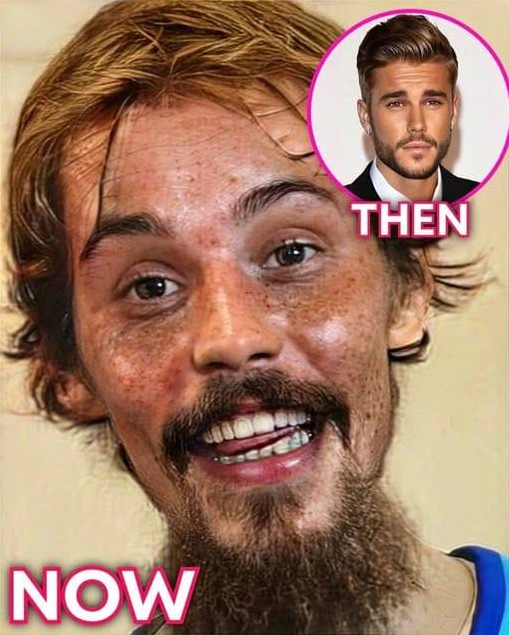
Justin Bieber has spent much of his life in the public spotlight, so whenever a headline begins with something like “admits he tested positive for…,” it’s bound to spread quickly—and often without context. Over the years, Bieber has indeed been open about personal struggles, including health challenges, but viral “see more” posts often blur the line between truth and exaggeration.
One of the most widely confirmed health issues Bieber has publicly discussed is his diagnosis with Lyme disease. He revealed this in early 2020 after months of speculation about his appearance and well-being. At the time, many online commentators were making assumptions, some even accusing him of substance abuse. In response, Bieber chose to clarify the situation himself, explaining that he had been battling Lyme disease along with a serious case of chronic mono.
Lyme disease can be complex and, if not treated early, may lead to symptoms such as fatigue, joint pain, neurological issues, and skin problems. Bieber described feeling extremely drained and struggling both physically and mentally. For fans who had watched him grow from a teenage sensation into a global superstar, the revelation was a reminder that fame doesn’t protect anyone from real health struggles.
His openness marked a turning point. Rather than allowing rumors to define his narrative, Bieber took control of it. He spoke candidly about how the illness affected his daily life—how even simple tasks could feel overwhelming, and how the uncertainty of his condition added emotional strain. At times, he stepped back from music and touring, choosing instead to focus on recovery.
Around that same period, Bieber also shared insights into his mental health journey. He had previously spoken about anxiety, depression, and the pressures of growing up in the spotlight. The combination of physical illness and mental stress created a challenging chapter, but it also led him to prioritize balance in ways he hadn’t before.
Support from those close to him played a significant role. His marriage to Hailey Bieber became a source of stability. In interviews, he has often credited her with helping him navigate difficult moments, emphasizing the importance of having someone who understands and supports you through uncertainty. Their relationship, while also under public scrutiny, has been a consistent presence during his recovery and personal growth.
Faith has also been central to Bieber’s story. He has frequently spoken about how spirituality helped him find meaning during some of his lowest points. While not everyone relates to that aspect in the same way, for Bieber it became a framework for resilience—a way to stay grounded amid both success and struggle.
Of course, headlines about celebrities often resurface or evolve. Sometimes, phrases like “tested positive for…” are used in misleading ways, creating confusion or implying new developments that aren’t accurate. It’s a common tactic in viral content—leave the sentence unfinished, spark curiosity, and let speculation do the rest.
In Bieber’s case, aside from Lyme disease and past discussions about mental health, there have been other health-related updates over time. For example, he later revealed that he had experienced a rare neurological condition called Ramsay Hunt syndrome, which temporarily affected his facial movement. That announcement, like his earlier health disclosures, was shared directly with fans in a transparent and personal way.
What stands out across all these moments is a pattern: instead of hiding from difficult topics, Bieber has increasingly chosen to address them openly. That shift hasn’t always been easy, especially given the intensity of public attention, but it has allowed him to reshape how people see him—not just as a performer, but as someone navigating real-life challenges.
His journey also reflects a broader conversation about celebrity culture. Fans often feel connected to public figures, but that connection can sometimes lead to unrealistic expectations. When a headline suggests something shocking or incomplete, it’s easy to jump to conclusions. Bieber’s experiences highlight the importance of waiting for verified information and understanding that there’s usually more to the story than a single line can capture.
In recent years, Bieber has gradually returned to music and public appearances, though with a noticeably different approach. He has spoken about setting boundaries, taking breaks when needed, and focusing on long-term well-being rather than constant output. That mindset represents a significant evolution from the fast-paced, high-pressure environment that defined much of his early career.
For fans, his story can be both reassuring and instructive. It shows that even at the highest levels of success, health—both physical and mental—remains a priority. It also demonstrates the value of honesty. By sharing his experiences, Bieber has helped reduce stigma around issues that many people face privately.
So when you see a headline like “Justin Bieber admits he tested positive for…,” it’s worth pausing before assuming the worst. In many cases, the reality is either already known, taken out of context, or far less dramatic than it appears.
Ultimately, Bieber’s story isn’t just about illness or headlines. It’s about growth, resilience, and learning to navigate life under extraordinary circumstances. And while the details of his journey continue to evolve, one thing remains clear: behind the fame is a person who, like anyone else, has had to face challenges, adapt, and find a way forward.