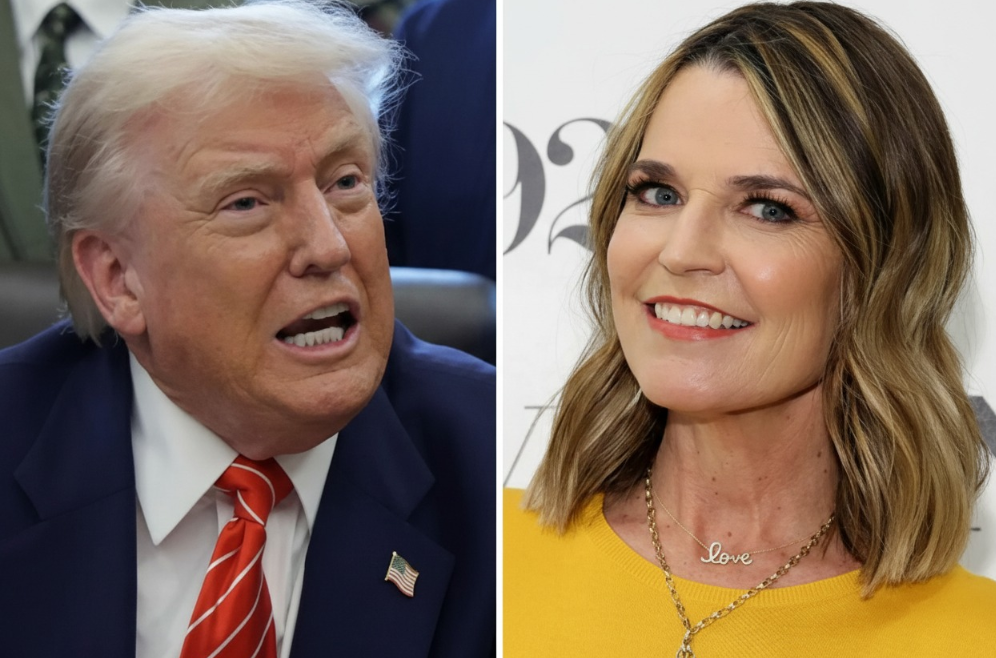
There is no credible evidence that Donald Trump has called for the death penalty for Savannah Guthrie. Claims like this tend to spread quickly online, especially when they involve well known public figures and emotionally charged language, but they are often misleading, exaggerated, or entirely fabricated. It is important to approach such statements with caution and verify them against reliable, reputable sources before accepting them as fact.
Misinformation frequently follows a recognizable pattern. A dramatic headline appears, often using phrases like “breaking news” or “just minutes ago,” designed to create urgency and provoke a strong reaction. The claim itself is usually extreme or shocking, making it more likely to be shared without careful scrutiny. In this case, the idea that a former or current president would publicly call for the execution of a journalist would represent a major and unprecedented escalation, one that would be covered extensively by every major news outlet around the world. The absence of such widespread, verified reporting is a strong indicator that the claim is not accurate.
That does not mean that political rhetoric in general is always calm or measured. Figures like Donald Trump have been known for using strong, sometimes controversial language, particularly when criticizing members of the media. Journalists, including Savannah Guthrie, have at times been the focus of tense exchanges during interviews or public appearances. These moments can generate headlines and fuel public debate, but they are very different from advocating for extreme legal punishments such as the death penalty.
The death penalty itself is a serious and highly regulated aspect of the U.S. legal system. It can only be applied in specific criminal cases, typically involving the most severe offenses such as capital murder, and only after a lengthy judicial process that includes trials, appeals, and multiple layers of review. No individual, regardless of their position or influence, has the authority to unilaterally impose such a sentence, especially against a journalist or public figure without any legal basis. Suggesting otherwise misunderstands how the legal system functions.
The spread of claims like this highlights a broader issue in today’s information environment. Social media platforms allow information—both accurate and inaccurate—to travel at incredible speed. When a claim aligns with someone’s existing beliefs or emotions, they may be more likely to accept and share it without verification. This can create a cycle in which misinformation gains traction simply because it is repeated often enough, not because it is true.
Another factor is the blending of satire, opinion, and factual reporting. Some content is intentionally exaggerated for comedic or rhetorical effect, but when it is taken out of context, it can be mistaken for real news. In other cases, fabricated stories are created specifically to generate clicks, engagement, or outrage. These pieces often lack credible sourcing and rely on vague or anonymous claims rather than verifiable evidence.
For readers, the key is to develop habits that help distinguish reliable information from misleading content. Checking multiple reputable news organizations, looking for direct quotes in context, and being wary of sensational language are all useful strategies. If a claim seems unusually extreme or unlikely, that is often a sign that it deserves closer scrutiny.
It is also worth considering the real world impact of spreading false or unverified claims. Statements that suggest violence or extreme actions, even if untrue, can contribute to a more hostile and polarized environment. They can damage reputations, increase mistrust, and distract from legitimate issues that deserve attention. Responsible sharing of information plays an important role in maintaining a more informed and constructive public discourse.
In situations involving public figures, context matters a great deal. Interviews, speeches, and public statements are often edited into short clips or summarized in ways that may not fully capture what was actually said. Going back to original sources—such as full transcripts or recordings—can provide a clearer understanding and prevent misinterpretation.
Ultimately, there is no verified basis for the claim that Donald Trump has called for the death penalty for Savannah Guthrie. It appears to be an example of how quickly misinformation can spread when it combines recognizable names with shocking assertions. Taking a moment to verify before reacting can help prevent the spread of such claims and contribute to a more accurate understanding of events.
If you came across this statement online, it would be wise to treat it with skepticism and look for confirmation from established news outlets. In an era where information is abundant but not always reliable, critical thinking is one of the most valuable tools available.