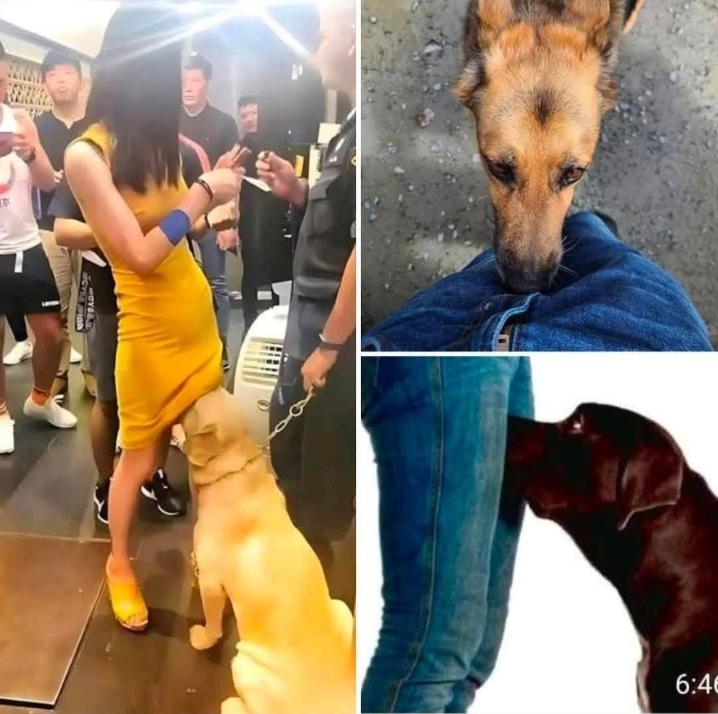
When a dog sniffs a person’s genital area, it can feel awkward or even embarrassing, especially in social situations. However, from the dog’s perspective, this behavior is completely natural and driven by instinct rather than anything inappropriate or intentional in a human sense. Understanding why dogs do this can help remove discomfort and give you a clearer picture of how they interpret the world.
Dogs rely heavily on their sense of smell—far more than humans do. While people primarily use vision to gather information, dogs use scent as their primary way of understanding their surroundings. A dog’s nose contains millions more scent receptors than a human’s, allowing it to detect subtle chemical signals that we cannot perceive. These signals provide dogs with detailed information about other animals and people, including identity, emotional state, and even certain aspects of health.
The reason dogs are particularly drawn to the genital area comes down to scent concentration. Human bodies produce pheromones, which are chemical signals released through sweat glands. These pheromones are most concentrated in areas where apocrine glands are located, such as the armpits and the groin. Since dogs are naturally drawn to strong scents, they often go directly to these areas to gather information quickly and efficiently.
From a dog’s perspective, this is similar to how they greet each other. When dogs meet, they often sniff each other’s rear ends. This is not random behavior—it’s their way of exchanging information. The scent glands in that area carry unique chemical markers that tell another dog about age, sex, mood, and reproductive status. When a dog sniffs a human’s genital area, it’s essentially trying to gather the same type of information, just adapted to a different species.
It’s important to clarify that this behavior does not mean there is anything “wrong” with you. A common myth online suggests that a dog sniffing someone’s genital area indicates illness or disease. While it is true that dogs can be trained to detect certain medical conditions, such as infections or even some cancers, casual sniffing is not a reliable diagnostic tool. In everyday situations, a dog sniffing you is simply acting on instinct and curiosity.
That said, dogs can sometimes pick up on hormonal changes. For example, they may show increased interest in women who are pregnant or menstruating due to shifts in hormone levels and scent. Similarly, if a person has recently exercised, not showered, or has a stronger natural body odor, a dog may be more inclined to investigate. These are normal biological variations, not signs of a problem.
Another factor that influences this behavior is the dog’s personality and training. Some dogs are more curious and social than others, and they may be more likely to engage in sniffing behavior. Puppies, in particular, are still learning boundaries and tend to explore the world with their noses. On the other hand, well-trained adult dogs may be less likely to engage in this behavior, especially if they have been taught appropriate ways to greet people.
Social context also matters. If a dog is meeting someone new, it is more likely to sniff them thoroughly, including areas that might make humans uncomfortable. Once the dog becomes familiar with the person, the behavior often decreases. This is because the dog has already gathered the information it was seeking and no longer needs to investigate as intensely.
If this behavior makes you uncomfortable, it can be managed through training and redirection. Dog owners can teach their pets alternative greeting behaviors, such as sitting or focusing on a toy when meeting new people. Positive reinforcement techniques—rewarding the dog for appropriate behavior—are usually effective. Consistency is key, as dogs learn best when expectations are clear and reinforced over time.
For visitors who encounter this behavior, staying calm is important. Sudden movements or loud reactions can excite the dog and make the situation worse. Instead, gently turning your body away or stepping back can signal that the behavior is not welcome without escalating the interaction. In most cases, the dog will lose interest and move on.
It’s also worth noting that dogs do not understand human social norms in the same way people do. What feels intrusive or inappropriate to us is simply a form of communication for them. Interpreting their actions through a human lens can lead to misunderstandings. By recognizing that dogs operate on instinct and sensory information, it becomes easier to respond with patience and understanding.
In some cases, excessive or persistent sniffing could indicate a need for more training or mental stimulation. Dogs that are bored or under-stimulated may engage in more exploratory behaviors, including sniffing. Providing regular exercise, interactive toys, and structured activities can help reduce these tendencies by giving the dog other outlets for its energy and curiosity.
Ultimately, when a dog sniffs your genital area, it means you have something interesting to their nose—nothing more, nothing less. It’s a reflection of their incredible sense of smell and their instinctive way of learning about the world around them. While it may not align with human social expectations, it is a normal and harmless behavior in the canine world.
Understanding this can turn an awkward moment into an opportunity for insight. Instead of feeling embarrassed or concerned, you can recognize it as a reminder of how differently animals experience life. Dogs live in a world rich with scent, where every smell tells a story. When they sniff you, they are simply trying to read that story in the only way they know how.