🚨 BREAKING NEWS? Not Quite — Let’s Set the Record Straight
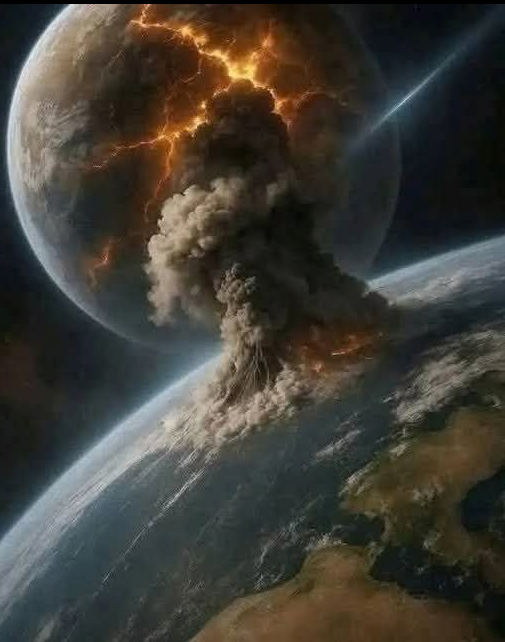
In recent hours, a viral claim has been circulating online suggesting that NASA has confirmed a dramatic and potentially catastrophic event set to begin on June 5th—something so alarming that it has sparked confusion, fear, and curiosity across social media. The posts are often cut off with phrases like “the Earth will begin to…” followed by “See more,” encouraging clicks and shares. But what is really going on here?
Let’s unpack the truth behind this so-called “breaking news.”
First and foremost, there is no official confirmation from NASA that any unusual, dangerous, or world-altering event will begin on June 5th. Claims like these are a common form of viral misinformation designed to grab attention, generate clicks, and spread rapidly without verification. They often rely on mystery and urgency to make people feel like they are about to miss out on critical information.
NASA, one of the world’s most transparent scientific organizations, regularly publishes updates about space activity, planetary science, and potential risks to Earth. If there were truly a significant event—such as an asteroid impact, a shift in Earth’s rotation, or a solar phenomenon capable of affecting life on Earth—it would be widely reported by credible news outlets and confirmed through official NASA channels. None of that is happening in this case.
So where do these rumors come from?
Many times, they are rooted in misinterpreted scientific events. For example, NASA frequently tracks asteroids that pass near Earth. While headlines might sensationalize these as “close calls,” in reality, space is vast, and these objects are usually millions of miles away, posing no threat. Similarly, solar flares or geomagnetic storms can sound alarming, but they are natural occurrences that scientists monitor closely and prepare for.
Another possibility is that the claim is linked to a real but harmless event that has been exaggerated. For instance, Earth does experience natural cycles—such as seasonal changes, shifts in magnetic fields, or minor orbital variations—but none of these begin suddenly on a specific date in a way that would justify a “breaking news” alert.
The phrase “the Earth will begin to…” is deliberately vague. It creates suspense while avoiding making a specific claim that could easily be disproven. This tactic is often used in clickbait content because it encourages people to share the post without fully understanding it.
It’s also important to understand how misinformation spreads so quickly. Social media platforms are designed to amplify content that gets strong reactions—fear, shock, curiosity. A dramatic statement about Earth and NASA checks all those boxes. People share it out of concern or fascination, not realizing they are helping to spread something unverified.
But there’s a bigger issue here: repeated exposure to false “breaking news” can erode trust in real scientific information. When people become accustomed to sensational claims that turn out to be untrue, they may start to ignore legitimate warnings in the future. That’s why it’s crucial to pause and verify before reacting.
If you ever see a claim like this, here are a few quick ways to check its credibility:
- Look for confirmation from official sources like NASA’s website or verified social media accounts
- Check major news outlets to see if they are reporting the same story
- Be cautious of posts that use vague language or urge you to “see more” without providing details
- Consider whether the claim sounds exaggerated or designed to provoke fear
In this case, none of the reliable indicators support the viral claim. There is no impending event beginning on June 5th that will dramatically affect Earth in the way these posts suggest.
That said, space science is full of fascinating and real developments. NASA is currently involved in missions studying Mars, exploring distant asteroids, and observing the universe with powerful telescopes. These are genuine stories worth paying attention to—stories that expand our understanding of the cosmos rather than distort it.
The takeaway here is simple: not everything labeled “breaking news” is real. In the digital age, anyone can create a headline that looks urgent and convincing. But truth requires verification, context, and credible sources.
So if you’ve seen the viral claim about June 5th and wondered what it means, the answer is reassuring—there is no hidden catastrophe, no sudden planetary change, and no secret announcement from NASA. It’s just another example of how easily misinformation can spread when curiosity meets clever wording.
Stay curious, but stay critical.