Women in the 1970s… What Do You Notice? 🧐
When you look at photos of women from the 1970s, something immediately stands out—but it’s not just one thing. It’s a mix of attitude, style, confidence, and cultural change that defined an entire decade. The 70s weren’t just about fashion trends or hairstyles—they were about transformation. Women were redefining how they looked, how they lived, and how they were seen by the world.
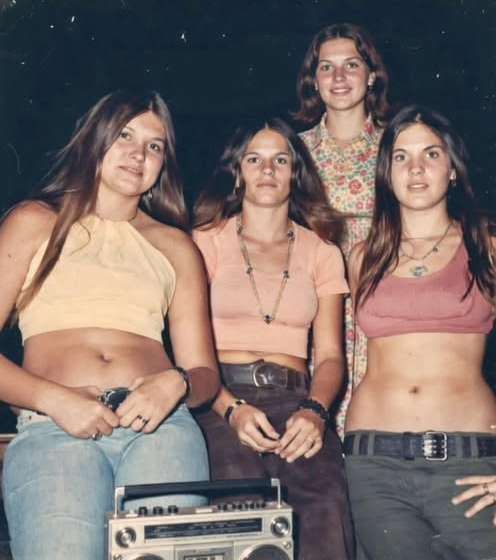
The first thing many people notice is the natural beauty. Unlike today’s heavily curated social media aesthetic, women in the 70s often embraced a more relaxed and authentic appearance. Makeup was lighter, sometimes barely there. Skin wasn’t airbrushed or filtered—it was real. Freckles, texture, and individuality were visible and accepted. Hair was worn in its natural state—whether straight, curly, or voluminous. Big afros, loose waves, and shag cuts weren’t just styles; they were statements of identity and freedom.
Then there’s the fashion, which is impossible to ignore. The 70s were bold, experimental, and expressive. Women wore bell-bottom jeans, high-waisted pants, flowing maxi dresses, halter tops, and platform shoes. Patterns were loud—psychedelic prints, florals, geometric shapes—and colors ranged from earthy tones to bright, eye-catching hues. Clothing wasn’t just about looking good; it was about feeling free and breaking away from rigid expectations of how women “should” dress.
But beyond the surface, what really stands out is the energy of independence. The 1970s came right after the major momentum of the 1960s civil rights and feminist movements. Women were entering the workforce in greater numbers, pushing for equal pay, and challenging traditional gender roles. The idea that a woman’s life had to follow a strict path—marriage, children, homemaking—was being questioned more openly than ever before.
You can see this shift in photographs. Women aren’t just posing—they’re present. They look confident, self-assured, and sometimes even defiant. Whether they’re walking down a city street, attending a protest, or dancing at a club, there’s a sense that they are claiming space in a way that feels new for the time.
Another noticeable element is the sense of community and shared culture. The 70s had strong social movements that brought women together. From feminist rallies to consciousness-raising groups, women were having conversations about identity, equality, and rights. This collective energy influenced everything—from the way they spoke to the way they dressed. Even something as simple as wearing jeans or going braless could be seen as a quiet act of rebellion against societal norms.
Of course, the decade also had its glamorous side. The rise of disco culture brought a completely different aesthetic into the spotlight. Suddenly, there were shimmering fabrics, jumpsuits, bold accessories, and dramatic looks designed for nightlife. Women expressed themselves on the dance floor with confidence and flair. It was fun, vibrant, and unapologetically bold—a contrast to the more earthy, natural daytime styles.
What’s interesting is how diverse the decade was. There wasn’t just one “type” of woman or one standard of beauty. The 70s allowed for multiple identities to exist at once. You had the bohemian free spirit, the career-driven professional, the activist, the disco queen—all coexisting in the same cultural moment. This diversity is something that still influences how we think about individuality today.
Another thing people often notice, especially when comparing the 70s to now, is the lack of digital pressure. There were no smartphones, no social media, no constant need to present a perfect image. People lived more in the moment. Photos were taken occasionally, not endlessly. As a result, what you see in those images feels more candid and less staged. There’s a kind of honesty in the way women appear—laughing, walking, talking—without the awareness of being constantly observed.
At the same time, it’s important to recognize that the 70s weren’t perfect. Women still faced significant challenges—inequality in the workplace, limited opportunities in certain fields, and societal expectations that hadn’t fully disappeared. But what makes the decade stand out is that it was a turning point. It was a time when those challenges were being confronted more directly and publicly.
So when you ask, “What do you notice?” the answer goes far beyond appearance.
You notice:
- Authenticity in how women looked
- Freedom in how they dressed
- Confidence in how they carried themselves
- Change in the roles they were beginning to occupy
- Expression in every aspect of their identity
In many ways, the 1970s laid the groundwork for the world we see today. The conversations started then continue now—about equality, self-expression, and what it means to be a woman in society.
Looking back, there’s something refreshing about that era. It reminds us that beauty doesn’t have to be perfect to be powerful, and that style isn’t just about trends—it’s about identity. Most of all, it shows how a generation of women helped reshape expectations, not just for themselves, but for the future.