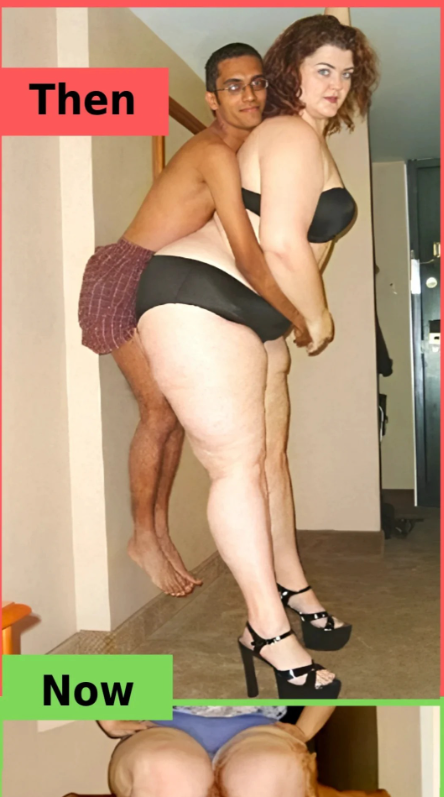
 The Surprising Psychology Behind Mismatched Couples
At first glance, some couples make people do a double take. Maybe one partner is loud and outgoing while the other is quiet and reserved. Maybe there’s a noticeable difference in appearance, age, lifestyle, or social background. These relationships are often labeled as “mismatched,” but that label says more about our expectations than it does about the reality of human connection.
The truth is, what looks mismatched on the outside can be deeply compatible on the inside.
One of the most common explanations comes from a well-known idea in psychology: opposites attract. While it’s not universally true, there’s real evidence that people are often drawn to qualities they don’t possess themselves. An introverted person might feel energized by someone outgoing, while a spontaneous person might benefit from a partner who is more structured. These differences can create balance rather than conflict.
But attraction isn’t just about differences—it’s about how those differences interact.
Psychologists often point out that compatibility is less about being similar in every way and more about sharing core values. Two people can have completely different personalities, hobbies, or appearances, yet still align on what truly matters: how they view relationships, how they handle conflict, their long-term goals, and their emotional needs.
That’s why some couples who seem perfectly matched on paper don’t last, while others who appear completely different build strong, lasting relationships.
Another key factor is something called complementary needs. People often seek partners who fulfill emotional or psychological needs they may not even be fully aware of. For example, someone who struggles with decision-making might feel secure with a partner who is confident and decisive. Someone who tends to overthink might find comfort in a partner who is more easygoing.
This doesn’t mean one person is “fixing” the other—it means they create a dynamic where both individuals feel supported in different ways.
There’s also the role of perception. Society tends to promote a narrow image of what a “perfect couple” should look like—similar levels of attractiveness, shared interests, matching lifestyles. When a couple doesn’t fit that mold, people notice. But those judgments are often superficial.
What outsiders see is only a snapshot. They don’t see the private conversations, the shared humor, the emotional understanding, or the small daily acts that build a relationship.
Interestingly, research has shown that familiarity and emotional connection often matter more than initial physical attraction. Over time, people grow more attracted to those they feel safe with, understood by, and valued by. This can lead to strong bonds between individuals who might not have been considered a “match” at first glance.
There’s also a psychological concept known as the “matching hypothesis,” which suggests people tend to pair with others of similar social desirability. While this can be true in many cases, it doesn’t account for the full complexity of human relationships. Confidence, kindness, humor, intelligence, and emotional availability all influence attraction in ways that go beyond surface-level traits.
In other words, what someone brings to a relationship isn’t always visible.
Another surprising factor is the role of self-perception. People don’t choose partners based solely on how others see them—they choose based on how they see themselves. Someone who feels secure and self-aware is more likely to pursue a relationship that genuinely fulfills them, regardless of whether it fits societal expectations.
On the other hand, people who rely heavily on external validation may prioritize how a relationship looks rather than how it feels.
Mismatched couples often challenge these external expectations. They prioritize connection over appearance, compatibility over conformity. And in doing so, they reveal something important: there is no single formula for a successful relationship.
Cultural and social influences also play a role. In some communities, differences in age, background, or lifestyle might stand out more, while in others they are more accepted. As societies become more diverse and interconnected, the definition of what a “normal” couple looks like continues to expand.
Another layer to consider is growth. Relationships are not static—they evolve over time. Two people who seem different at the beginning may grow toward each other, developing shared habits, mutual understanding, and deeper emotional bonds. At the same time, their differences can keep the relationship dynamic and interesting.
Of course, differences can also create challenges. Communication styles may clash, priorities may differ, and misunderstandings can arise. But these challenges are not unique to mismatched couples—they exist in all relationships. What matters is how those differences are managed.
Healthy relationships are built on communication, respect, and a willingness to understand each other. When those elements are present, differences become something to navigate, not something to fear.
There’s also something quietly powerful about choosing a partner who doesn’t fit the mold. It reflects a level of independence and authenticity—the ability to prioritize personal happiness over societal approval. That choice can strengthen a relationship, because it’s based on genuine connection rather than external expectations.
In many ways, mismatched couples remind us that love is not a checklist. It’s not about perfectly aligned traits or meeting a specific standard. It’s about connection, timing, emotional compatibility, and the unique chemistry between two people.
What looks surprising from the outside often makes perfect sense to the people inside the relationship.
And maybe that’s the real takeaway.
The idea of a “mismatch” assumes there’s a correct way for two people to fit together. But human relationships are far more complex—and far more interesting—than that. What matters isn’t how a couple appears to others, but how they function together in the moments no one else sees.
So the next time you see a couple that doesn’t seem to “match,” it might be worth reconsidering what that actually means.
Because sometimes, the most unexpected pairings are the ones that work the best.