Noticed This Red Ring on My Daughter’s Head and the Hair Is Snapping Off. It’s Spreading Fast. Any Home Remedies Before the ER?
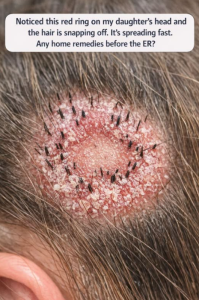
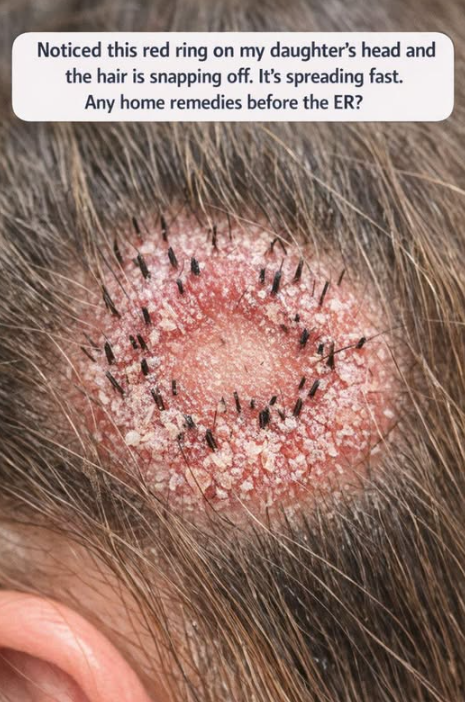
It can be frightening for any parent to notice sudden changes on their child’s scalp, especially when those changes seem to appear quickly and worsen day by day. One parent recently shared their concern after discovering a red circular patch on their daughter’s head. Even more alarming, the hair in that area appeared to be snapping off close to the scalp, leaving a thinning or bald-looking spot that seemed to be growing larger.
Situations like this naturally raise anxiety. Parents often wonder whether the problem is something minor that can be treated at home or a more serious condition that requires immediate medical attention. Understanding what might be happening is the first step toward deciding what to do next.
What a Red Ring on the Scalp Could Mean
One of the most common causes of a red, ring-shaped patch on the scalp with hair breakage is a fungal infection known as Tinea capitis, often referred to as scalp ringworm. Despite the name, this condition is not caused by worms at all. It is a contagious fungal infection that affects the scalp and hair shafts.
Children are especially vulnerable to this infection because it spreads easily in schools, daycare centers, and playgrounds where kids share hats, brushes, pillows, or close contact during play.
When a child develops tinea capitis, several symptoms may appear:
-
A circular red or scaly patch on the scalp
-
Hair that becomes brittle and breaks off near the surface
-
Bald spots that slowly expand
-
Mild itching or tenderness
-
Sometimes swollen lymph nodes around the neck
Because the fungus attacks the hair shaft, it weakens the hair and causes it to snap off easily. That is why parents often notice short, broken hairs inside the affected patch.
Why It Can Spread Quickly
Fungal infections thrive in warm, moist environments and can spread rapidly if untreated. A single small patch can expand into multiple areas of hair loss over the course of days or weeks.
Children may also accidentally spread the infection to other parts of the scalp by scratching or touching the area and then touching another part of their head.
It can also spread to siblings, classmates, or even pets. Certain animals, especially cats and dogs, can carry the same fungus responsible for ringworm infections.
Because of this contagious nature, early treatment is important.
Should You Go to the Emergency Room?
In most cases, scalp ringworm is not considered a medical emergency. However, it does require proper treatment from a healthcare provider.
If the infection becomes severe, it can lead to a condition called Kerion, which is an intense inflammatory reaction to the fungus. Kerion causes swollen, painful lumps on the scalp that may ooze fluid or pus. If this occurs, medical care should be sought quickly because untreated kerion can sometimes lead to scarring and permanent hair loss.
Parents should consider urgent medical care if they notice:
-
Rapid swelling of the scalp
-
Severe pain or tenderness
-
Pus or drainage
-
Fever
-
Large areas of hair loss appearing quickly
Otherwise, scheduling a visit with a pediatrician or dermatologist within a day or two is usually the best step.
Why Home Remedies Alone Usually Don’t Work
Many parents search for home remedies when they first notice scalp problems. While some natural treatments may soothe the skin or reduce irritation, most scalp fungal infections require prescription medication to fully eliminate the fungus.
Unlike mild skin infections on the body, scalp infections affect the hair follicles. Because the fungus lives inside the hair shafts, topical creams alone often cannot reach deep enough to completely cure the infection.
Doctors usually prescribe oral antifungal medications that travel through the bloodstream to the hair roots where the fungus lives.
Things You Can Do at Home Right Away
While waiting for medical care, there are a few safe steps parents can take to reduce the spread and protect their child’s scalp.
Keep the scalp clean and dry.
Wash your child’s hair gently using mild shampoo. Avoid harsh scrubbing, which can irritate the skin and cause more hair breakage.
Avoid sharing personal items.
Do not allow your child to share combs, brushes, hats, pillows, or towels with others until the infection is treated.
Disinfect hair tools.
Hairbrushes and combs should be cleaned with hot water and disinfectant to prevent reinfection.
Wash bedding and hats.
Use hot water to wash pillowcases, hats, and hair accessories that may have come into contact with the scalp.
Trim fingernails.
Short fingernails help reduce scratching, which can spread the infection.
Over-the-Counter Options
Some antifungal shampoos may help slow the spread of scalp fungus while waiting for a doctor’s appointment. Shampoos containing ingredients like selenium sulfide or ketoconazole can reduce fungal spores on the scalp.
However, these shampoos are usually used alongside prescription medication rather than replacing it.
The Good News About Treatment
The reassuring news is that scalp ringworm is very treatable. Once proper medication begins, most children start improving within a few weeks.
Hair usually grows back in the affected areas once the infection clears. Permanent hair loss is uncommon unless the infection becomes severe or untreated for a long period.
Doctors may also recommend continuing antifungal shampoo for several weeks to prevent recurrence.
When to Watch Closely
Parents should monitor the scalp closely for changes such as:
-
Rapid expansion of the patch
-
Multiple new patches appearing
-
Swelling or pus
-
Increasing pain
If any of these signs appear, medical care should be sought promptly.
A Reminder for Parents
Seeing a sudden scalp problem on your child can be scary, especially when hair starts falling out or breaking off. But conditions like tinea capitis are fairly common in childhood and usually respond well to treatment once diagnosed.
The most important thing is not to panic and to seek professional medical advice rather than relying solely on home remedies.
With proper care, the infection can be cleared, the scalp can heal, and your child’s hair will most likely grow back normally.