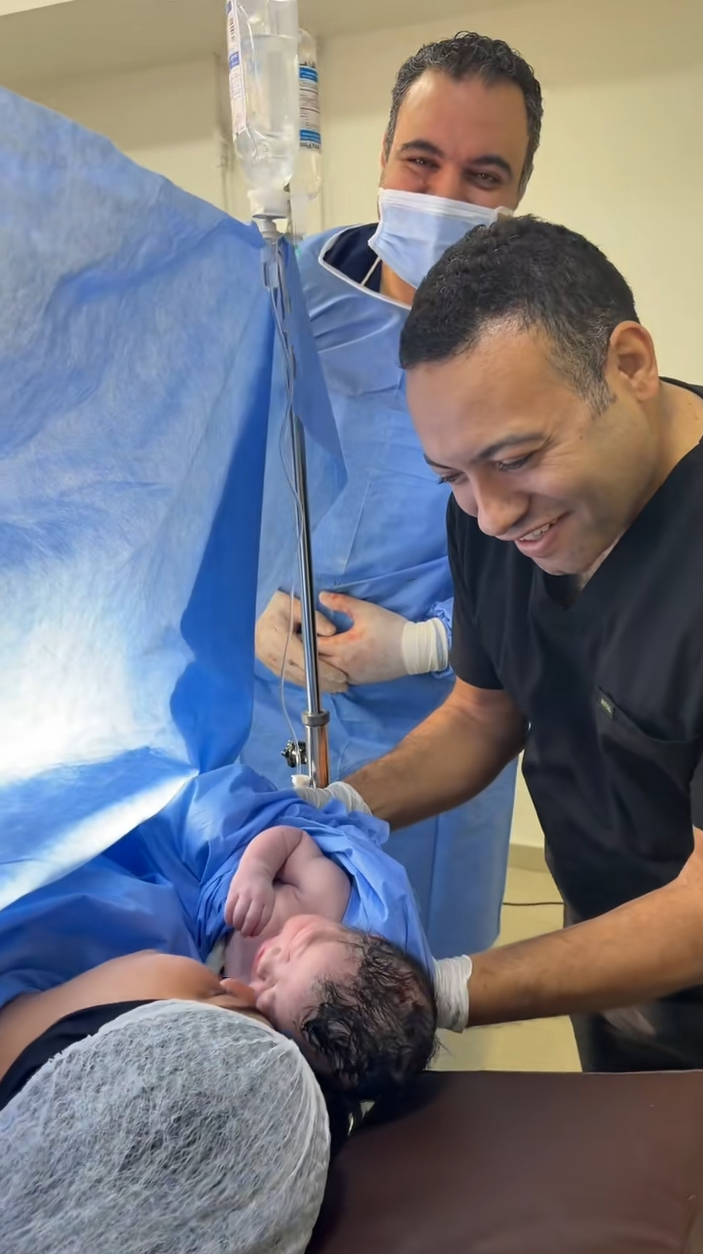
The first moments between a mother and her newborn baby are unlike anything else in human experience. They exist in a space that feels almost outside of time—where the noise of the world fades, and what remains is something raw, instinctive, and deeply emotional. These moments are not just the beginning of a child’s life; they are also the birth of a new identity for the mother, one that carries profound responsibility, love, and transformation.
Immediately after birth, there is often a pause—a brief, suspended moment where everything seems to hold its breath. Then comes the baby’s first cry. It is sharp, sudden, and full of life. That cry signals more than just the start of breathing; it announces arrival, survival, and the beginning of connection. For the mother, hearing that sound can trigger an overwhelming wave of relief and emotion. After hours—or even days—of labor, that cry is reassurance that the baby is alive and here.
When the baby is placed on the mother’s chest for the first time, something remarkable happens. Skin meets skin, warmth meets warmth, and two beings who have been connected invisibly for months finally meet face to face. The baby, who has known only the muffled rhythms of the womb—the heartbeat, the flow of blood, the sound of the mother’s voice—now encounters the outside world. Yet in that moment, the mother’s chest becomes a bridge between those two worlds. Her scent, her voice, and her touch provide familiarity in an otherwise overwhelming environment.
The baby’s instincts are powerful from the very beginning. Newborns often turn their heads toward their mother’s voice or the smell of her skin. Some even begin the early motions of searching for nourishment. This instinctive behavior highlights the biological bond that forms even before birth. For the mother, watching these tiny, purposeful movements can feel astonishing. It is as if the baby already knows her, trusts her, and depends on her completely.
Emotionally, these first moments can be intense and complex. Many mothers feel an immediate surge of love—an almost indescribable attachment that seems to come from somewhere deeper than thought. Others may feel a quieter connection, one that grows steadily rather than all at once. Both experiences are normal. The idea that every mother must instantly feel overwhelming love can sometimes create unnecessary pressure. In reality, bonding is a process, and those first moments are just the beginning.
Physically, the mother is often exhausted. Her body has undergone immense strain, and yet she is suddenly focused on this small, fragile life placed in her arms. There is a unique kind of strength that emerges in this moment—a strength fueled not by energy, but by instinct and emotion. Despite fatigue, pain, or disorientation, many mothers find themselves fully present, captivated by the baby’s tiny features: the delicate fingers, the soft skin, the way the baby’s eyes may briefly open and close.
For the baby, the transition from the womb to the outside world is dramatic. Inside the womb, everything was constant—temperature, sound, nourishment. Outside, everything is new. Light is brighter, sounds are sharper, and sensations are unfamiliar. The mother’s presence becomes an anchor in this new environment. Her heartbeat, once heard from within, can still be felt when the baby rests on her chest. This continuity provides comfort and helps regulate the baby’s breathing, temperature, and heart rate.
In many cases, healthcare providers encourage immediate skin-to-skin contact because of its benefits. It helps stabilize the baby’s vital signs, promotes early breastfeeding, and supports emotional bonding. But beyond the clinical benefits, there is something deeply human about it. It is a moment that doesn’t need explanation or measurement—it simply is.
Fathers or partners, when present, also experience these first moments in powerful ways. Watching the birth and seeing the mother and baby connect can be emotional and transformative. When they hold the baby for the first time, they begin forming their own bond, one that will grow and evolve over time. These early interactions set the tone for the relationships that will develop in the days, months, and years ahead.
There is also a quietness that often follows the initial excitement. After the flurry of activity—medical checks, movement in the room, voices giving instructions—there may be a period of calm. In that calm, the mother and baby simply exist together. The baby may rest, listening to the steady rhythm of the mother’s heartbeat. The mother may watch, study, and memorize every detail, as if trying to capture the moment forever.
Time behaves differently in these moments. Minutes can feel like hours, and hours can feel like seconds. The outside world continues moving—people go about their day, traffic flows, conversations happen—but within that small space, everything feels paused. It is a private beginning, even if it takes place in a busy hospital room.
These first moments also mark the start of learning—on both sides. The mother begins to learn her baby’s signals: the difference between a hungry cry and a tired one, the subtle movements that indicate comfort or discomfort. The baby begins to learn the mother’s voice, her touch, and the sense of safety she provides. This mutual learning forms the foundation of their relationship.
Not every first moment unfolds exactly as expected. Sometimes medical interventions are necessary, and the baby may need immediate care. In such cases, the initial connection may be delayed, and that can be emotionally challenging. However, bonding is resilient. Even if those first moments are interrupted, connection can and does grow in the hours and days that follow. What matters most is not perfection, but presence and care over time.
Culturally and personally, these moments are often remembered for a lifetime. Mothers may recall the exact feeling of holding their baby, the sound of that first cry, or the expression on their baby’s face. These memories become part of family stories, shared and retold as the child grows older. They are the origin point—the first chapter in a much longer story.
There is also a sense of awe in these moments. The realization that this tiny human being, once part of the mother’s body, is now separate and beginning their own life can feel almost surreal. It is a reminder of both the fragility and resilience of life. The baby is small, dependent, and vulnerable, yet also strong, adaptable, and full of potential.
As the first hour passes, practical tasks begin to take shape. The baby may be weighed, measured, and examined. The mother may receive care and guidance. But even as these tasks unfold, the emotional connection continues to deepen. Each glance, each touch, each small interaction adds another layer to the bond.
Over time, these first moments become a reference point. During sleepless nights, challenging days, or moments of doubt, many mothers find themselves returning mentally to that beginning—the first cry, the first touch, the first time they held their baby. It serves as a reminder of why everything matters, why the effort is worth it, and how strong the connection truly is.
Ultimately, the first moments between a mother and her baby are not defined by perfection or a specific sequence of events. They are defined by connection. Whether quiet or overwhelming, immediate or gradual, these moments represent the start of a relationship that will continue to grow, change, and deepen over a lifetime.
In those first minutes, there are no expectations, no comparisons, and no external pressures that truly matter. There is only the mother and the baby—two lives meeting for the first time, bound by something that words can only partially capture. It is a beginning filled with vulnerability, strength, and an extraordinary kind of love that will continue to unfold in ways both expected and surprising.