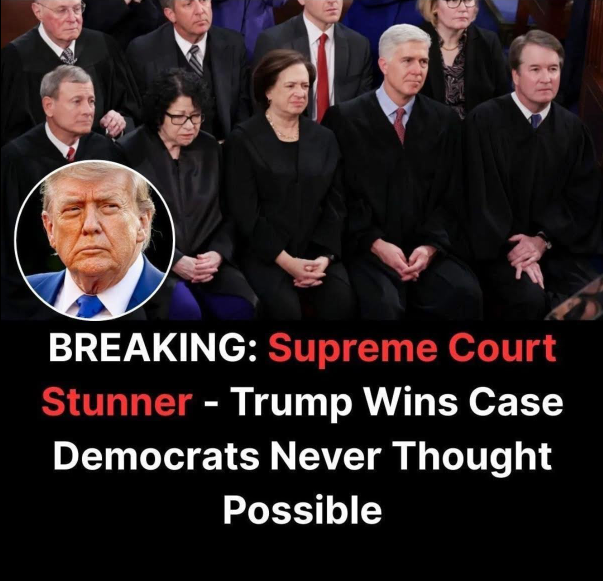
The recent decision by the Supreme Court of the United States to allow the Trump administration to resume immigration enforcement sweeps in Los Angeles has reignited a deeply polarizing national debate—one that cuts across legal, political, and humanitarian lines. The ruling underscores the enduring tension between federal authority and local resistance, while also highlighting how immigration remains one of the most contentious issues in American public life.
At the center of the case is the federal government’s authority to enforce immigration laws, even in jurisdictions that have adopted so-called “sanctuary” policies. Los Angeles, like several other major cities, has long positioned itself as a place that limits cooperation with federal immigration enforcement, particularly when it comes to local law enforcement agencies sharing information with federal officials. Supporters of these policies argue that they help build trust between immigrant communities and local authorities, making neighborhoods safer overall. Critics, however, claim that such policies undermine federal law and create safe havens for undocumented individuals.
The Supreme Court’s decision effectively clears the way for federal agents to carry out coordinated immigration sweeps—operations that often involve detaining individuals suspected of being in the country without legal authorization. These sweeps can take place in workplaces, neighborhoods, or other public areas, and they are typically conducted by agencies such as Immigration and Customs Enforcement (ICE). While federal officials argue that such actions are necessary to uphold the rule of law, opponents contend that they can lead to widespread fear, family separations, and potential civil rights violations.
Legal experts note that the Court’s ruling is less about endorsing a specific policy and more about reaffirming the federal government’s broad powers over immigration. Under the U.S. Constitution, immigration enforcement falls squarely within federal jurisdiction. This means that while states and cities can set certain policies regarding how their own agencies interact with federal authorities, they cannot block federal agents from carrying out their duties.
Still, the practical implications of the ruling are significant. In Los Angeles, immigrant advocacy groups have already begun mobilizing resources to support affected communities. Legal aid organizations are preparing for a potential surge in cases, while community leaders are working to inform residents of their rights. Many are emphasizing the importance of knowing what to do if approached by immigration officials, including the right to remain silent and the need for a warrant before agents can enter private homes.
On the other side of the debate, supporters of stricter immigration enforcement view the ruling as a necessary step toward restoring order. They argue that consistent enforcement deters illegal immigration and ensures fairness for those who follow legal pathways. For them, the Supreme Court’s decision represents a reaffirmation of the principle that federal law must be applied uniformly across the country.
Politically, the ruling is likely to have ripple effects. Immigration has long been a defining issue in American elections, and decisions like this one tend to energize both sides of the debate. Lawmakers at the federal and state levels may use the ruling to push for new legislation, either to strengthen enforcement mechanisms or to provide additional protections for undocumented individuals.
The decision also raises broader questions about the balance of power between different levels of government. While the federal government holds primary authority over immigration, states and cities often bear the brunt of its real-world impacts. This dynamic can lead to conflicts, particularly in places with large immigrant populations and strong local opposition to federal policies.
For many residents of Los Angeles, the issue is deeply personal. The city is home to millions of immigrants, many of whom have lived and worked there for years, contributing to the local economy and culture. The prospect of renewed immigration sweeps brings uncertainty and anxiety, particularly for mixed-status families where some members are citizens or legal residents while others are not.
At the same time, the ruling highlights the ongoing challenge of crafting a comprehensive immigration policy at the national level. Despite years of debate, Congress has struggled to pass major reforms, leaving much of the responsibility to the executive branch and the courts. This has resulted in a patchwork of policies that can shift dramatically depending on the administration in power.
Looking ahead, the impact of the Supreme Court’s decision will likely depend on how aggressively federal authorities choose to implement the sweeps and how local communities respond. Legal challenges may continue, particularly if there are allegations of misconduct or violations of constitutional rights. Advocacy groups are expected to closely monitor enforcement actions and document any potential abuses.
In the broader context, the ruling serves as a reminder of the complex and often contentious nature of immigration policy in the United States. It underscores the difficulty of balancing competing priorities—security, legality, compassion, and practicality—in a way that satisfies all stakeholders.
Ultimately, the debate over immigration enforcement is unlikely to be resolved anytime soon. As long as there are differing views on how to approach the issue, decisions like this one will continue to spark discussion and disagreement. For now, the Supreme Court’s ruling stands as a significant moment in that ongoing conversation, shaping the landscape of immigration policy and its real-world consequences for communities across the country.