First Breath of the World
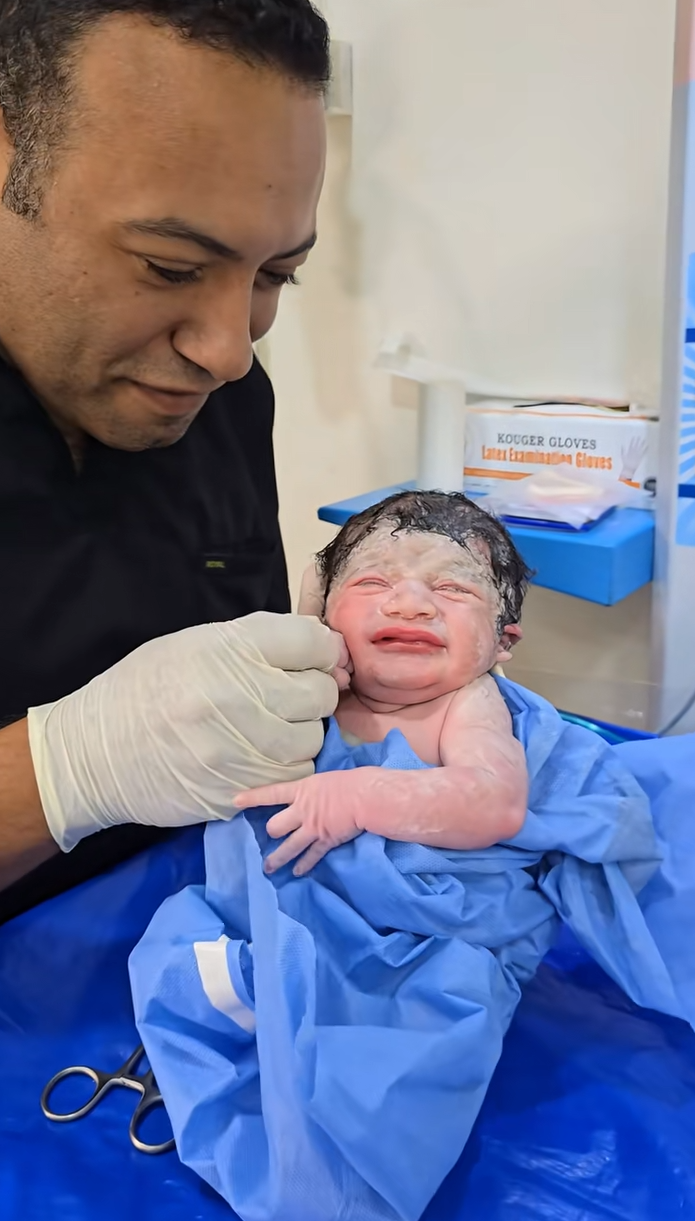
The room was quiet in the way only a delivery room can be—filled with movement, purpose, and yet suspended in a kind of sacred stillness. Blue drapes framed the scene, stainless steel instruments lay ready but now forgotten, and the soft hum of machines blended into the background like a distant tide. In the center of it all, a new life had just arrived.
The baby, still glistening from the journey into the world, let out a small, uneven cry—a sound both fragile and powerful. It was not loud, not dramatic, but it carried something deeper than volume: the unmistakable declaration of existence. The first breath of the world.
Cradled carefully in practiced hands, the newborn blinked against the unfamiliar brightness. The transition from darkness to light had been sudden, overwhelming, and confusing. Tiny fingers curled instinctively, grasping at nothing and everything all at once. The skin, still coated in traces of birth, told the story of where this life had just been—safe, warm, and hidden.
The man holding the baby leaned closer, his face soft with focus and quiet wonder. His gloved hands moved gently, not just with skill, but with care shaped by experience. Yet even with all the births he had witnessed before, there was something about this moment that never became routine. Each child was new, each arrival different, each first cry a reminder that life begins again and again in ways that never grow ordinary.
“Welcome,” he murmured under his breath, though no one had asked him to speak.
The baby’s eyes fluttered, not quite seeing, not yet understanding. The world was a blur of shapes and sensations. Cool air brushed against warm skin. Sounds echoed without meaning. Hands touched—firm but gentle—and though everything felt strange, there was an instinctive sense that this moment mattered.
Wrapped in blue cloth, the newborn was lifted slightly, supported with careful precision. A small, trembling arm stretched outward, as if reaching for something just beyond comprehension. Perhaps it was reflex. Perhaps it was something more—a silent attempt to connect with the vast, unknown world now unfolding.
Time seemed to slow.
Around them, the room continued its quiet rhythm. A nurse adjusted equipment. Another prepared fresh linens. The clinical environment remained efficient, organized, and calm. Yet at the center of it all, there was something profoundly human taking place—something no instrument could measure.
The baby’s expression shifted. The initial cry softened into small, uneven breaths. Lips parted slightly, as if testing the mechanics of breathing, tasting air for the very first time. Each inhale was a discovery. Each exhale, a step further into life.
The man smiled faintly, his eyes never leaving the child. There was a tenderness in that gaze—a recognition of how delicate this moment was. Not just physically, but symbolically. This was the beginning of a story that would stretch far beyond this room, far beyond this day.
Who would this child become?
The question lingered in the air, unspoken but present.
Would they grow to laugh loudly, filling rooms with joy? Would they face hardships that shaped their strength? Would they discover passions that lit their path, or wander through uncertainty before finding their way? No one could know. And that was the beauty of it.
Every life begins like this—unwritten, unpredictable, full of possibility.
The baby stirred again, a soft whimper escaping as if protesting the unfamiliarity of everything. The warmth of the womb had been replaced by a world that felt vast and cold. But already, comfort was finding its way back in small forms: the gentle hold of steady hands, the soft fabric wrapped around the body, the quiet reassurance of human presence.
These were the first signals of safety. The first hints that this world, though overwhelming, would also offer care.
The man adjusted his grip slightly, ensuring the baby was secure. His movements were deliberate, almost instinctive. Years of practice had taught him what to do, but moments like this reminded him why it mattered.
Life, in its earliest form, demanded respect.
The newborn’s tiny face relaxed, just for a moment. The tension softened. The cries faded into soft breaths, uneven but steady. Eyes remained closed now, as if retreating inward to process the overwhelming arrival.
And in that stillness, something extraordinary happened—nothing.
No dramatic movement. No sudden sound. Just a quiet pause.
It was in that pause that the weight of the moment truly settled.
A life had begun.
Not in theory, not in abstraction, but right here—in fragile, breathing form. A future filled with unknown choices, relationships, and experiences had just opened its first chapter.
Outside the room, the world continued as it always did. People walked, talked, worked, and worried about things that, in this moment, felt distant and small. Traffic moved. Phones buzzed. Time carried on.
But inside this space, something timeless had occurred.
The baby’s hand twitched again, fingers curling and uncurling as if practicing the act of holding. One day, those hands would grasp objects, write words, build things, and reach for others. They would comfort, create, and perhaps even heal.
For now, they simply existed—small, delicate, full of potential.
The man looked at the child one more time before continuing his work. There was no grand gesture, no dramatic declaration. Just a quiet acknowledgment—a silent understanding of what had just taken place.
Another beginning.
Another story.
Another life stepping into the vastness of the world.
The baby let out one last soft sound, somewhere between a sigh and a whisper. It was not a cry of distress, nor a call for attention. It felt more like an adjustment—a subtle acceptance of this new reality.