Shekinah Güven, known to many viewers as a memorable personality from 90 Day Fiancé, has once again found herself at the center of online conversation—this time for something far more personal than reality TV drama. Her recent candid recovery clip has sparked widespread attention, not because of shock value alone, but because of the raw honesty and vulnerability she chose to share with her audience.
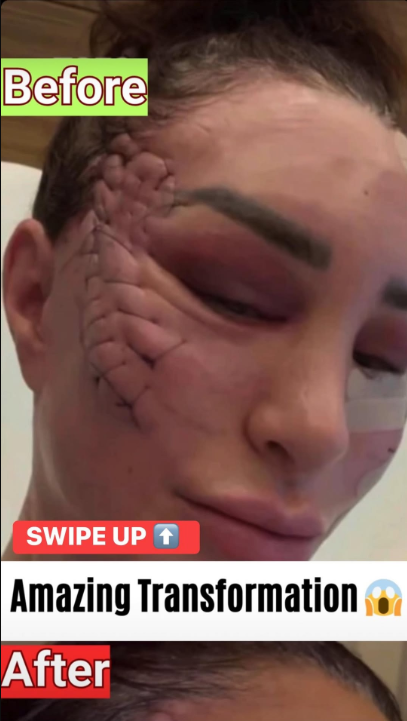
In an era where social media is often curated to perfection, Shekinah Güven took a different approach. The video, which quickly circulated across platforms, shows her in the midst of a recovery process following cosmetic procedures. Rather than presenting a polished “after” reveal, she documented the uncomfortable, unfiltered in-between stage—the swelling, the fatigue, and the emotional toll that often goes unseen.
What makes this moment significant is not just the content of the clip, but the reaction it provoked. Fans and critics alike flooded comment sections with a mix of concern, admiration, and debate. Some praised her bravery for showing the reality behind beauty enhancements, while others questioned the broader culture that normalizes such procedures in the first place.
The clip itself is striking in its simplicity. There are no dramatic edits, no background music, no attempt to soften the reality of recovery. Instead, viewers see a person navigating discomfort, speaking openly about pain, healing, and expectations versus reality. In doing so, Shekinah inadvertently challenged one of the biggest illusions perpetuated online: that transformation is instant and effortless.
For many followers, this was a refreshing departure from the typical influencer narrative. Social media is saturated with “before and after” transformations that skip over the difficult middle. By highlighting that middle phase, Shekinah added an important layer to the conversation around beauty standards. She reminded viewers that every aesthetic choice comes with a process—often one that requires patience, resilience, and acceptance of temporary imperfection.
However, the buzz wasn’t entirely positive. Critics argued that while transparency is valuable, repeatedly showcasing cosmetic procedures could contribute to unrealistic expectations in a different way. They pointed out that even candid content can normalize frequent alterations, especially among younger audiences who may already feel pressure to meet certain beauty ideals.
This tension—between authenticity and influence—is at the heart of the discussion surrounding her video. On one hand, Shekinah’s openness helps demystify cosmetic enhancements. On the other, it raises questions about how much visibility these procedures should have in mainstream digital culture.
Interestingly, the clip also sparked conversations about emotional vulnerability. Recovery isn’t just physical; it can be mentally taxing as well. Being temporarily unable to present oneself confidently, especially for someone in the public eye, requires a level of emotional strength that is rarely acknowledged. In sharing her experience, Shekinah offered a glimpse into that side of the journey.
Many viewers resonated with this aspect in particular. Comments poured in from people who had undergone similar procedures, expressing gratitude for her honesty. Others who had never considered cosmetic work said the video gave them a more realistic perspective, potentially influencing their future decisions.
There’s also a broader cultural context to consider. Reality TV stars often face intense scrutiny regarding their appearance. From the moment they step onto the screen, they become subjects of public commentary—praised, criticized, and compared. Over time, this pressure can shape how they see themselves and the choices they make. Shekinah’s clip, whether intentionally or not, sheds light on the aftermath of that pressure.
It’s worth noting that her journey has always been somewhat polarizing. During her time on television, she was both admired and criticized for her lifestyle and relationship choices. This latest moment continues that pattern, reinforcing her status as a figure who provokes strong reactions.
Yet, beyond the headlines and debates, there’s a more human story unfolding. At its core, the clip is about someone navigating change—physically and emotionally—in front of a global audience. That’s not an easy position to be in. Every expression, every update, becomes part of a larger narrative shaped by strangers.
What sets this situation apart is her willingness to relinquish some control over that narrative. By sharing a less-than-perfect moment, she allowed viewers to see her as more than a curated persona. In doing so, she blurred the line between reality TV and real life in a way that feels more genuine than anything scripted.
The impact of this moment may extend beyond a single viral clip. It contributes to an ongoing shift in how influencers and public figures approach transparency. Audiences are increasingly drawn to authenticity, even when it’s uncomfortable. They want to see the full story, not just the highlights.
At the same time, this trend comes with its own challenges. The more people share, the more they expose themselves to judgment. For someone like Shekinah, who is already a public figure, that scrutiny is amplified. Every choice becomes a talking point, every post a potential controversy.
Despite this, her decision to share her recovery journey may ultimately be seen as a positive step. It opens the door for more honest conversations about beauty, self-image, and the realities behind aesthetic choices. It also encourages viewers to think critically about what they see online and to question the narratives presented to them.
In the end, the buzz surrounding Shekinah Güven’s recovery clip is about more than just one person’s experience. It reflects a broader cultural moment—one where authenticity is valued, but still complicated; where transparency is praised, but also scrutinized.
Whether people view her actions as brave, controversial, or somewhere in between, one thing is clear: she got people talking. And in today’s digital landscape, sparking meaningful conversation is no small feat.
As the discussion continues, it will be interesting to see how both Shekinah and her audience evolve. Will this moment encourage more openness among public figures? Or will it highlight the risks of sharing too much? Perhaps it will do both.