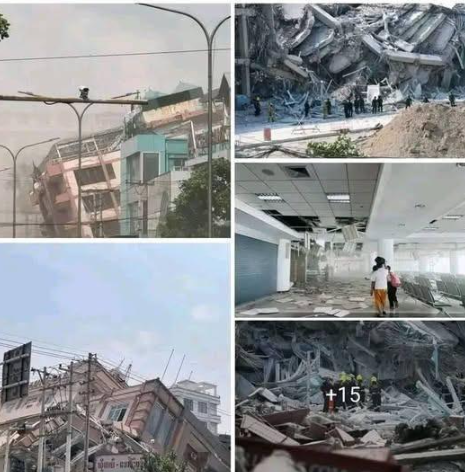
Headlines like “LATEST NEWS Alert: Powerful 7.7 magnitude earthquake shakes the city… See more” are designed to create immediate urgency. A 7.7 magnitude earthquake is indeed a major seismic event — but when you see a vague headline without a city name, time, or official source, it’s important to pause before reacting or sharing.
First, let’s understand what a 7.7 magnitude earthquake actually means. Earthquakes are measured using the moment magnitude scale (Mw), which replaced the older Richter scale for large events. The scale is logarithmic, meaning each whole number increase represents about 32 times more energy release. A 7.7 quake is classified as a major earthquake. It is capable of causing serious damage, especially in densely populated areas or regions with weaker infrastructure.
For comparison, the devastating 2010 earthquake in Port-au-Prince measured 7.0. The 2023 quake that struck near Gaziantep exceeded 7.8. These examples show how destructive quakes in this magnitude range can be, depending on depth, location, and building standards.
However, when a viral post simply says “the city” without naming it, that’s a red flag. Real emergency alerts from organizations like the United States Geological Survey (USGS) or official government disaster agencies always include:
-
Exact location (city and country)
-
Depth of the earthquake
-
Time (with time zone)
-
Aftershock information
-
Tsunami risk (if near ocean)
Without those details, the post may be incomplete, outdated, or misleading.
A 7.7 earthquake typically causes:
• Strong to severe ground shaking
• Potential structural collapse in vulnerable buildings
• Damage to roads, bridges, and utilities
• Possible landslides in mountainous regions
• Tsunami risk if under the ocean
But the level of destruction depends heavily on building codes. Countries with strict seismic regulations — like Japan — often experience less structural collapse compared to areas where enforcement is weaker.
Another important factor is depth. A shallow 7.7 quake (less than 70 km deep) is generally more destructive than a deep one because energy reaches the surface more directly. If a viral headline doesn’t include depth information, it’s missing critical context.
Why do these vague alerts spread so quickly?
Social media algorithms prioritize urgency and emotion. Words like “LATEST,” “ALERT,” and “Powerful” trigger immediate attention. When combined with “See more,” they encourage clicks. Sometimes these posts recycle older earthquakes from previous years, presenting them as new events.
It’s also common for people to misinterpret seismic data apps. Earthquakes happen every day worldwide. The Earth experiences thousands annually, though most are too small to feel. A major quake anywhere in the world can appear on global monitoring apps, leading some users to assume it happened nearby.
If you ever see a headline like this, here’s what to do:
-
Check the USGS website or app for real-time earthquake data.
-
Look at official government disaster management accounts.
-
Verify the date and time.
-
Avoid sharing unverified posts.
If a real 7.7 earthquake occurs, major international outlets would report it immediately. Emergency agencies would issue safety instructions. There would be live updates, confirmed casualty reports, and rescue information.
In the case of an actual major earthquake, safety steps include:
• Drop, Cover, and Hold On during shaking
• Stay away from windows and heavy furniture
• Avoid elevators
• Move to open areas after shaking stops
• Prepare for aftershocks
Aftershocks are common after large quakes. Some can be strong enough to cause additional damage. They may continue for days or even weeks.
Tsunami warnings are issued separately if the quake occurs offshore. Agencies like the Pacific Tsunami Warning Center monitor sea-level changes. Not every large offshore quake triggers a tsunami — it depends on fault movement and vertical displacement of the ocean floor.
It’s important to balance awareness with calm thinking. Earthquakes are natural geological processes caused by tectonic plate movement. The Earth’s crust is divided into massive plates that slowly shift. Stress builds at boundaries, and when it releases, seismic waves spread outward.
Major fault lines — such as the San Andreas Fault in California — are constantly monitored. Scientists cannot predict the exact date and time of an earthquake, but they can identify high-risk zones.
Preparedness is always more productive than panic. Having an emergency kit, securing heavy furniture, and knowing evacuation routes are practical steps in earthquake-prone areas.
If this “LATEST NEWS” post is real, reliable updates will follow quickly from trusted sources. If it’s vague and lacks specifics, it may be misinformation designed to generate traffic.
In today’s fast-moving digital world, dramatic headlines can travel globally in minutes. But responsible sharing matters. Spreading unverified disaster alerts can create unnecessary fear, especially for people with family in earthquake-prone regions.
So when you see “Powerful 7.7 magnitude earthquake shakes the city… See more,” pause before reacting. Check credible sources. Look for detailed reports. Stay informed — but stay calm.