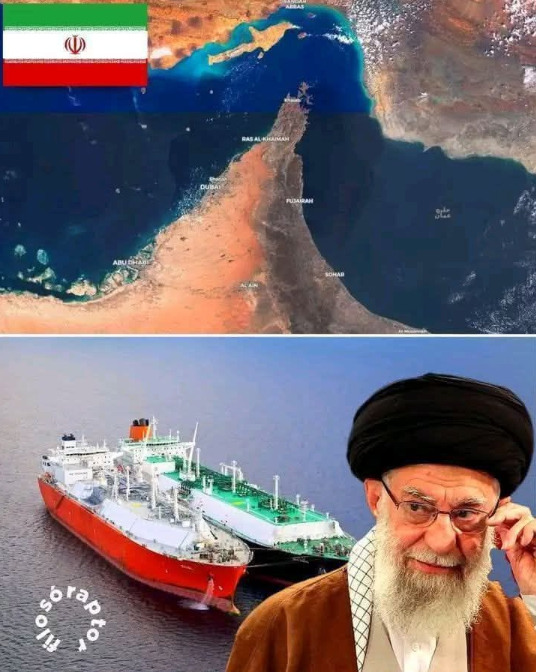
In a move that has sent shockwaves through global markets and diplomatic circles, the Islamic Consultative Assembly has approved a measure authorizing the potential closure of the Strait of Hormuz, one of the world’s most strategically vital maritime chokepoints. While the decision does not automatically trigger an immediate shutdown, it grants the government of Iran the authority to act if national security conditions are deemed to require it.
The Strait of Hormuz, a narrow passage connecting the Persian Gulf to the Gulf of Oman and the Arabian Sea, is responsible for the transit of roughly 20% of the world’s petroleum supply. Every day, millions of barrels of crude oil and liquefied natural gas pass through this corridor, making it a cornerstone of global energy stability. Any disruption, even temporary, would likely cause significant volatility in energy prices and ripple effects throughout the international economy.
Parliamentary leaders described the vote as a defensive measure. According to statements from lawmakers, the authorization is intended as a response to what they describe as escalating external pressures, including sanctions and regional military activity. Though no timeline was specified, officials emphasized that closure would only occur if higher authorities, including Iran’s national security bodies, determined it necessary.
International reaction was swift. Governments across Europe and Asia expressed concern, urging restraint and dialogue. The United States, which maintains a significant naval presence in the region, reaffirmed its commitment to ensuring freedom of navigation in international waters. U.S. officials described the strait as a critical international passageway whose closure would have global consequences.
Energy markets responded almost immediately to the announcement. Oil prices climbed sharply in early trading, reflecting investor anxiety about potential supply disruptions. Analysts note that even the threat of closure can drive speculation and price swings, as shipping companies, insurers, and traders calculate risk premiums.
Neighboring Gulf nations, including Saudi Arabia and Oman, are closely monitoring the situation. Saudi Arabia, one of the world’s largest oil exporters, relies heavily on maritime routes through the strait, although it has invested in alternative pipeline routes to mitigate potential risks. Oman, which shares control of part of the strait’s southern coastline, has historically advocated for diplomacy and regional cooperation to maintain open waterways.
Security experts caution that closing the Strait of Hormuz would not be a simple matter. The waterway is governed by international maritime law, and any attempt to block it could trigger serious geopolitical confrontation. Naval forces from multiple nations patrol the area, and previous periods of tension have resulted in incidents involving seized tankers and military standoffs.
Historically, Iran has periodically threatened to close the strait during moments of heightened tension, particularly in response to economic sanctions. However, it has never fully executed such a closure. Many analysts interpret these announcements as strategic signaling — a way of demonstrating leverage without necessarily taking irreversible steps.
The economic implications of a shutdown would be profound. Countries in Asia, particularly China, Japan, South Korea, and India, depend heavily on Gulf oil shipments. A disruption could lead to increased fuel prices, higher transportation costs, and inflationary pressures worldwide. Financial markets would likely experience turbulence as investors react to uncertainty in energy supply chains.
Shipping companies are already reviewing contingency plans. Some vessels may delay entry into the region until greater clarity emerges. Insurance rates for tankers traveling through high-risk areas could increase significantly, adding further cost to global trade.
Diplomatic channels are reportedly active behind the scenes. Regional mediators and international organizations are said to be engaging with Iranian officials to clarify the intent and scope of the parliamentary authorization. Observers note that such measures often serve as bargaining tools in broader negotiations over sanctions, nuclear policy, and regional security arrangements.
Military analysts warn that even minor miscalculations in the confined waters of the strait could escalate rapidly. The narrowest point of the passage is only about 21 miles wide, with shipping lanes even narrower. This geography makes navigation sensitive and increases the risk of confrontation if tensions rise.
At the same time, some experts argue that a prolonged closure would harm Iran’s own economic interests. A significant portion of its oil exports also transit the same waterway. Blocking the route could reduce government revenue at a time when economic pressures are already significant.
Public sentiment within Iran appears mixed. Some citizens view the parliamentary decision as a necessary assertion of sovereignty and strength in the face of foreign pressure. Others worry about potential economic fallout and the possibility of military escalation. Domestic debates reflect broader questions about how best to balance national pride with economic stability.
International law scholars point out that while coastal states have certain rights within their territorial waters, the Strait of Hormuz is widely regarded as an international transit route. Under the United Nations Convention on the Law of the Sea, ships are generally guaranteed the right of transit passage through straits used for international navigation. Any attempt to fully close the passage could lead to legal disputes and coordinated international responses.
For now, global leaders are urging calm. Statements from several foreign ministries emphasize dialogue over confrontation. Markets remain sensitive to developments, and even small shifts in rhetoric could influence oil prices and investor confidence.
The situation underscores the delicate balance that defines the region. The Persian Gulf has long been a focal point of geopolitical rivalry, energy competition, and strategic maneuvering. Decisions made in Tehran reverberate across continents, affecting consumers, industries, and governments far beyond the Middle East.
Whether this parliamentary approval translates into concrete action remains uncertain. Much depends on broader diplomatic dynamics, regional security developments, and economic calculations in the weeks ahead. What is clear, however, is that the mere possibility of closing the Strait of Hormuz has once again highlighted how interconnected and fragile the global energy system can be.
As tensions evolve, the international community will be watching closely, aware that stability in this narrow stretch of water plays an outsized role in the functioning of the modern world economy