Why Claims of Severe Sentences in Trump Threat Cases Are Fueling Debate
In the charged political climate of the United States, few figures generate as much controversy as Donald Trump. Since leaving office, Trump has remained a dominant presence in American politics, shaping conversations not only through his words and actions but also through the legal and rhetorical battles that swirl around him. One particularly contentious issue that has sparked debate is the claim that individuals accused of making threats involving Trump are receiving unusually severe sentences. These claims—circulating widely on social media and partisan news outlets—have fueled arguments about free speech, political bias in the justice system, and the line between rhetoric and criminal conduct.
At the heart of the controversy is the legal concept of “true threats.” Under U.S. law, not all threatening language is protected by the First Amendment. Courts have long held that statements intended to communicate a serious expression of intent to commit an act of unlawful violence can be prosecuted. The difficulty lies in determining intent and context. In politically charged environments, hyperbolic language is common. Supporters and critics alike often use dramatic, emotionally loaded expressions. When such language is directed at a former president, prosecutors and courts face intense scrutiny: are they protecting public safety, or are they chilling political speech?
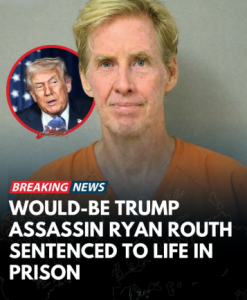
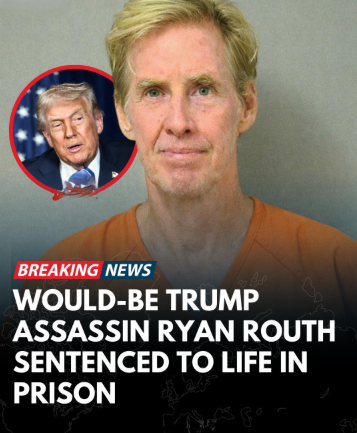
Recent cases involving alleged threats against Trump have been framed by some commentators as examples of harsh punishment aimed at deterring dissent. Headlines sometimes suggest that defendants are being “made examples of” because of who the alleged target is. These narratives resonate with audiences already suspicious of government power and media bias. For Trump supporters, claims of severe sentencing can reinforce a sense that the system is stacked against them and against Trump himself. For Trump’s critics, the same cases are often viewed as necessary enforcement of the law to prevent violence in an era when political rhetoric has occasionally turned deadly.
The debate is also shaped by the broader context of rising political violence in the United States. The January 6, 2021, attack on the U.S. Capitol remains a defining moment, altering how law enforcement and courts respond to threats and extremist rhetoric. Since then, federal agencies have emphasized prevention. When threats are made against high-profile political figures, they are treated with heightened seriousness. Supporters of strict sentencing argue that deterrence is essential: leniency could embolden others to escalate from words to actions. From this perspective, strong sentences are not about politics but about safeguarding democratic institutions and human lives.
Yet critics counter that severity can be selective and politically motivated. They point to cases where threats against other public figures—especially those outside the Trump orbit—seem to receive less attention or lighter punishment. Whether or not this perception is supported by data, it plays powerfully into narratives of double standards. In a polarized media ecosystem, isolated examples can be amplified and stripped of nuance. A complex sentencing decision, influenced by a defendant’s history, the credibility of the threat, and the presence of weapons or concrete plans, may be simplified into a partisan talking point.
Social media accelerates this process. A single court ruling can be framed in dramatically different ways depending on the outlet or influencer sharing it. One side may emphasize the danger posed by the defendant and the need for accountability. The other may highlight the defendant’s political views and suggest that those views, rather than the alleged conduct, drove the punishment. In this environment, claims of “severe sentences” become symbolic weapons in a broader cultural war over whose voices are protected and whose are punished.
Another factor fueling debate is confusion about what sentencing actually involves. Federal sentencing guidelines consider a range of factors: the nature of the offense, the defendant’s intent, criminal history, and any aggravating or mitigating circumstances. Judges have discretion within these frameworks. Two cases that appear similar on the surface can result in very different outcomes. However, public discussions rarely delve into these details. Instead, they focus on the headline number of years or months, which can sound shocking without context.
The role of Trump himself also cannot be ignored. He frequently frames legal actions related to him or his supporters as politically driven. When he describes prosecutions as “witch hunts” or “weaponization of the justice system,” he primes his audience to view related cases—like threat prosecutions—as part of a larger pattern of persecution. This framing is powerful because it taps into existing distrust of institutions. Even people who do not follow the specifics of a case may accept the narrative that something unfair is happening.
On the other side, many legal experts and civil liberties advocates stress that taking threats seriously is not optional. History shows that ignoring warning signs can have tragic consequences. They argue that courts must err on the side of caution, especially when rhetoric around Trump and other political figures has sometimes inspired real-world violence. From this perspective, debate over severity should focus on whether the punishment fits the individual facts of each case, not on political identity.
Ultimately, claims of severe sentences in Trump threat cases are fueling debate because they sit at the intersection of law, politics, and emotion. They raise fundamental questions about how a democracy balances free expression with security, and how trust in the justice system can survive in a polarized age. Each new case becomes more than a legal matter; it becomes a symbol onto which people project their fears, loyalties, and suspicions.
Whether these claims are fully accurate or not, their impact is undeniable. They shape public perception, reinforce existing divides, and influence how Americans think about both Trump and the institutions meant to govern fairly. In a country already struggling to find common ground, the debate over sentencing in threat cases is less about the courtroom alone and more about the broader struggle over truth, trust, and the meaning of justice in modern America.