No, Britain Would Not Be Left Without a King
If King Charles III were to die, the British monarchy does not enter a period of vacancy or uncertainty. That’s because under long-established constitutional law, the Crown is never without a monarch—a principle sometimes called “demise of the Crown.” As soon as one monarch dies, their successor immediately becomes king or queen, even before any formal proclamation is made.
So if Charles were to die today:
✔ Someone would become the new monarch instantly.
✔ There would be no gap.
✔ The system continues under a clear legal order.
There would not be a moment when the United Kingdom is “left without a king.”
Who Would Take the Throne?
The British throne passes according to an order of succession that has evolved over centuries. It’s laid out in statutes like the Act of Settlement 1701 and the Succession to the Crown Act 2013, and it determines the line of heirs to the Crown.
Under that established order, if King Charles III were to die:
➡️ His eldest son, Prince William, Prince of Wales, would immediately become king.
William is the first person in line to succeed Charles. His position as heir apparent is constitutional and hereditary, meaning it doesn’t require any special approval—only the natural operation of succession.
The Royal Succession Line: What Comes Next
Here’s what the succession would look like once William becomes monarch:
-
Prince William becomes King.
-
His eldest son, Prince George, becomes the heir apparent.
-
Then come his other children: Princess Charlotte and Prince Louis.
-
After them would be other descendants of Charles III.
This means that the British monarchy carries on in the same family line, with no interruption or constitutional crisis unless something extremely unusual happened.
Does the King Have to Abdicate for a Successor to Take Over?
No. Under current law, a monarch remains king for life. Abdication is extremely rare in British history. The most famous example is King Edward VIII, who abdicated in 1936 to marry Wallis Simpson—a choice that triggered a constitutional crisis. In modern times, abdication is effectively considered unthinkable by many legal scholars and royal commentators, and there’s no indication Charles plans to step down.
So William would only become king if Charles dies (or somehow abdicates, which is highly unlikely). That’s why discussions about William becoming king in 2026 or any year before Charles’s natural death are speculative rumors—not constitutional fact.
What Happens Immediately After a Monarch’s Death? The Protocols
When a British monarch dies, a set of pre-planned procedures kicks in to manage the transition. While the new king is already the monarch, there are formalities that follow:
✔ The Accession Council convenes.
This body gathers—typically at St James’s Palace in London—to officially proclaim the new monarch’s accession. That proclamation is largely ceremonial, since the new king already holds the Crown by law.
✔ Loyalty oaths are made.
Government and parliament members reaffirm their allegiance to the new sovereign.
✔ The new monarch addresses the nation.
This is a symbolic moment that reaffirms continuity.
None of this interrupts the monarchy—so there’s no gap when the throne would be empty. The Crown simply flows to the successor.
What About a Regency?
There’s another constitutional mechanism worth mentioning: a regency. This comes into play if the monarch is alive but unable to perform duties due to illness or incapacity.
Under the Regency Acts, if King Charles were declared incapable of fulfilling his role, then William (as heir apparent) could serve as regent, performing royal duties on Charles’s behalf while Charles remains king.
So even while Charles is alive:
⭐ William could function as acting monarch under a regency.
⭐ But William would only become king when Charles dies.
What About Other Royals Like Prince Harry?
Prince Harry comes after William and William’s children in the line of succession—meaning he would only be king if William and all of William’s descendants were unable to inherit (which is extremely unlikely).
There’s also a legal nuance under the Regency Acts: if William’s heir, Prince George, were under 18 when he inherited, a regent could be appointed. That regent could legally be Harry—but only if certain residency conditions are met and if Harry is living in the UK.
But again, this is a contingency, not the standard scenario.
Does the Queen Consort Ever Become Sovereign?
Camilla, Queen Consort, is Charles’s wife—not a blood heir. If Charles died, Camilla would not inherit the throne. Instead, she would take a title such as Queen Dowager or Queen Mother (a traditional but informal title), depending on custom and royal household decisions.
Royal succession is strictly about bloodline descent and parliamentary statute, not marital relationship.
So Why Do People Ask “Is Britain Left Without a King?”
Mostly because:
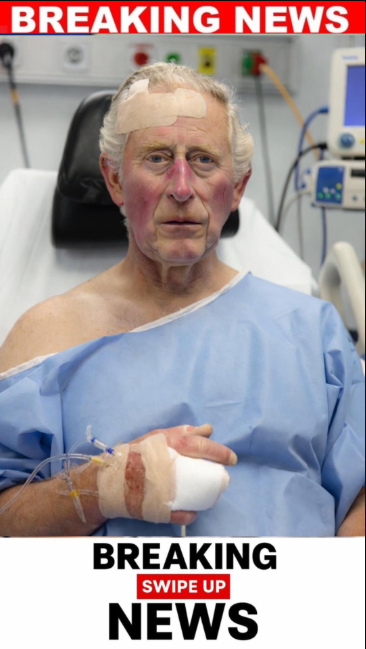
✨ Media speculation about Charles’s health often gets sensationalized.
✨ Some people misunderstand how succession works.
✨ Rumors about abdication or changes to monarchy feed uncertainty.
But the basic constitutional truth is simple: there is always a living successor ready to take the throne the moment the current monarch dies. This system has worked for centuries and remains codified in British law.
In Short: What Happens If Charles Dies Today?
📌 The Crown does not become vacant.
📌 Prince William automatically becomes king.
📌 Formal ceremonies and proclamations follow later.
📌 There would be continuity with no interruption in royal authority.
That’s how constitutional monarchy has worked in the United Kingdom for generations—and it’s designed to prevent exactly the kind of power vacuum implied by the question “Are the British left without a king?”
Bottom line: If Charles III were to die today, Britain would instantly gain a new king—Prince William. There would be no time without a sovereign because succession law ensures that the Crown transfers immediately and unambiguously