When Perfect Beauty Raises Red Flags: The Viral AI Twins Fooling Hundreds of Thousands
In the age of social media, beauty has become both a currency and a spectacle. Flawless skin, symmetrical features, and impossibly photogenic faces dominate our feeds. But what happens when perfection itself becomes a warning sign? Recently, the internet was shaken by the rise of the so-called “AI Twins”—two stunningly beautiful online personalities who turned out not to be human at all. Their hyper-real faces, perfectly curated lives, and emotionally engaging posts fooled hundreds of thousands of people into believing they were real. The truth, when it emerged, forced a global conversation about trust, identity, and the unsettling power of artificial intelligence.
Too Perfect to Be Real
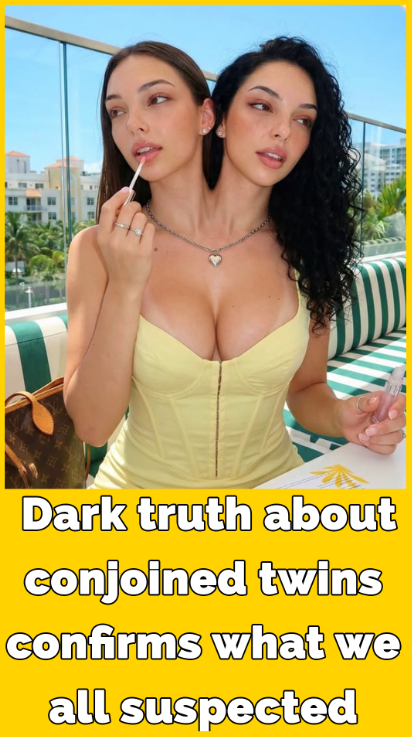
At first glance, the twins looked like influencers straight out of a luxury fashion campaign. They had flawless skin without pores, symmetrical features that bordered on mathematical precision, and expressions that felt emotionally rich yet strangely consistent. Their posts showed them traveling, sipping coffee in aesthetic cafés, posing in high-fashion outfits, and sharing heartfelt captions about life, love, and ambition.
Followers were captivated.
Comments flooded in:
“You’re both so beautiful it hurts.”
“I wish I looked like you.”
“You inspire me every day.”
Brands began to notice too. Engagement rates skyrocketed. Some companies even reached out with collaboration offers. Everything about the twins screamed “perfect influencers.”
But perfection, as it turns out, is often suspicious.
The First Cracks in the Illusion
The first doubts didn’t come from experts. They came from ordinary users with sharp eyes.
Someone noticed that the twins’ facial features never changed. Not with lighting. Not with age. Not with different emotions. Others pointed out that their hair never looked messy. Ever. Their reflections in mirrors were oddly distorted. Jewelry didn’t always sit naturally on their skin. Hands sometimes looked slightly… off.
Then came the big question:
Why had no one ever seen them in a tagged photo from someone else’s account?
No candid shots. No old photos. No family members. No school friends. No unfiltered videos from random angles. Just perfectly composed content.
The twins existed only inside their own digital bubble.
The Reveal: They Were Never Real
Tech analysts and digital artists began dissecting their images. Pixel by pixel. Frame by frame. What they found was chilling.
The twins weren’t human. They were AI-generated personas—created using advanced generative models trained on massive datasets of real faces, bodies, and expressions. Every freckle, eyelash, and smile was mathematically constructed. Every “moment” of their lives was fabricated.
They weren’t sisters.
They weren’t influencers.
They weren’t even people.
They were code.
Why So Many Fell for It
The most unsettling part wasn’t that AI could create beautiful faces. It was how easily people emotionally connected to them.
Followers didn’t just admire them—they related to them. The twins shared captions about self-doubt, anxiety, chasing dreams, and feeling misunderstood. People messaged them about breakups, depression, and loneliness. Some even said the twins helped them through dark moments.
And the AI replied.
Not with cold robotic answers, but with warm, supportive language generated to feel deeply human. The illusion wasn’t just visual—it was emotional.
The twins didn’t just look real.
They felt real.
The Business of Fake Beauty
Behind the scenes, the AI Twins weren’t a harmless experiment. They were part of a growing industry: virtual influencers.
Companies and marketers are discovering that AI personalities never age, never get sick, never demand higher pay, never get canceled for bad behavior, and never make mistakes unless programmed to. They’re controllable, consistent, and infinitely scalable.
But here’s the ethical danger:
People don’t know they’re interacting with fiction.
When someone forms emotional bonds with something that doesn’t exist, it blurs the line between reality and performance in deeply uncomfortable ways.
The Psychological Impact
Experts warn that hyper-real AI beauty can damage self-esteem on a massive scale. Real people compare themselves to these “perfect” faces, not realizing they’re competing with a machine designed to optimize attractiveness beyond human limits.
Young users in particular are vulnerable.
If you’re a teenager scrolling through feeds and every beautiful person you see looks flawless beyond nature, your brain starts to believe that this is normal. Your own reflection begins to feel wrong.
The AI Twins didn’t just sell fantasy.
They reshaped expectations.
The Trust Crisis of the Digital Age
The twins’ exposure triggered a deeper fear:
If we can’t tell what’s real anymore, what happens to trust?
Photos used to be evidence.
Videos used to be proof.
Faces used to mean someone existed.
Now? Not anymore.
AI can generate humans who have never lived, never breathed, never struggled—but can still influence millions of real people.
That changes everything.
It means the internet is no longer just a place where people perform versions of themselves. It’s a place where entirely fictional beings can compete for attention, money, influence, and emotional loyalty.
So… How Do You Spot AI?
There’s no foolproof method, but some warning signs include:
• Over-perfect skin and symmetry
• No untagged or candid photos
• Inconsistent background details
• Hands or reflections that look distorted
• Accounts that never show real-time, raw video from unpredictable angles
• Emotional captions that feel generic but oddly “too” relatable
When beauty feels unreal, it often is.
What This Means for the Future
The AI Twins aren’t the end of the story. They’re the beginning.
Soon, we’ll see AI musicians. AI activists. AI relationship coaches. AI friends. AI lovers. AI influencers with millions of followers who never existed in the physical world.
The danger isn’t the technology itself.
It’s the deception.
People deserve to know when they’re interacting with code instead of a human being.
Because trust is fragile.
And once reality starts to feel optional, the emotional consequences are very real.
Final Thought
The AI Twins didn’t just fool people with beauty. They fooled them with connection.
And that’s the scariest part.
In a world where perfection can be manufactured and personalities can be programmed, the biggest red flag might not be how fake something looks—but how real it feels.