Sleeping on Your Left Side Affects Your Health in Ways You Would Have Never Thought
We spend about a third of our lives asleep, yet few of us think deeply about how we sleep. Not just how long, but in what position. Back, stomach, right side, left side—each posture influences the body in subtle but powerful ways. Among them, sleeping on your left side stands out as one of the most beneficial and underrated habits for overall health. What seems like a small change in position can quietly improve digestion, heart health, brain function, and even pregnancy outcomes.
Let’s explore why turning to your left side at night might be one of the healthiest things you can do for your body.
1. Better Digestion and Less Heartburn
One of the biggest benefits of sleeping on your left side is how it helps your digestive system.
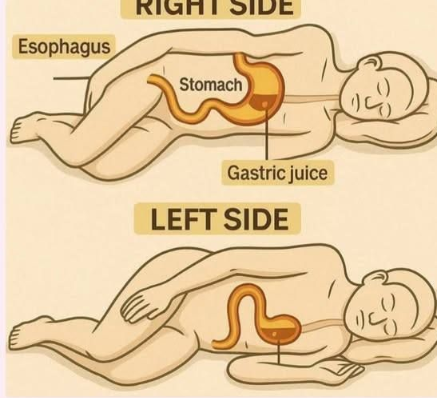
Your stomach and pancreas are positioned more toward the left side of your body. When you lie on your left side, gravity naturally helps keep stomach acid where it belongs—down in the stomach, instead of flowing back up into the esophagus.
That means:
• Less acid reflux
• Less heartburn
• Less nighttime indigestion
People with GERD (gastroesophageal reflux disease) often notice major relief simply by switching to the left side at night. On the right side, stomach acid is more likely to travel upward. On the left, gravity works in your favor.
2. Supports Your Heart and Circulation
Your heart works nonstop, even while you sleep. Sleeping on your left side can make that job a little easier.
The heart is slightly tilted toward the left side of the chest. When you sleep on your left side:
• Gravity helps blood flow more easily from the lower body back to the heart
• The heart doesn’t have to work as hard to circulate blood
• Lymphatic drainage improves, helping remove waste from tissues
Your body’s largest artery—the aorta—arches to the left. Lying on your left side reduces pressure on it, allowing smoother blood flow.
Over time, this can support better cardiovascular efficiency and reduce nighttime strain on the heart.
3. Boosts Brain Detox While You Sleep
Your brain has its own “cleaning system” called the glymphatic system. It becomes most active during sleep and helps flush out waste products linked to neurological diseases.
Research suggests that sleeping on your side—especially the left—may improve how efficiently this system clears toxins from the brain. These include proteins like beta-amyloid, which are associated with Alzheimer’s disease.
In simple terms:
• Side sleeping helps your brain clean itself
• Left-side sleeping may optimize that process
Your body isn’t just resting when you sleep—it’s doing deep maintenance. The left side appears to support that cleanup.
4. Improves Lymphatic Drainage
Your lymphatic system removes waste, toxins, and excess fluid from your body. Most of the lymphatic drainage pathways are located on the left side.
When you sleep on your left side:
• Lymph flows more easily toward the thoracic duct
• Your body removes toxins more efficiently
• Immune function is supported
Think of it as giving your internal “garbage disposal” the best possible angle to work overnight.
5. Helps With Pregnancy and Fetal Health
Doctors often recommend left-side sleeping during pregnancy—and for good reason.
When a pregnant person lies on their left side:
• Blood flow to the placenta improves
• Oxygen and nutrients reach the baby more efficiently
• Pressure is taken off the liver and major blood vessels
• Swelling in the legs and feet can decrease
Sleeping on the back can compress the inferior vena cava (a major vein), reducing blood flow. The left side avoids that and supports both parent and baby.
6. Reduces Snoring and Sleep Apnea Symptoms
Snoring often happens when the tongue and throat tissues collapse backward and block airflow. This is especially common when lying on the back.
Sleeping on your side—especially the left—helps keep airways open.
Benefits include:
• Less snoring
• Better oxygen flow
• Fewer breathing interruptions at night
People with mild sleep apnea often experience noticeable improvement just by changing sleep position.
7. Eases Back and Neck Pain (When Done Right)
Left-side sleeping can also help align your spine—if your pillow and mattress support it properly.
With the right setup:
• Your spine stays in a neutral position
• Pressure on the lower back is reduced
• Neck tension decreases
To make it work:
• Use a pillow that keeps your head aligned with your spine
• Place a pillow between your knees to prevent hip rotation
This keeps your body in balance and reduces morning stiffness.
8. Supports Your Gut Microbiome
Your gut bacteria play a massive role in immunity, mood, metabolism, and inflammation. Good digestion supports a healthy microbiome—and left-side sleeping helps digestion.
Better movement of food and waste through the intestines =
• Less bloating
• More regular bowel movements
• Healthier gut environment
Over time, this affects everything from energy levels to immune resilience.
9. Calms the Nervous System
Left-side sleeping is associated with increased activation of the parasympathetic nervous system—the “rest and digest” mode.
That means:
• Lower heart rate
• Reduced stress hormones
• Deeper, more restorative sleep
Your body shifts out of fight-or-flight and into healing mode.
10. How to Train Yourself to Sleep on Your Left Side
If you’re not used to it, switching positions can feel awkward at first. But your body adapts.
Try this:
• Start on your left side every night
• Hug a body pillow or place one behind your back
• Put a pillow between your knees
• Use a firm, supportive mattress
Within a couple of weeks, your brain will start choosing the left side automatically.
The Takeaway
Sleeping on your left side isn’t just a comfort choice—it’s a health strategy.
It supports:
✔ Digestion
✔ Heart function
✔ Brain detox
✔ Lymphatic drainage
✔ Pregnancy health
✔ Breathing
✔ Spine alignment
✔ Nervous system recovery
You don’t need supplements or special equipment to benefit—just a small change in how you lie down at night.