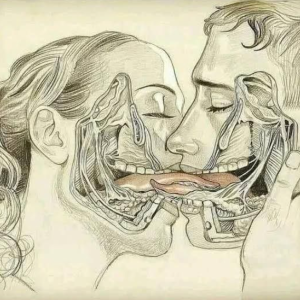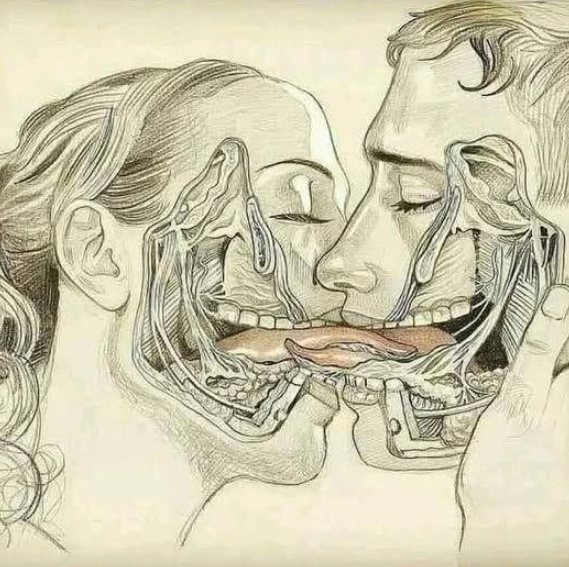
WHAT HAPPENS WHEN WE TONGUE KISS?
Tongue kissing—often called a “French kiss”—is one of the most intimate and emotionally charged ways humans express attraction and connection. It may seem simple on the surface: two people, close together, sharing a kiss with open mouths and tongues. But behind that moment is a surprisingly complex mix of biology, psychology, chemistry, and social meaning. Let’s explore what really happens when we tongue kiss, from your brain to your body to your emotions.
1. Your brain lights up with pleasure
The moment your lips and tongue touch someone else’s, your brain goes to work. Kissing activates multiple sensory systems at once:
-
Touch (lips and tongue are extremely sensitive)
-
Taste
-
Smell
-
Sight and sound, if you’re close and focused on each other
This sensory overload sends signals to the brain’s reward centers. Dopamine—the “feel-good” chemical—starts flowing. Dopamine is associated with pleasure, motivation, and desire, which is why kissing can feel exciting, addictive, and emotionally intense.
At the same time, your brain may release oxytocin, often called the “bonding hormone.” Oxytocin promotes feelings of trust, closeness, and emotional attachment. That’s one reason why kissing can make people feel more connected, not just aroused.
2. Your heart rate and breathing change
During a tongue kiss, your body enters a mild state of arousal. Your:
-
Heart rate increases
-
Breathing becomes deeper or faster
-
Blood flow increases to the skin and lips
This happens because your nervous system shifts into a stimulated state. Your body is preparing for intimacy and connection. It’s similar to what happens during excitement or anticipation.
That physical response is part of why kissing can feel electrifying, even before anything else happens.
3. Your lips and tongue send powerful signals
The lips and tongue are packed with nerve endings—more than most other parts of the body. They’re designed to detect very fine touch, temperature, and movement. When they’re involved in a kiss, your brain gets extremely detailed sensory information.
That’s why:
-
A good kiss can feel unforgettable
-
A bad kiss can feel instantly “off”
-
Small changes in pressure, rhythm, or timing make a big difference
Your nervous system is constantly interpreting the kiss: Is this gentle? Urgent? Awkward? Confident? Passionate? Those signals influence how attracted and emotionally connected you feel in that moment.
4. Chemistry plays a role (literally)
When people tongue kiss, they exchange tiny amounts of saliva. That might sound unromantic, but it serves a subtle biological purpose.
Your saliva contains chemical information about your immune system. Some scientists believe that deep kissing helps your brain subconsciously assess genetic compatibility—especially in terms of immune diversity. In simple terms, your body may be “checking” whether the other person is a good biological match.
This doesn’t mean you’re consciously thinking about DNA—but it may help explain why some kisses feel instantly right and others don’t.
5. Emotions get involved fast
A tongue kiss often feels more intimate than other forms of physical contact. That’s because:
-
It happens very close to the face and eyes
-
It involves vulnerability
-
It often signals romantic or sexual interest
Emotionally, kissing can trigger:
-
Attachment
-
Desire
-
Comfort
-
Excitement
-
Sometimes confusion or nervousness
Depending on the context, a kiss can mean different things: affection, curiosity, love, longing, or even goodbye. The emotional weight of a kiss often depends on the relationship between the two people involved.
6. Your body synchronizes with the other person
When a kiss is mutual and enjoyable, your bodies often start to mirror each other:
-
Your breathing may sync
-
Your movements become coordinated
-
Your tension levels align
This kind of physical and emotional synchronization is a form of nonverbal communication. It builds connection without words. That’s why kissing can feel like a “conversation” between two people, even in silence.
7. It can reduce stress
Because of oxytocin and dopamine, kissing can actually lower stress levels. It may:
-
Reduce cortisol (the stress hormone)
-
Create feelings of calm and safety
-
Improve mood
That’s why a kiss from someone you care about can feel comforting after a long day or emotional moment.
8. It can increase desire—or reveal lack of it
A tongue kiss often acts like a “spark test.” After kissing someone, you might feel:
-
More attracted
-
Emotionally closer
-
Curious to go further
Or you might feel:
-
Nothing
-
Awkward
-
Disconnected
That reaction doesn’t mean something is wrong with you. It just means chemistry is either present or not. Kissing is one of the fastest ways people discover whether attraction is real or imagined.
9. It’s also shaped by culture and experience
How people kiss—and what it means—varies across cultures, families, and personal histories. Some people grow up seeing affection openly. Others don’t. Some learn kissing through experience. Others through movies, stories, and imagination.
So when you tongue kiss someone, you’re not just sharing saliva and sensation—you’re also bringing:
-
Your expectations
-
Your comfort level
-
Your emotional style
-
Your past experiences
That’s why the same kiss can feel very different to two people in the same moment.
10. The meaning matters as much as the act
Physically, tongue kissing is about lips, tongues, nerves, and chemicals. But emotionally, it’s about connection.
A kiss can mean:
-
“I want you.”
-
“I care about you.”
-
“I feel close to you.”
-
“I miss you.”
-
“I trust you.”
Sometimes it means all of those at once.
Final thoughts
When we tongue kiss, a lot more is happening than just mouths touching. Your brain releases pleasure chemicals. Your heart and body respond. Your emotions shift. Your senses heighten. And your connection with the other person deepens—if the chemistry is right.
Kissing is one of the most powerful and intimate forms of human communication. It blends biology with emotion, instinct with meaning. That’s why a single kiss can change how two people see each other—and sometimes even how they see themselves.