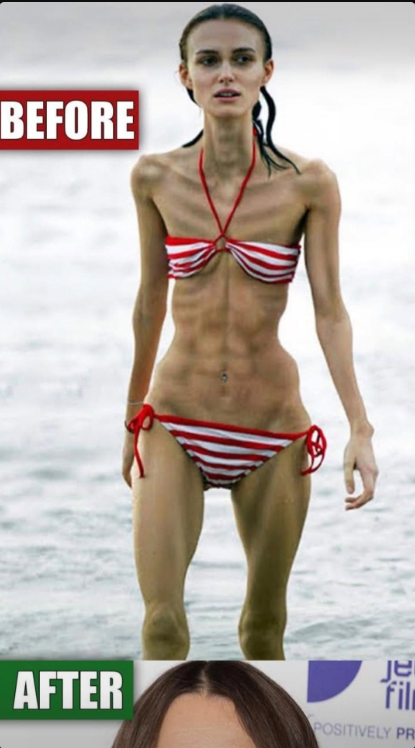
When a Photo Says Too Much: The Real Story Behind Extreme Weight Loss, Recovery, and the Pressure to Look “Perfect”
In the age of social media, a single photo can travel faster than truth. It can inspire admiration, spark envy, or ignite cruel speculation. Nowhere is this more obvious than in images of dramatic weight loss. One picture of a thinner body can trigger thousands of comments: “You look amazing!” … “What’s your secret?” … “Are you sick?” … “I wish I had your discipline.”
But what those comments rarely capture is the real story—the emotional, physical, and psychological journey behind extreme weight change. A photo may show the result, but it almost never shows the cost.
The Illusion of the “Perfect” Body
For decades, society has pushed a narrow idea of what “healthy” and “beautiful” look like. Thinness is often equated with success, self-control, and worth. The message is subtle but constant: smaller is better.
Social media intensifies this pressure. Platforms are flooded with before-and-after photos, transformation reels, and “glow-up” stories. They’re designed to be eye-catching, not truthful. What’s cropped out are the tears, the exhaustion, the hunger, the obsession, and sometimes the illness.
When someone posts a photo after extreme weight loss, the internet often assumes one of two things:
-
They’re a fitness hero.
-
They’re dangerously unwell.
Both assumptions can be wrong.
When Weight Loss Isn’t a Choice
Not all weight loss comes from gym routines and clean eating. Sometimes it comes from trauma. From grief. From depression. From anxiety. From eating disorders. From medical conditions. From stress so intense that the body simply stops cooperating.
People lose weight during breakups, after deaths in the family, during financial collapse, or while battling mental illness. They lose weight when food becomes the only thing they feel they can control—or the last thing they care about at all.
A photo can’t tell you whether the person in it:
• Was starving themselves to feel worthy
• Couldn’t eat because anxiety made them nauseous
• Was sick and didn’t know it yet
• Was praised for “discipline” while quietly falling apart
So when people see a thinner body and say, “You look better now,” what they may really be saying is, “Your pain is aesthetically pleasing.”
And that cuts deep.
The Dangerous Praise of Suffering
One of the cruelest parts of extreme weight loss is how often it gets rewarded.
People struggling with disordered eating or stress-related weight loss frequently hear things like:
• “I wish I had your willpower.”
• “You’re so lucky you’re skinny.”
• “Don’t gain it back—you look great like this!”
What they don’t hear is:
• “Are you okay?”
• “You seem tired.”
• “Do you feel healthy?”
Praise becomes fuel. Even when the weight loss came from suffering, people start chasing the validation. They cling to the compliments because they finally feel seen—even if what’s being seen is their pain in a prettier package.
This is how recovery gets complicated.
Recovery Isn’t Photogenic
If extreme weight loss is dramatic and visually striking, recovery is slow, messy, and invisible.
Recovery often looks like:
• Gaining weight back
• Losing control over numbers
• Eating when you don’t feel “deserving”
• Watching your body change in ways you didn’t plan
• Fighting the urge to go back to what made people praise you
It doesn’t look like a glow-up. It looks like discomfort. It looks like grief for the body you were rewarded for having—even if it nearly destroyed you.
And that’s where the pressure to look “perfect” becomes dangerous. Because when someone starts healing, they often hear:
• “You were so tiny before.”
• “You looked better then.”
• “What happened?”
What happened is: they chose life over approval.
The Mental War Behind the Smile
Extreme weight loss isn’t just physical. It’s a psychological battlefield.
People who go through it often struggle with:
• Body dysmorphia (not seeing themselves accurately)
• Food guilt and fear
• Obsession with control
• Shame when they eat “normally”
• Panic when their body changes
And social media doesn’t help. When every scroll shows someone else’s “perfect” body, it reinforces the belief that your worth is tied to how little space you take up.
So when someone posts a photo after weight loss, the comments might say “goals,” but inside, they might be thinking:
“If I gain even a pound, I’ll disappear again.”
A Photo Is a Moment, Not a Life
Photos freeze time. They don’t show:
• What the person ate that day—or didn’t eat
• How they felt getting dressed
• Whether they cried before the picture
• Whether they were praised while dying inside
A body in a photo might look “perfect,” but perfection is a performance. Health is a process. And recovery is rarely camera-ready.
That’s why we have to be careful with what we project onto other people’s bodies.
Instead of saying:
• “You look amazing now.”
Try:
• “You look like yourself.”
• “You seem strong.”
• “I hope you’re feeling good.”
Instead of asking:
• “How did you get so skinny?”
Ask:
• “Are you taking care of yourself?”
Redefining What “Healthy” Means
Healthy doesn’t mean thin.
Healthy means:
• You can eat without fear
• You can rest without guilt
• You can exist without performing
• You’re not at war with your own body
Health is quiet. It doesn’t need applause. It doesn’t trend.
Recovery isn’t about getting back to a smaller version of yourself. It’s about getting back to a safer version of yourself. One that can breathe, eat, laugh, and live without constant calculation.
The Real Story Behind the Photo
When you see a dramatic transformation online, remember:
You are seeing the cover—not the chapters.
Behind that image could be:
• A person who survived something brutal
• A person who is still healing
• A person who lost weight for reasons they never wanted to
• A person trying to find peace in a body the world keeps judging
So the next time a photo “says too much,” pause. Don’t assume. Don’t compare. Don’t idolize suffering.