🚨 BREAKING: Venezuelan Leader Nicolás Maduro Removed From Power — What It Means
In a stunning and unprecedented move that has reverberated across the Americas and around the globe, Venezuelan President Nicolás Maduro has been removed from power following a dramatic foreign intervention that ended with his capture and relocation to the United States. This marks one of the most consequential geopolitical shifts in Latin America in decades.
🇻🇪 The End of Maduro’s Rule
In early January 2026, U.S. forces abruptly captured Venezuelan President Nicolás Maduro in Caracas — an operation that has shocked diplomats, analysts, and citizens alike. The U.S. government officially announced the extraction of Maduro and his wife, Cilia Flores, from the Venezuelan capital as part of a high-stakes military action. Both were flown to the United States to face federal charges, including allegations of narcotrafficking and narco-terrorism.
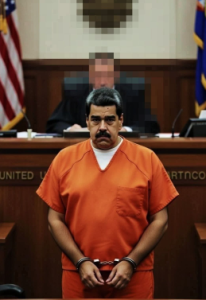
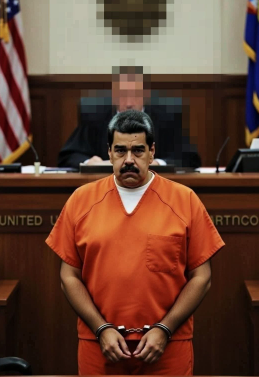
Maduro’s first public appearance in a U.S. courtroom occurred shortly after his capture, where he pleaded innocent to the charges, maintaining his long-standing denial of wrongdoing. Wearing a blue prison uniform, he asserted his innocence and tried to portray himself as a legitimate statesman wrongly targeted by foreign powers.
The operation unfolded with remarkable speed and secrecy, leaving Venezuelan institutions in disarray and raising urgent questions about sovereignty, law, and the future of governance in the oil-rich nation.
🌍 International Reactions: Division and Diplomacy
The world’s reaction has been deeply polarized:
United States & Supporters:
The U.S. government framed the capture as a necessary enforcement of international law and a crackdown on transnational narcotics trafficking. Top U.S. officials have signaled intentions to help stabilize Venezuela and support democratic institutions, though they’ve been vague about the precise mechanisms.
Critics & Opponents:
Several foreign powers, particularly Russia, condemned the intervention as a blatant violation of international norms, calling it a “theft” that undermines established diplomatic principles. High-level Russian officials warned that such actions could irreparably damage global stability and likened the move to an act of war.
Other nations, particularly in Latin America, have expressed a mixture of concern and cautious optimism — some lamenting that external intervention risks setting a dangerous precedent, while others see Maduro’s removal as a possible turning point after years of authoritarian rule and economic collapse.
👍 Mixed Reactions in Venezuela
Inside Venezuela and among the diaspora, reactions have varied widely:
-
Celebration and Hope: Many Venezuelans — especially those who fled economic crisis, hyperinflation, and political repression — have expressed joy and hope that Maduro’s removal could signal a new era for their country. Public celebrations erupted in cities both inside Venezuela and among Venezuelan communities abroad.
-
Uncertainty and Fear: At the same time, many Venezuelans remain cautious. For millions still inside the country, the political and economic landscape has been deeply unstable for years, and the sudden power vacuum has stoked fears of further chaos, reprisals, or military crackdowns by remaining loyalist elements.
🇻🇪 What Happened to Maduro’s Inner Circle?
Although Maduro himself has been removed, key figures from his administration and political apparatus still hold positions within Venezuela. Loyalists in the military and government institutions control strategic sectors, potentially complicating efforts to install a new, stable leadership.
The interim governing authorities in Caracas — led by acting president Delcy Rodríguez — have already begun reshaping the government. For example, Rodríguez recently removed Alex Saab, a Colombian businessman and longtime Maduro ally, from his cabinet post and merged his ministry into another portfolio led by a different official.
Meanwhile, Colombia has formally requested Maduro’s extradition from the United States to face broader charges tied to alleged crimes against humanity, including the repression of political opponents. This request underscores the growing international legal entanglements around Maduro’s removal.
⚖️ Legal Battles and Global Scrutiny
Maduro’s transfer to the U.S. and subsequent legal proceedings have sparked heated debate in international law circles. Critics argue the operation violated Venezuela’s sovereignty and international norms, pointing to UN principles that one nation cannot enforce its laws on another’s territory without consent. Supporters counter that extreme levels of corruption, human rights abuses, and illicit activity justified an extraordinary response.
The legal battles ahead — both in U.S. courts and in possible extradition proceedings with Argentina and other nations — will likely unfold over months or years.
🛢️ Economic and Energy Implications
Venezuela’s vast oil resources have been at the center of global geopolitical calculations for years. Under Maduro, oil production plummeted due to mismanagement and sanctions, exacerbating economic collapse. With Maduro’s removal, energy markets — already volatile — are paying close attention to who controls Venezuela’s oil infrastructure and how quickly production could rebound.
In some quarters, there are fears the situation might lead to increased competition among global powers — including China, which had deep economic ties with Venezuelan oil under Maduro, and the U.S., which could see this as an opportunity to reshape energy flows in the region.
🇻🇪 Political Reforms and the Road Ahead
Acting leadership in Venezuela has already embarked on a series of reforms:
-
Amnesty Measures: The interim government has announced sweeping amnesty initiatives aimed at releasing political prisoners and fostering national reconciliation after years of repression.
-
Easing Sanctions: Some U.S. sanctions on Venezuelan oil have been reviewed or eased in an effort to stabilize the economy, though these moves are fraught with political controversy.
However, deep structural challenges remain. Inflation, power shortages, food insecurity, and institutional distrust have plagued the nation for years, and progress will depend on broad cooperation from both domestic stakeholders and the international community.
🌐 Why This Matters
This is more than a change of government in one country. It is a geopolitical earthquake with far-reaching consequences:
-
It raises fundamental questions about sovereignty, intervention, and international law.
-
It alters the balance of power in Latin America.
-
It affects global energy markets.
-
It reshapes U.S. foreign policy strategy in the Western Hemisphere.
-
It influences how authoritarian regimes are challenged or upheld worldwide.
Whether this marks the beginning of a stable democratic transition in Venezuela or a new chapter of instability remains to be seen. What is certain is that the world will be watching every development closely in the coming months.