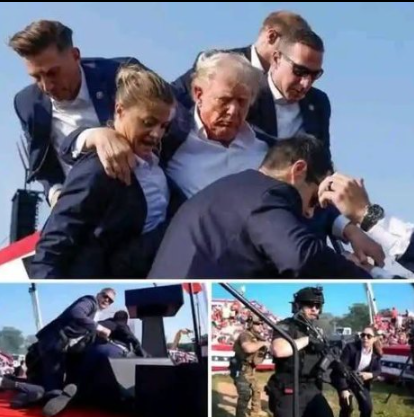
📌 Summary: No Verified Shooting Happened
As of today, no reputable news outlet has reported that President Donald Trump was shot while exiting the White House. There are no official statements from the White House, Secret Service, FBI, Reuters, AP, BBC, or similar major organizations confirming any such incident. That absence of authoritative reporting is a strong indicator that the social media posts or videos claiming this are false or unverified rumors.
False viral claims about public figures — especially dramatic ones involving violence — are extremely common online and can spread faster than real news because of how social platforms amplify sensational content.
🧠 What Actually Happens When a President Is Shot
If a sitting U.S. president were shot or seriously injured, here’s what reliably happens:
-
Immediate official statement: The White House Press Office and the Secret Service would issue urgent alerts.
-
Live breaking news coverage: Major TV networks and wire services (BBC, AP, Reuters, CNN, NYT, etc.) would interrupt regular programming with confirmed updates.
-
Recorded official footage and documentation almost always follow, from press briefings to medical and security details.
There’s no evidence of these steps occurring in the past few hours related to Trump. That strongly contradicts claims that he was shot “20 minutes ago.”
📍 Why This Rumor Is Likely Misinformation
🔹 Viral Sensationalism
On social media — especially on short-form video platforms — users sometimes take old footage, remix it, or add dramatic captions to generate views. Headlines like “Trump shot again!” are effective at grabbing attention, but they’re not reliable evidence.
Misinformation often exploits existing fears or narratives. Claims about a president being attacked are among the most inflammatory and viral categories online.
🔹 Mixing Old Events with New Rumors
There have been real incidents involving Trump and gunfire — but none recently:
-
In July 2024, there was an attempted assassination at a campaign rally in Pennsylvania. Shots were fired; one person was killed, others were wounded, and Trump was grazed on the ear. It was verified by multiple news outlets and investigated by the FBI.
-
Other conspiracy theories and false deaths or shootings have circulated previously only to be debunked by reliable journalists.
These real past events get repurposed in misleading clips to make new, false claims look credible.
🔹 False Claims Spread Quickly
Research shows that inaccurate or unverified claims about Trump shootings after the 2024 rally were shared hundreds of millions of times on social media platforms even when they were demonstrably false or uncertain.
Platforms like X and TikTok mix real clips with user captions — and many users share dramatic claims without checking facts. This is especially true around political events or high tensions.
🧪 What Independent Fact-Checks and Experts Say
Fact-checking organizations and reliable outlets regularly debunk claims similar to this one:
-
False claims about staged shootings, deaths, or presidential injury are common after dramatic viral posts. When real events happen, the evidence is documented by major outlets.
-
In the 2024 rally shooting, authorities recovered weapons and evidence. They did not describe staging or misreporting.
-
Rumors about conspiracies (e.g., deep state, inside jobs, hidden motivations) have no evidence and are widely disputed by professional fact-checkers.
📊 Why People Believe These Claims
There are several psychological and social reasons why unverified or false posts gain traction:
• Emotional impact
Claims involving violence or threat to leaders trigger strong emotional reactions — fear, anger, shock — which motivate shares.
• Confirmation bias
People may already distrust certain institutions or political figures, so they’re more likely to accept or spread claims that fit their beliefs.
• Algorithm dynamics
Social media algorithms reward content that generates engagement (likes, comments, shares), not accuracy. Misleading content often gets amplified because it provokes stronger engagement than plain facts.
• Lack of context
Short clips or screenshots lack broader context — such as date, location, source verification — making it easy to misinterpret old or unrelated content as new.
🧾 What Has Happened Recently (Legitimate News)
While Trump has not been shot, there are major political and crisis developments connected to violence and federal policy that are happening now:
🔹 National Controversy Over Federal Shooting in Minneapolis
A 37-year-old nurse, Alex Pretti, was fatally shot by federal agents in Minneapolis during a protest tied to immigration policy. The video and facts are disputed, and the case has sparked nationwide debate and protests.
Both Republican and Democratic lawmakers are demanding transparency and investigations into the conduct of federal agents in that incident.
This real, high-profile event may be contributing to heightened tensions and the spread of sensational claims about violence in D.C.
🔹 Other National Security and Political Issues
Meanwhile, Trump is pushing ahead on policy topics — for example, a planned White House ballroom construction project has become controversial.
These topics illustrate that politics is heated, and rhetoric about violence or threats can spread quickly even when not grounded in fact.
🧭 How to Verify Claims Like This Yourself
If you see a dramatic claim like “President shot again,” here’s how to check:
-
Look for coverage from major news agencies (Reuters, AP, BBC, NYT). If they aren’t reporting it, the claim is almost certainly false.
-
Check official statements from the White House or Secret Service.
-
Use fact-checking sites like PolitiFact and Snopes for analysis of viral posts.
-
Be wary of social clips lacking source information, dates, or clear context.
If you want, I can help you find the latest credible news links on Trump and D.C. developments right now.
📌 Bottom Line
🚫 There is no verified evidence that President Donald Trump was shot while exiting the White House 20 minutes ago.
📉 The viral claim is almost certainly misinformation or rumor circulating on social media.
📢 Such claims spread quickly but can be checked against reliable news sources and official statements.