🧭 1. What’s Happening in the South China Sea?
The South China Sea is one of the world’s most strategically important maritime regions — major shipping routes, rich fishing grounds, and potentially huge undersea energy deposits. Several countries have overlapping claims, including China, the Philippines, Vietnam, Malaysia, Brunei and Taiwan.
China claims nearly the whole sea through a so-called “nine-dash line,” a claim rejected by an international tribunal in 2016 — a ruling Beijing refuses to accept.
Because of these disputes:
-
The U.S. Navy conducts Freedom of Navigation Operations (FONOPs) to challenge what it calls excessive maritime claims.
-
China’s navy and coast guard aggressively enforce what Beijing says are sovereign waters.
This tense mix — competing claims + regular military patrols — produces close calls and high-risk encounters.
🚢 2. Recent High-Profile Incident: USS Higgins and Scarborough Shoal
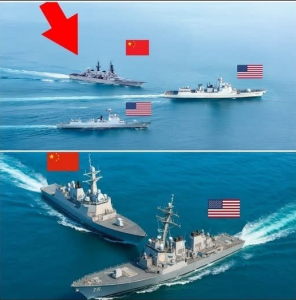
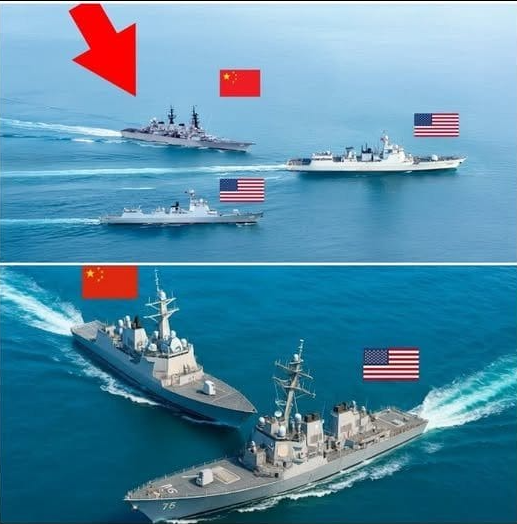
In August 2025, the U.S. Navy’s guided-missile destroyer USS Higgins (DDG-76) sailed near Scarborough Shoal — a contested atoll claimed by China but inside the Philippines’ exclusive economic zone.
China’s military claimed its forces expelled the Higgins from the area, calling the U.S. move a violation of Chinese sovereignty. The U.S. Navy strongly denied this, saying the operation was legitimate under international law and that the Higgins continued routine operations — even after China’s statement.
Key point:
This was not a battle — no shots fired, no ships sunk — but a diplomatic and military standoff reflecting deeper tensions.
⚠️ 3. The “Collision Incident” That Fueled Tension
Also in August 2025, not directly involving U.S. ships, there was a collision between Chinese Coast Guard and People’s Liberation Army Navy (PLAN) vessels near Scarborough Shoal while they chased a Philippine Coast Guard patrol boat.
Here’s what we know:
-
A China Coast Guard cutter (“3104”) collided with a PLA Navy destroyer (“Guilin”).
-
The Chinese Coast Guard ship was severely damaged and rendered unseaworthy.
-
Philippine sources claimed there were casualties on the Chinese side.
Although dramatic footage circulated on social media, this was not a direct U.S.–China naval battle — more a regional confrontation that contributes to overall tension.
📈 4. Why Narratives Like “Brutal Lesson” Arise
Third-party videos and social media often blend real events with speculation, using titles like “China learns a brutal lesson” to attract attention. These videos typically:
✔ Mix official events (FONOPs, collisions) with
✖ Dramatic, exaggerated language or unverified claims.
The U.S. Navy did not defeat China in combat; rather, U.S. operations continue as they have for years — assertively but largely without conventional warfare. You should treat dramatic video headlines as interpretive commentary, not official military reporting.
🗣 5. Statements and Rhetoric
China regularly accuses the United States of violating its claimed territorial rights and “undermining peace and stability,” while the U.S. says it is defending international law and navigational freedoms recognized by treaties and customs.
This gives rise to heated rhetoric — but rhetoric is not the same as combat.
🌏 6. Broader Geopolitical Context
This isn’t an isolated issue; it’s part of a broader set of tensions between China and the U.S. that include:
🌊 Freedom of Navigation vs. Sovereignty Claims
The U.S. pushes for free passage in international waters, while China seeks to enforce limits based on its claims. (Scarborough Shoal is a flashpoint.)
🛥 Close Military Encounters
There have been other “unsafe interactions” between U.S. and Chinese warships over the years, including close-proximity passes requiring evasive action.
✈️ Airspace Close Calls
Tensions also extend to airspace, such as Chinese helicopters flying very close to Philippine aircraft over contested waters.
📡 Electronic Warfare and Strategic Competition
Independent defense analysts report China has been developing expanded electronic warfare capabilities that could challenge U.S. sensors and communications in the region — though public confirmation remains limited and some evidence is circumstantial.
📜 7. Legal and Military Framework
Under international law (UNCLOS), countries have:
-
Territorial seas extending up to 12 nautical miles from coastlines/features.
-
Exclusive economic zones (EEZs) up to 200 nautical miles where a coastal state has resource rights.
The U.S. does not recognize China’s “nine-dash line” claims, and routinely patrols to assert that freedom of navigation applies to all nations. China insists such patrols undermine its sovereignty claims.
🧠 8. Strategic Implications — What This Does Mean
📍 Increased Regional Risks
Frequent patrols, close maneuvers, and aggressive tactics from all sides increase the risk of accidental clashes that could escalate. But as of now:
✔ No open naval battle has occurred between the U.S. and China.
✔ No formal declaration of war exists between the two.
✔ Most confrontations are peaceful assertions of presence, not armed conflicts.
🔍 9. Why It Feels Like a Clash
Several factors amplify perceptions of conflict:
📌 Media Amplification
Headlines like “brutal lesson” or “battle in the South China Sea” can exaggerate routine military postures to grab attention.
📌 Historical Analogies
People often compare today’s tensions to past great-power clashes — but current events are mostly diplomatic/military signaling, not full-scale war.
📌 Social Media Impact
Short videos and clips without context can distort the scale and meaning of events.
🛡 10. Bottom Line
📍 Yes — U.S. Navy and Chinese forces have been in tense standoffs in the South China Sea.
🚫 No — there has been no confirmed full-scale naval battle or defeat of China by the U.S. Navy.
📊 No — this does not mean war has begun.
⚠️ Yes — regional tensions are high, and even routine patrols carry risk.
The incidents — like freedom-of-navigation operations and collisions between Chinese government vessels — happen within a broader pattern of contestation over territorial claims and maritime control. These are strategic and political confrontations, not open warfare.