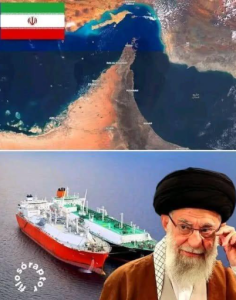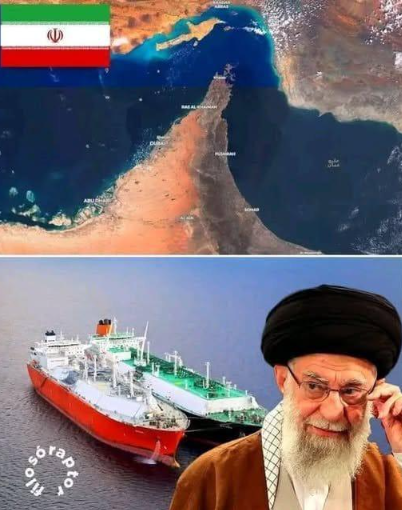
🇮🇷 What Happened: Parliament Vote to Close the Strait of Hormuz
On June 22, 2025, the Iranian Parliament (Majlis) voted in favor of a motion calling for the closure of the Strait of Hormuz, a narrow but strategically vital waterway through which a substantial portion of the world’s energy supplies transit. The vote was widely reported by international and regional news services.
Lawmakers framed this move as a retaliatory response to recent United States airstrikes on Iranian nuclear facilities, which Tehran described as acts of aggression. According to Iranian state media, the motion was passed overwhelmingly in the Majlis.
However — and this is crucial — the parliament’s vote itself does not automatically close the Strait of Hormuz. Under Iranian law, that authority lies with higher bodies: specifically the Supreme National Security Council (SNSC) and the Supreme Leader, Ayatollah Ali Khamenei. Parliament’s decision functions as a recommendation or expression of political intent, not an immediate action.
🌍 Why the Strait of Hormuz Matters
The Strait of Hormuz is one of the world’s most important maritime chokepoints. It links the Persian Gulf with the Gulf of Oman and the Arabian Sea. Due to its narrow width — roughly 33 kilometers (21 miles) at its narrowest point — and designated shipping lanes, it is sensitive to geopolitical tensions.
Critically, about 20 % of global oil supply and a significant portion of liquefied natural gas (LNG) passes through the strait every day. Blocking or significantly disrupting traffic through Hormuz would have immediate effects on energy markets, global trade, and financial markets.
That’s why even the threat or suggestion of closure sends shockwaves through markets: traders, energy producers, and governments pay close attention because any interruption could drive prices up quickly and contribute to global inflationary pressures.
💡 What the Vote Does
-
Political Signal: It demonstrates a hardline stance by Iran’s conservative-dominated parliament amid heightened tensions with the United States and its regional allies.
-
Domestic Politics: The action boosts the rhetoric of resistance against Western actions inside Iran, consolidating internal political support among nationalist and hardline factions.
-
Proxy Pressure: By escalating the rhetoric around Hormuz, Tehran potentially increases leverage in diplomatic negotiations, although it stops short of concrete military action.
❌ What the Vote Doesn’t Do (Yet)
-
It does not automatically close the Strait of Hormuz. Only the Supreme National Security Council and the Supreme Leader can authorize such a measure.
-
There has been no confirmed military operation or mine-laying that has physically closed the strait since the vote. Shipping continues to move through the passage as of this writing.
In short, it is a political escalation, not an immediate physical blockade.
📊 Market and Economic Impact
Even the suggestion of closing the strait reverberates through global markets:
Oil prices:
When tensions in the Gulf rise, oil prices typically spike. In past months when the Iran-Israel conflict escalated, oil futures surged by double digits percentage points before settling back once outright closure looked less likely.
Shipping and freight:
Shipping companies and insurers react to perceived risk by raising premiums and sometimes rerouting vessels away from the Gulf. This increases costs for global trade and particularly for energy shipments from the Middle East.
Global economy:
Large interruptions in Hormuz could squeeze global supply, hurting economies that depend on cheap energy imports — from Asia to Europe to North America. Even fear of disruption contributes to volatility in stock and commodity markets.
🧠 Strategic Realities: Would Iran Actually Close It?
Even though parliament backed the idea, most analysts and observers remain skeptical about a complete closure for several reasons:
-
Iran’s own dependence: Iran exports much of its oil via the very strait it might close. Blocking it would hurt Tehran’s own export revenue.
-
Military risk: A full closure by force (e.g., mines or direct attacks on shipping) would likely provoke a strong naval response from the United States and its allies already operating in the region.
-
Economic self-harm: Beyond lost oil exports, such a move could isolate Iran economically and diplomatically, undercutting its relations with energy-importing nations and trading partners.
For these reasons, experts generally view a complete closure without diplomatic negotiation and security guarantees as unlikely. However, Iran could choose to make maritime traffic more risky through military posturing, harassment of commercial vessels, or limited interdictions.
🪖 How Iran Could Implement a Closure
Should Tehran decide to try to enforce a closure, it could do so in several ways — all of which have significant consequences:
-
Mine deployment across the strait to block or threaten vessels.
-
Naval patrols or interdictions targeting specific flag states or types of shipments.
-
Threats and tactical escalations that make insurers label the waters “high risk,” effectively reducing commercial traffic.
During the 1980s Iran-Iraq War, both sides attacked shipping in and near the Strait of Hormuz in what was called the “Tanker War,” showing how vulnerable the region can be once hostilities extend to commercial routes.
📌 International Responses So Far
-
United States: Publicly and privately warns that closing Hormuz would cross a “red line” and could trigger serious military consequences — emphasizing that the U.S. and NATO navies maintain a significant presence to keep sea lanes open.
-
Regional Gulf States: Saudi Arabia, UAE, and others depend on Hormuz for their oil exports and have strong incentives to keep it open, possibly encouraging diplomatic de-escalation.
-
Energy consumers (Asia & Europe): Tokyo, Beijing, New Delhi, and European capitals monitor developments closely, balancing energy security with geopolitical stability.
While there has been intense attention around this vote, no major naval blockade has occurred yet.
🧭 Bottom Line: What This Vote Represents
The Iranian parliament’s vote to approve closing the Strait of Hormuz is a significant political escalation that reflects rising regional tensions and Tehran’s desire to push back against perceived foreign aggression.
However:
-
It is not an automatic action that shuts down global oil routes.
-
The final decision lies with Iran’s Supreme National Security Council and Supreme Leader.
-
Even the threat of closure can disrupt markets and force recalibration of global energy strategies.
In essence, the vote raises the stakes in the Middle East—not necessarily by shutting down trade, but by highlighting just how precarious energy security can be in times of geopolitical conflict