A 9.1 Magnitude Earthquake Also Caused a Tsunami in the City of… Japan: The Day the Sea Rose
On March 11, 2011, the world watched in shock as one of the most powerful earthquakes ever recorded struck off the coast of Japan. Measuring 9.1 on the moment magnitude scale, the quake didn’t just shake the earth—it moved the ocean. What followed was a devastating tsunami that tore through coastal cities, reshaped landscapes, and forever changed millions of lives.
This was not just a natural disaster.
It was a moment when the power of the planet became impossible to ignore.
The Earthquake That Moved a Nation
The earthquake occurred at 2:46 p.m. local time, about 70 kilometers (43 miles) east of the Oshika Peninsula in northeastern Japan. The shaking lasted for six long minutes—an eternity when the ground beneath you won’t stop moving.
Buildings swayed.
Highways cracked.
Power lines snapped.
People ran for cover.
Japan is one of the most earthquake-prepared countries in the world. Skyscrapers are built to flex. Emergency alerts are automated. Drills are common. And still, this quake was so powerful that even the best preparation could only do so much.
The quake shifted the Earth’s axis slightly. It shortened the length of a day. That’s how massive it was.
But the real catastrophe came next.
When the Ocean Turned Against the Land
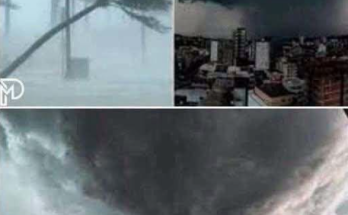
Within minutes of the earthquake, the ocean began to rise.
The seafloor had been violently lifted during the quake, displacing an enormous volume of water. That energy raced outward in all directions at jet-like speeds. When it reached the Japanese coast, it had nowhere to go but up and in.
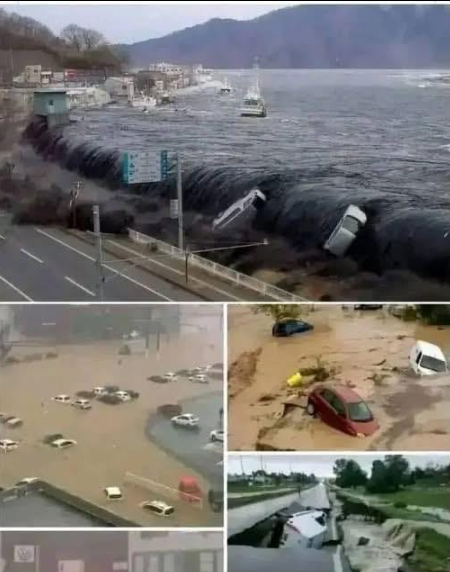
Walls of water—some over 40 feet (12 meters) high—slammed into coastal towns.
Cities like Sendai, Rikuzentakata, Kesennuma, and Minamisanriku were hit hardest.
The tsunami didn’t just flood these places.
It erased them.
A City Swallowed in Minutes
In Sendai, one of the largest cities in the region, the tsunami surged inland for miles. Cars, buses, trucks, and entire houses were lifted and smashed together. Fires broke out as gas lines ruptured. Boats were tossed onto rooftops. Airports turned into lakes.
In Rikuzentakata, almost 70% of the town was destroyed. Out of 8,000 buildings, fewer than 2,000 were left standing. A famous pine forest that had stood for centuries was reduced to a single tree.
That lone tree later became a symbol of survival.
The Human Cost
The numbers are staggering:
• Over 15,000 people killed
• More than 2,500 missing
• Over 6,000 injured
• Hundreds of thousands displaced
Families were torn apart in minutes. People ran to higher ground while watching the sea swallow everything they knew. Some escaped by seconds. Others didn’t.
In many places, the tsunami arrived so fast that there was barely time to react.
The Nuclear Crisis That Followed
As if the earthquake and tsunami weren’t enough, another disaster unfolded.
The waves hit the Fukushima Daiichi Nuclear Power Plant, knocking out its power systems and cooling mechanisms. Without cooling, reactors overheated. Hydrogen explosions tore through buildings. Radioactive material leaked into the air and sea.
Entire towns around Fukushima were evacuated. Some remain uninhabitable to this day.
The disaster became a triple catastrophe:
• Earthquake
• Tsunami
• Nuclear meltdown
No single event like it had ever happened before.
Why This Tsunami Was So Destructive
Several factors made the tsunami especially deadly:
-
The size of the quake – 9.1 is among the largest ever recorded
-
The shallow depth – It displaced huge volumes of water
-
Coastal geography – Funnel-shaped bays amplified wave height
-
Population density – Many towns were built close to the sea
Even with seawalls and warning systems, the sheer energy of the water overwhelmed defenses.
The Power of Preparedness — and Its Limits
Japan’s emergency systems saved countless lives. Alerts went out within seconds. Trains stopped automatically. Many people knew to run uphill when the shaking stopped.
But this disaster proved a painful truth:
👉 Even the best preparation can’t stop nature. It can only reduce the damage.
Still, those systems meant the difference between tens of thousands dead… and hundreds of thousands.
The Long Road to Recovery
After the waters receded, the real work began.
Mud covered everything.
Debris piled meters high.
Entire towns had to be rebuilt from scratch.
Japan spent hundreds of billions of dollars on recovery and reconstruction. New seawalls were built. Towns were moved to higher ground. Early warning systems were improved. Disaster education became even more central in schools.
But rebuilding homes is easier than rebuilding lives.
For survivors, the trauma remains.
Lessons the World Learned
The 2011 earthquake and tsunami changed global disaster planning.
Countries around the Pacific Ring of Fire re-evaluated their tsunami systems. Coastal cities began asking hard questions about:
• Where we build
• How we warn
• How fast we respond
• How well we educate
Because the ocean doesn’t care about borders.
What happened in Japan could happen elsewhere.
A Reminder Written in Water
“A 9.1 magnitude earthquake also caused a tsunami in the city of…” is more than a headline.
It’s a warning.
It reminds us that beneath our cities, beneath our oceans, beneath our daily routines, the Earth is always moving. Quietly storing energy. Waiting.
And when it releases it, the world changes in minutes.
Final Thought
The 2011 Japan earthquake and tsunami showed the world two things at once:
• How terrifying nature’s power can be
• How resilient humans can be in response
Out of rubble came rebuilding.
Out of grief came unity.
Out of loss came resolve.