The Real Purpose of Those Mysterious Lines on Towels
If you’ve ever unfolded a brand-new towel and noticed a neat band of woven lines running across it, you’re not alone in wondering what they’re for. They don’t seem decorative enough to be just for looks, and they’re too precisely placed to be random. These “mysterious lines” — sometimes called dobby borders — actually serve several important purposes that combine practicality, durability, and even a bit of manufacturing science. Let’s dive into what those lines really do and why almost every quality towel has them.
1. First, What Are They?
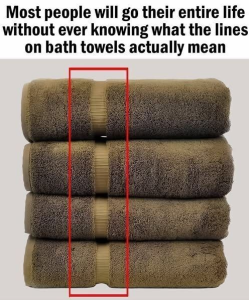
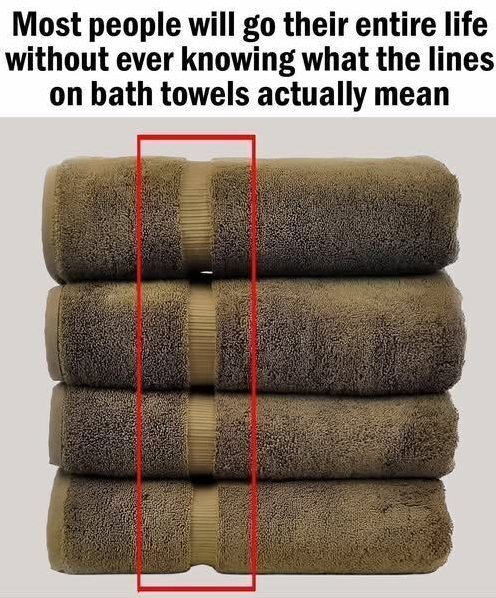
The lines you see on towels are usually a dobby border or woven band. They’re made using a different weaving technique than the rest of the towel. While the main body of a towel uses looped threads (called terry cloth) to create that soft, fluffy surface, the border uses a tighter, flatter weave.
That contrast — fluffy loops in the middle, flat woven lines near the ends — is intentional and very functional.
2. They Help the Towel Keep Its Shape
One of the biggest enemies of a towel is repeated washing and drying. Heat, water, and spinning stretch and tug at the fabric. Over time, that can cause a towel to warp, curl at the edges, or lose its rectangular shape.
The woven border acts like a structural anchor.
Because the border is tightly woven and less stretchy than terry loops, it helps:
-
Prevent the towel from twisting out of shape
-
Keep the edges from curling
-
Maintain a clean, straight look over time
Think of it like the reinforced edge on a piece of paper or fabric — it gives the towel a strong “frame.”
3. They Reduce Fraying and Unraveling
Terry cloth is made of loops. Those loops are wonderful for absorbing water, but they’re also more vulnerable to snagging and pulling. When loops unravel near the edges, the towel can start to fray.
The dobby border uses a flat weave with no loops, which:
-
Strengthens the ends of the towel
-
Reduces the chance of loose threads and fraying
-
Helps the towel survive many more wash cycles
So the mysterious lines are partly there to protect your towel from slowly falling apart.
4. They Make Towels Easier to Fold and Hang
Ever notice how towels with borders seem to fold more neatly? That’s not an accident.
The border creates a natural fold line. Because it’s flatter and firmer than the fluffy part, it:
-
Helps towels fold evenly
-
Keeps them stacked neatly in a closet or on a shelf
-
Makes them look more organized when hung on a rack
Hotels especially love this feature. Those crisp, uniform towel displays you see in hotel bathrooms are made possible in part by these woven bands.
5. They Improve Absorption Where It Matters Most
This might sound surprising, but the border actually helps the rest of the towel do its job better.
The main body of the towel is designed for maximum absorbency using terry loops. The border, being flat and less absorbent, prevents water from pooling at the very edges. That means:
-
The towel dries more evenly
-
The edges don’t stay damp longer than the rest
-
There’s less chance of musty smells developing
In short, the border helps balance the towel’s moisture behavior.
6. They Make Towels Stronger Without Making Them Stiff
If you made an entire towel out of a super-tight weave, it would be durable — but not very soft. If you made the whole towel out of fluffy loops, it would be soft — but fragile.
The solution? Combine both.
The lines on the towel are part of a smart design compromise:
-
Soft, absorbent terry loops in the middle
-
Strong, stable woven fabric at the ends
That way, the towel feels luxurious where it touches your skin but stays tough where it needs reinforcement.
7. They Help During Manufacturing
Those lines also play a role long before the towel reaches your bathroom.
During production:
-
The border helps guide cutting and sizing
-
It gives machines a reference point for consistent towel length
-
It improves quality control by making defects easier to spot
So those lines aren’t just for you — they help factories produce millions of identical, reliable towels.
8. They Add a Touch of Design Without Extra Bulk
Yes, there’s also a style element. But not just for looks — for visual balance.
The woven band:
-
Breaks up the large field of fluffy fabric
-
Adds subtle elegance
-
Makes the towel look finished rather than plain
Designers can change the pattern, width, and texture of the border to give towels a distinct identity without sacrificing function.
9. Why Don’t All Towels Look the Same?
Not all towels have identical lines. That’s because:
-
Some use multiple borders
-
Some use decorative patterns
-
Some use extra-wide dobby bands
Higher-quality towels often have thicker, more carefully woven borders. Cheap towels may skip them or use very thin versions — which is one reason budget towels lose their shape faster.
10. So… What’s the Real Purpose?
Those mysterious lines aren’t decoration for decoration’s sake. They are:
✔ Structural reinforcement
✔ Anti-fray protection
✔ Shape retention
✔ Folding and hanging support
✔ Moisture management
✔ Manufacturing guidance
✔ Subtle design enhancement
In other words, they’re one of those quiet, everyday design features that do a lot of work without ever asking for attention.
Final Thought
Next time you pick up a towel, take a second look at those woven lines. They’re not random. They’re a clever blend of engineering, textile science, and design — all working together to make sure your towel stays soft, strong, and usable for years.