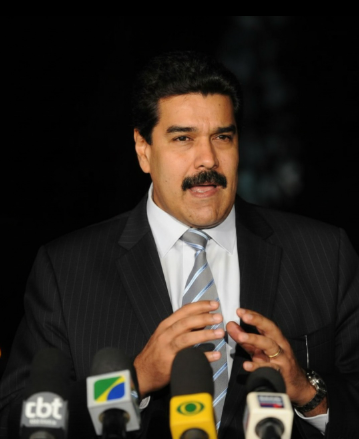
🇻🇪 1) What Happened to Nicolás Maduro — Arrest & Transfer to the U.S.
Earlier this month, Venezuelan President Nicolás Maduro — long accused by the United States of corruption, narcotics trafficking and anti-democratic repression — was captured by U.S. forces in Caracas in a military operation described by the Trump administration as Operation Absolute Resolve. Maduro and his wife, Cilia Flores, were rapidly flown to the United States where they now face federal charges in New York.
In his first court appearance in Manhattan, Maduro pleaded not guilty to charges that include narco-terrorism conspiracy and cocaine importation, rejecting the legitimacy of his detention. He has told the U.S. court he was “kidnapped” and continues to claim he is the legitimate president of Venezuela.
A U.S. federal judge recently blocked a lawyer’s attempt to join Maduro’s defense team because the attorney did not have direct authorization from his client, underlining ongoing legal struggles surrounding his representation.
Despite his transfer to U.S. custody, Maduro’s legal ordeal has only just begun: prosecutors are advancing a sprawling indictment alleging deep ties to international drug smuggling networks.
🏛️ 2) Venezuela’s Supreme Court & Political Continuity
While Maduro has been detained abroad, Venezuela’s Supreme Tribunal of Justice (TSJ) — historically aligned with Maduro’s government — acted swiftly. The court appointed Vice President Delcy Rodríguez as acting president to ensure state continuity. Rodríguez had already been designated interim leader by the TSJ immediately after the capture of Maduro and formally assumed the role days later.
Rodríguez has declared that Venezuela will continue its domestic governance according to the constitution and has sought to maintain legitimacy among Venezuelans and abroad. She has also set up a special commission aimed at seeking Maduro’s release — an effort to negotiate his freedom amid complex geopolitical pressure.
While Rodríguez has support from key political figures and parts of the Venezuelan establishment, her authority remains contested — especially by opposition leaders and some segments of the population who view U.S. involvement as a violation of sovereignty.
🧠 3) International & Domestic Reactions: Law, Sovereignty & Criticism
U.S. Government
The Trump administration framed the operation and Maduro’s detention as a law enforcement action against narco-terrorism, with the U.S. Justice Department asserting domestic authority for the capture in a newly released legal memo — despite international law concerns. Critics argue this memo sidesteps key UN Charter principles on the use of force in another sovereign nation’s territory.
Venezuela’s Government
From Caracas, acting President Rodríguez and Maduro loyalists condemned what they describe as an illegal U.S. military intervention, framing their opposition as both legal and patriotic. This rhetoric has helped mobilize nationalist sentiment and complicates diplomatic channels.
Overseas Governments & NGOs
Global reactions have been mixed and polarized:
-
Latin American governments and human rights groups have expressed concern over U.S. military intervention, stressing the need for respect for sovereignty and due process.
-
Some neighboring nations are wary that similar interventions could embolden actions against other regional leaders.
-
Human rights organizations have criticized unclear judicial processes and lack of transparency surrounding detentions and political prisoner counts both before and after Maduro’s arrest.
🕊️ 4) Prisoner Releases — Symbolism and Politics
In a major political development closely linked to Venezuela’s leadership transition, the interim government has released dozens of political prisoners that were detained under Maduro’s rule — many of whom were long-standing opponents of his administration.
Concurrently:
-
Venezuelan authorities and independent observers disagree on the exact number of detainees released — with official claims exceeding 400 freed but NGO estimates far lower, perhaps closer to 60–80 confirmed cases.
-
Among those freed are journalists, opposition figures and multiple detained foreign nationals, including U.S. citizens. The State Department corroborated the release of several Americans, which the U.S. government described as a positive gesture in a tense diplomatic climate.
These releases serve both as a symbolic break from Maduro’s era of repression and as a strategic move to ease international pressure and foster a modicum of stability in Caracas. However, critics caution that many political prisoners remain behind bars and that releases are uneven.
🧑⚖️ 5) Legal and Diplomatic Complexities
Maduro’s legal situation in the U.S. underscores several novel and contentious issues:
-
Jurisdiction: Charging a former head of state, captured in his own country by another state’s military forces, raises questions about sovereignty, international law, and diplomatic immunity.
-
Defense rights: Maduro’s insistence on his retained presidency and characterization of his capture as unlawful puts his defense strategy at odds with conventional U.S. criminal proceedings.
-
Potential appeals and treaties: International human rights and diplomatic norms may influence future hearings, although the immediate legal focus remains on U.S. federal law.
Separately, in Venezuela, the legitimacy of the TSJ’s actions and interim leadership will likely be debated among legal scholars and opposition groups, particularly as the country awaits potential elections and a clearer constitutional roadmap.
🌍 6) What This Means for Venezuela, the Americas, and Global Politics
Geopolitical Ramifications
This unprecedented sequence of events — a U.S. military operation to detain a foreign president for prosecution under U.S. law — has opened a new chapter in American foreign policy. It raises complex questions about the shifting norms of international law, executive power, and hemispheric relations.
Venezuelan Stability
Domestically, Venezuela now stands at a crossroads:
-
Some hope political prisoner releases and the transition of authority signal a move toward reconciliation, governance reform, and eventual free elections.
-
Others fear deep divisions and continued instability, especially if loyalist factions resist the interim government or if diplomatic ties remain strained.
Human Rights and Accountability
For human rights advocates, the unfolding situation spotlights the twin imperatives of justice for abuses and respect for legal norms — both within Venezuela’s long-contested political environment and in how international actors respond to alleged crimes by state leaders.
📅 What’s Next
Maduro’s next U.S. court appearance is scheduled for March 17, 2026, where further procedural and evidentiary matters are expected to be addressed.
Meanwhile:
-
Venezuela’s interim government will likely continue releasing political detainees and striving for international engagement.
-
Diplomatic negotiations over Maduro’s fate, Venezuela’s future elections, and regional stability will be key focal points in coming months.