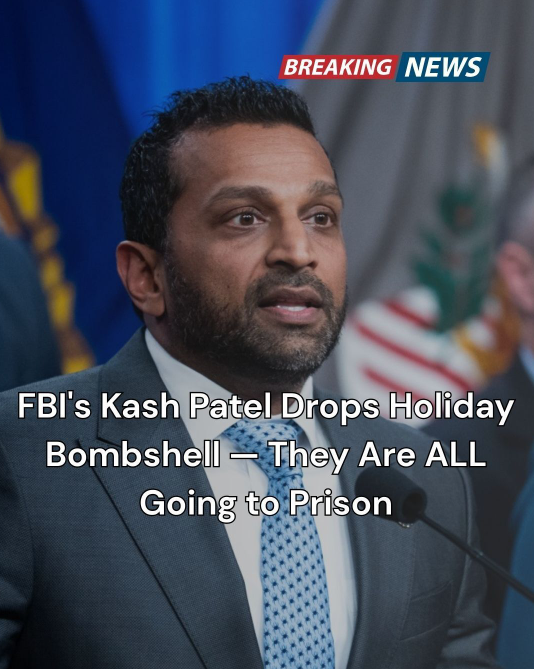
Patel Heaps Praise on FBI Agents Over Uptick in Arrests, Calling It a “Renewed Commitment to Law and Order”
In a moment that surprised many observers across the political spectrum, Patel publicly commended rank-and-file FBI agents following a reported uptick in arrests tied to federal investigations, praising what he described as a renewed commitment to public safety, accountability, and the rule of law. The remarks, delivered amid heightened national debate over federal law enforcement, marked a notable shift in tone and reignited discussion about the evolving role of the FBI in an increasingly polarized era.
Patel’s comments come at a time when the Federal Bureau of Investigation has found itself under intense scrutiny—from lawmakers, media outlets, advocacy groups, and the public alike. Accusations of politicization, concerns about transparency, and questions surrounding leadership have dominated headlines for years. Against that backdrop, Patel’s praise stood out for its emphasis on the agents themselves, rather than the institution’s leadership or political oversight.
“The Work Matters,” Patel Says
According to those familiar with the remarks, Patel highlighted the dedication of frontline FBI agents, crediting them with carrying out their duties “professionally and lawfully” despite intense external pressure.
“This is about the men and women doing the work,” Patel emphasized, underscoring that agents continue to investigate complex cases, pursue fugitives, and dismantle criminal networks regardless of political winds. The uptick in arrests, Patel suggested, reflects not aggression or overreach, but consistency—agents executing warrants, following evidence, and adhering to the law.
By drawing a distinction between institutional leadership and field operations, Patel tapped into a growing narrative that seeks to separate criticism of federal agencies from the individuals who serve within them.
Context: A Contentious Climate for Federal Law Enforcement
The FBI has operated under a microscope in recent years. From high-profile investigations to internal controversies, the bureau has become a focal point in broader debates about justice, accountability, and government power.
In that environment, morale among agents has frequently been questioned. Former and current officials alike have acknowledged the difficulty of maintaining focus while facing public attacks, political accusations, and social media scrutiny.
Patel’s comments appeared to acknowledge those pressures directly, framing the recent increase in arrests as evidence that agents remain committed to their mission despite distractions.
What Does “Uptick in Arrests” Mean?
Importantly, Patel did not attribute the rise in arrests to any single factor or policy change. Instead, the increase was discussed broadly, encompassing a range of federal cases including:
-
Violent crime investigations
-
Financial and fraud-related offenses
-
National security matters
-
Organized crime and trafficking cases
Law enforcement analysts caution that arrest numbers can fluctuate for many reasons, including ongoing investigations reaching completion, coordinated operations, or shifts in enforcement priorities. Patel’s remarks did not suggest a sudden change in law or tactics, but rather pointed to outcomes becoming visible after extended investigative work.
A Strategic Reframing
Observers note that Patel’s praise may signal a strategic reframing rather than a wholesale endorsement of the FBI as an institution. By focusing on agents rather than leadership, Patel aligned himself with a view increasingly common among critics and supporters alike: that frontline personnel should not be conflated with broader political or administrative controversies.
This distinction allows for criticism of policy decisions or leadership structures while still acknowledging the professionalism of individual agents—many of whom have spent decades in federal service.
Reaction From Law Enforcement Circles
Within law enforcement circles, the comments were met with cautious appreciation. Some current and former agents have expressed frustration in recent years at being portrayed as political actors rather than investigators.
For them, Patel’s remarks were seen as validation—an acknowledgment that the work continues even amid controversy. Others, however, stressed that praise must be matched with continued support for clear guidelines, due process, and institutional integrity.
Political Implications
Politically, the comments landed in complex territory. Patel has previously been associated with sharp critiques of federal agencies, making this moment of praise particularly notable. Analysts suggest the remarks may reflect an effort to balance accountability with recognition—an approach aimed at appealing to voters who want both oversight and effective law enforcement.
In a polarized climate, even measured praise can carry political weight.
The Broader Debate: Accountability vs. Support
Patel’s comments reopen a central question facing American law enforcement: how to ensure accountability without undermining the legitimacy of those tasked with enforcing the law.
Supporters argue that praising lawful arrests reinforces public confidence and encourages professionalism. Critics counter that arrest statistics alone should never be the benchmark for success, warning against metrics that could incentivize overreach.
Patel appeared to walk that line carefully, emphasizing legality, restraint, and evidence-based work rather than raw numbers.
Why This Moment Matters
The significance of Patel’s praise lies not only in what was said, but in when it was said. At a time when public trust in institutions remains fragile, rhetoric that acknowledges complexity—rather than painting law enforcement as wholly corrupt or wholly infallible—stands out.
By focusing on agents “doing the job the right way,” Patel inserted nuance into a conversation often dominated by extremes.
Looking Ahead
Whether Patel’s remarks mark a lasting shift in tone or a singular moment remains to be seen. What is clear is that the debate over federal law enforcement is far from settled. Arrest numbers will rise and fall, leadership will change, and political scrutiny will continue.
But for now, Patel’s comments have sparked renewed attention on the individuals behind the badges—agents navigating one of the most challenging periods in modern FBI history.
Final Thoughts
In praising FBI agents amid an uptick in arrests, Patel offered a message that cut through partisan noise: recognition of work done within the bounds of the law matters. Whether one views the FBI with skepticism, support, or a mix of both, the reality remains that federal law enforcement operates at the intersection of justice, politics, and public trust.
How that balance is maintained may define the next chapter—not just for the bureau, but for the national conversation surrounding it.