78-Year-Old Susan Sarandon Criticized for Her Clothing: A Debate About Age, Expression, and Double Standards
Few Hollywood figures embody fearless self-expression quite like Susan Sarandon. Known for her Oscar-winning performances, outspoken activism, and unapologetic authenticity, Sarandon has long defied expectations placed on women in the public eye. Recently, however, the actress found herself at the center of renewed controversy — not for a film role or political statement, but for what she chose to wear.
At 78 years old, Sarandon was criticized across social media and tabloid headlines for appearing in outfits some deemed “too revealing,” “age-inappropriate,” or “attention-seeking.” The backlash reignited a familiar cultural debate: Who gets to decide how women — especially older women — should dress?
The Outfit That Sparked the Conversation
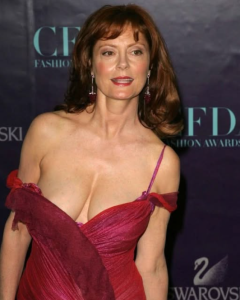
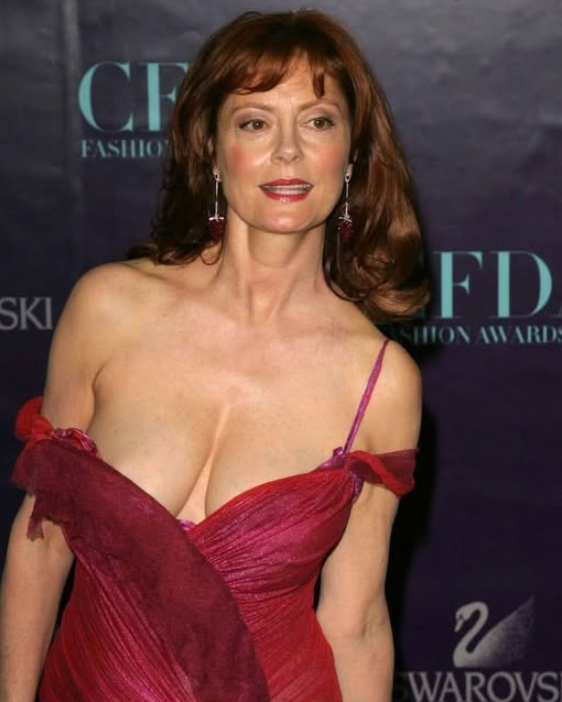
The criticism stemmed from Sarandon’s appearance at public events and in social media photos where she wore form-fitting dresses, low-cut tops, or outfits emphasizing her figure. While similar fashion choices on younger celebrities often pass without comment — or are celebrated — Sarandon’s clothing prompted a wave of remarks questioning her “appropriateness” given her age.
Comments ranged from thinly veiled concern to outright ageism:
-
“She should dress her age.”
-
“Why is she trying to look young?”
-
“This isn’t dignified for a woman her age.”
What these remarks reveal is less about fashion and more about deep-seated discomfort with aging women who refuse to become invisible.
Ageism and the Policing of Women’s Bodies
Criticism of Sarandon’s clothing fits into a broader cultural pattern: women’s bodies are policed at every stage of life. When women are young, they are scrutinized for being “too sexual.” When they age, they are expected to retreat quietly into modesty.
Men, by contrast, are rarely subjected to the same scrutiny. Older male celebrities routinely appear shirtless, wear tight clothing, or embrace youthful styles without public outrage. Their confidence is praised as “aging well” or “distinguished.” For women, the same behavior is often framed as embarrassing or desperate.
Sarandon herself has long spoken about this double standard, once saying that society becomes uncomfortable when women no longer seek approval — especially male approval — yet continue to claim agency over their appearance.
Susan Sarandon’s Long History of Defiance
This is not the first time Sarandon has faced backlash for refusing to conform. Throughout her career, she has challenged norms around sexuality, motherhood, politics, and aging.
From her early roles that redefined female desire to her red-carpet appearances that ignored conventional “rules,” Sarandon has consistently prioritized personal expression over public approval. Her confidence has often unsettled critics precisely because it undermines the idea that women must earn relevance through youth.
Importantly, Sarandon has never framed her fashion choices as an attempt to “look younger.” Instead, she has emphasized comfort, authenticity, and joy — values that resonate with many women who feel constrained by age-based expectations.
The Myth of “Dressing Your Age”
The phrase “dress your age” is often used without reflection. What does it actually mean? There is no universal standard for how a woman should dress at 30, 50, or 78. The idea assumes that age dictates morality, modesty, and visibility — a notion rooted in outdated social norms.
Fashion, at its core, is a form of self-expression. For many women, continuing to dress boldly later in life is an act of resistance against a culture that equates aging with decline. It sends a powerful message: aging does not erase identity, desire, or individuality.
Sarandon’s critics often frame their disapproval as concern or advice, but such commentary reinforces the belief that older women owe society restraint — that confidence becomes arrogance once wrinkles appear.
Supporters Push Back
Alongside the criticism, Sarandon has received overwhelming support from fans, feminists, and fellow creatives. Many praised her for:
-
Embracing her body without apology
-
Challenging ageist beauty standards
-
Modeling self-confidence for women of all generations
Supporters argue that the real issue is not Sarandon’s clothing, but society’s discomfort with older women who remain visible, expressive, and unapologetic.
Social media users pointed out that no one would question a man’s dignity for wearing a tailored suit that highlights his physique at the same age. The outrage, they say, reveals how deeply ageism and sexism are intertwined.
A Broader Cultural Reckoning
This controversy comes at a time when conversations about aging, representation, and beauty are evolving. More women in their 60s, 70s, and beyond are rejecting the idea that they must fade into the background. From fashion campaigns to film roles, older women are demanding visibility — on their own terms.
Susan Sarandon’s situation highlights how society is still catching up to this shift. While progress has been made, reactions like these show that the expectation for older women to “tone it down” remains deeply ingrained.
Why It Matters
This debate matters because it shapes how women perceive their own futures. When older women are shamed for confidence, it sends a message to younger women about what awaits them — a shrinking world of acceptable behavior.
By continuing to live openly and dress as she pleases, Sarandon challenges that narrative. Whether one personally likes her fashion choices is beside the point. The real question is whether women are allowed autonomy over their own bodies at every age.
Conclusion
Susan Sarandon being criticized for her clothing at 78 is not about fashion — it’s about freedom. It’s about who gets to be seen, who gets to feel desirable, and who is allowed to age without apology.
In refusing to conform, Sarandon reminds the world that aging is not a retreat from selfhood, but an expansion of it. And perhaps the discomfort her critics feel says more about society’s unresolved fears of aging than about anything she chose to wear