A 9.1 Magnitude Earthquake Also Caused a Tsunami in the City of Sendai: A Disaster That Shook the World
A 9.1 magnitude earthquake is not just a natural event—it is a force powerful enough to reshape landscapes, rewrite history, and alter the lives of millions in a matter of minutes. One of the most devastating examples of this occurred off the northeastern coast of Japan, when a massive undersea earthquake triggered a catastrophic tsunami that struck the city of Sendai and surrounding regions. What followed became one of the most destructive natural disasters of the 21st century, leaving deep scars on Japan and the world.
The Earthquake That Changed Everything
On March 11, 2011, the earth beneath the Pacific Ocean ruptured violently along the Japan Trench. The quake, measuring 9.1 on the Richter scale, was one of the strongest ever recorded. The epicenter was located approximately 130 kilometers east of Sendai, deep beneath the ocean floor. In seconds, tectonic plates that had been locked together for centuries suddenly shifted, releasing unimaginable energy.
Buildings swayed violently across northeastern Japan. Roads cracked open, power lines collapsed, and entire cities were thrown into chaos. But as terrifying as the earthquake itself was, it was only the beginning.
The Tsunami’s Deadly Arrival
Within minutes of the earthquake, tsunami warnings blared across the region. In Sendai, a coastal city with flat plains stretching inland, residents had little time to react. The sea began to withdraw ominously, exposing the ocean floor—a chilling sign known to precede massive tsunamis.
Then the waves arrived.
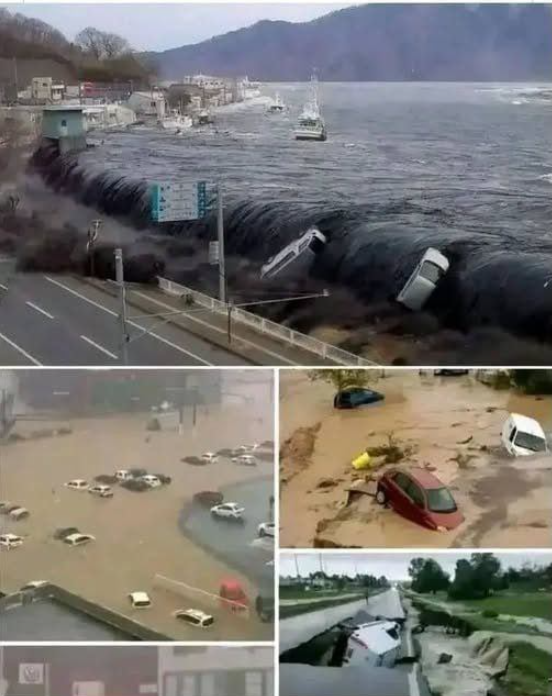
Walls of water, some exceeding 10 meters (33 feet) in height, surged inland at terrifying speed. Cars, homes, ships, and even airplanes at Sendai Airport were swept away like toys. Entire neighborhoods disappeared beneath the water. The tsunami traveled several kilometers inland, overwhelming sea walls and defenses that were thought to be sufficient.
Sendai: A City Overwhelmed
Sendai was among the hardest-hit cities. Its geography—wide coastal plains rather than steep cliffs—made it especially vulnerable. The tsunami did not simply crash against the shore; it poured inward relentlessly, swallowing farmland, residential areas, and industrial zones.
Sendai Airport became one of the most iconic images of the disaster. Floodwaters engulfed the runways as planes, terminal buildings, and vehicles were submerged. Thousands of people were trapped on rooftops, clinging to debris, desperately waiting for rescue.
For many residents, escape was impossible. The speed and power of the tsunami exceeded all expectations, leaving little margin for survival.
Human Cost and Tragic Loss
The earthquake and tsunami claimed more than 18,000 lives, with thousands more injured or missing. Entire families were wiped out. Survivors were left grieving amid ruins, often unsure whether loved ones were alive or gone forever.
In evacuation centers across Sendai, people huddled together in freezing temperatures, lacking food, water, electricity, and information. Despite the devastation, stories of courage and solidarity emerged—neighbors rescuing neighbors, strangers sharing supplies, and volunteers risking their lives to help others.
A Nuclear Crisis Compounds the Disaster
As if the earthquake and tsunami were not enough, the disaster triggered a nuclear emergency at the Fukushima Daiichi Nuclear Power Plant, located south of Sendai. Flooding disabled cooling systems, leading to reactor meltdowns and radioactive releases.
The nuclear crisis forced mass evacuations and sparked global concern over nuclear safety. It transformed a natural disaster into a complex humanitarian, environmental, and technological catastrophe with long-term consequences.
Global Impact and Shockwaves
The effects of the 9.1 magnitude earthquake were felt far beyond Japan. Tsunami waves crossed the Pacific Ocean, reaching Hawaii, the U.S. West Coast, South America, and Southeast Asia. Although the waves weakened over distance, they still caused damage and raised worldwide alarm.
Economically, the disaster disrupted global supply chains, particularly in the automotive and electronics industries. Japan’s infrastructure suffered hundreds of billions of dollars in damage, making it one of the costliest natural disasters in history.
Lessons Learned From the Tragedy
The Sendai tsunami exposed both the strengths and limitations of modern disaster preparedness. Japan’s early warning systems saved countless lives, yet the sheer scale of the event exceeded all predictions.
As a result, Japan and other tsunami-prone nations reevaluated coastal defenses, evacuation planning, and nuclear safety protocols. Sea walls were redesigned, evacuation routes expanded, and emergency communication systems improved.
Most importantly, the disaster reminded the world that even the most advanced technology cannot fully tame nature.
Resilience and Rebuilding
In the years following the catastrophe, Sendai embarked on a long journey of recovery. Entire districts were rebuilt on higher ground. Memorials were erected to honor the victims. Survivors worked tirelessly to restore their communities, carrying forward the memory of what was lost.
Today, Sendai stands as a symbol of resilience—a city that faced unimaginable destruction yet refused to be erased. While the scars remain, so does the determination to prepare, remember, and rebuild.
Final Reflection
A 9.1 magnitude earthquake and the tsunami it caused in Sendai were more than a tragic event—they were a global wake-up call. The disaster highlighted humanity’s vulnerability in the face of nature’s power and the importance of preparedness, cooperation, and compassion.