🚢 The Contested Waters: An Examination of a Recent South China Sea Incident
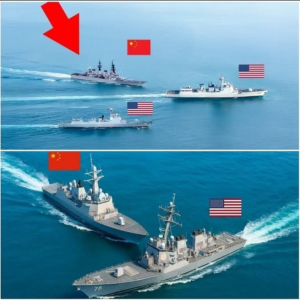
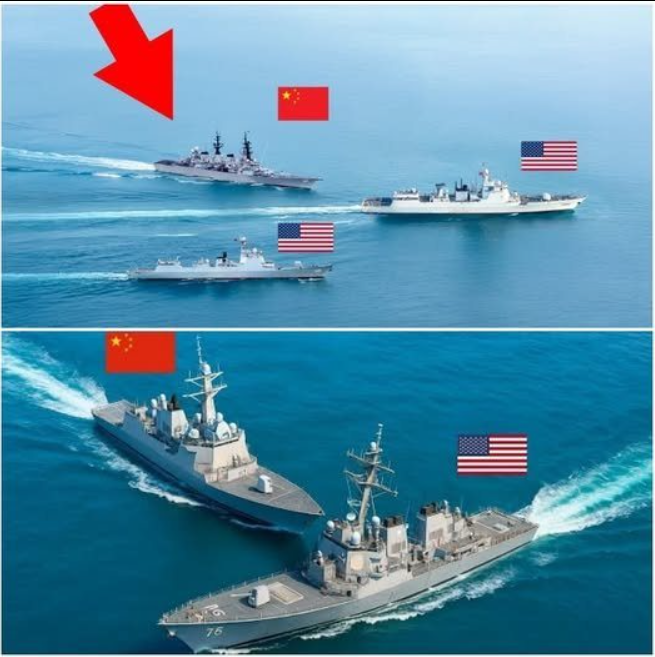
The South China Sea remains one of the world’s most volatile geopolitical flashpoints, a maritime crossroads where global trade routes, vast natural resources, and clashing sovereignty claims create a perpetual state of tension. The assertion that “China challenged the US Navy in the contested waters of Southeast Asia—and learned a brutal lesson” points to a severe, high-stakes encounter that resulted in a public setback for Beijing’s aggressive maritime posture.
While specific, definitive information on a single, decisive incident that fits the narrative of a “brutal lesson” is often elusive, the recent events near the Scarborough Shoal in August 2025 provide the clearest, most publicly documented instance of China’s aggressive tactics backfiring with significant diplomatic and strategic consequence. This event did not involve a direct kinetic clash with the US Navy, but rather an unforced error that highlighted operational incompetence and strategic recklessness, serving as a brutal public lesson to the People’s Liberation Army Navy (PLAN) and China Coast Guard (CCG).
The Unforced Error: Collision at Scarborough Shoal
The incident occurred in early August 2025 as Chinese naval and coast guard assets were engaged in a coordinated effort to block and intimidate a smaller vessel from the Philippine Coast Guard (PCG), the BRP Suluan, which was conducting a routine patrol and resupply mission near the contested Scarborough Shoal. Beijing claims sovereignty over the shoal, which lies well within the Philippines’ Exclusive Economic Zone (EEZ).
In a highly aggressive maneuver designed to box in and deter the Philippine vessel, a China Coast Guard cutter (3104), a former PLAN warship, and a much larger PLAN Type 052D guided-missile destroyer (Guilin, 164) were operating in dangerously close proximity. The situation, however, went dramatically awry.
-
The Miscalculation: As the Chinese vessels attempted to cut off the Philippine ship’s path, the CCG cutter and the PLAN destroyer collided with each other. The footage of the incident, later shared by the Philippine Coast Guard, was stark and unambiguous.
-
The Damage: The collision inflicted substantial damage, particularly to the bow of the CCG cutter, reportedly rendering it “unseaworthy.” The video also showed Chinese personnel on the cutter’s deck scrambling in the moments leading up to the impact, with their fate immediately after the collision remaining unaccounted for in public reports. The larger PLAN destroyer also sustained deep dents.
-
The “Brutal Lesson” Learned: The incident was a profound embarrassment to Beijing. It transformed an intended demonstration of overwhelming, coordinated maritime force into a public spectacle of operational failure. Instead of showcasing seamless joint-service dominance, it revealed significant flaws in coordination and tactical competency between the PLAN and CCG. The “lesson” was not delivered by an adversary’s firepower, but by their own poorly executed aggression and dangerous seamanship. Analysts noted that the incident not only endangered Chinese sailors but, more importantly, exposed a critical gap in professionalism and command-and-control efficiency that runs counter to China’s narrative of a modernized, world-class navy.
The US Response and Strategic Context
While the US Navy was not directly involved in the collision, its subsequent actions reinforced the lesson learned by China. The collision immediately drew the attention of the United States, a treaty ally of the Philippines.
-
Prompt US Deployment: Within days of the collision, the US deployed two warships—the USS Higgins (a guided-missile destroyer) and the USS Cincinnati (a littoral combat ship)—to the vicinity of the Scarborough Shoal. This rapid deployment of high-end naval assets sent a clear, undeniable signal of Washington’s commitment to its ally and the principle of freedom of navigation.
-
Freedom of Navigation Operations (FONOPs): The presence of the US warships underscored their long-standing policy of challenging what it views as China’s unlawful and excessive maritime claims. The US ships sailed in the vicinity, being shadowed by a Chinese navy vessel but without further incident. This act reaffirmed the US commitment to international law in the face of China’s aggressive “grey zone” tactics.
-
Diplomatic and Allied Backlash: The spectacle of the Chinese vessels colliding while harassing a smaller neighbor galvanized international concern. Japan, Australia, and New Zealand publicly condemned China’s dangerous maneuvers. This diplomatic fallout served as a second layer of the “brutal lesson,” isolating China and strengthening the regional coalition opposed to its maritime expansion.
The Broader Strategic Context
The events at Scarborough Shoal are a microcosm of the larger competition in the Indo-Pacific. China’s strategy relies heavily on “grey zone” tactics—coercive actions that fall short of armed conflict—using its vast Coast Guard and Maritime Militia to intimidate neighbors and assert its expansive “ten-dash line” claim over the South China Sea.
The failure at Scarborough Shoal has significant strategic implications:
-
Challenging the Image of PLAN Invincibility: For an authoritarian state like China, maintaining an image of military infallibility and seamless operational control is crucial. The self-inflicted collision publicly shattered this image, providing adversaries and regional partners with evidence of a gap between the size of China’s fleet and the professionalism of its crews.
-
Raising the Stakes for Miscalculation: The incident highlighted how close the region is to a true military crisis. The collision of Chinese vessels demonstrates that their aggressive maneuvers are inherently risky and could, on another day, involve and potentially sink a vessel from the Philippines or a US ally. An armed attack on a Philippine public vessel would, under the existing security treaty, trigger mutual defense obligations with the United States, raising the specter of a major international conflict.
-
Bolstering US Alliances: The incident gave the US an opportunity to showcase its reliability. By swiftly deploying warships and providing unequivocal diplomatic support, the US reinforced the value of its alliance with the Philippines, making it more difficult for Beijing to drive a wedge between the two nations.
In summary, the “brutal lesson” China learned was not a conventional military defeat, but a deeply humiliating operational and political blunder of its own making. It revealed that while Beijing has successfully built a numerically superior navy, its command, control, and seamanship are not yet on par with its global ambitions. By committing an “unforced error” in front of the world, China inadvertently discredited its own narrative, solidified the resolve of the Philippines, and justified the persistent presence of the US Navy, which continues its operations to ensure a free and open Indo-Pacific.