1. Overview: What the Policy Is
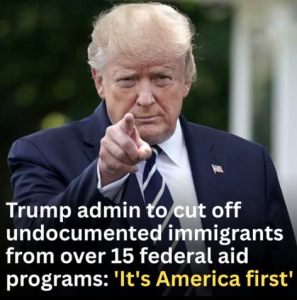
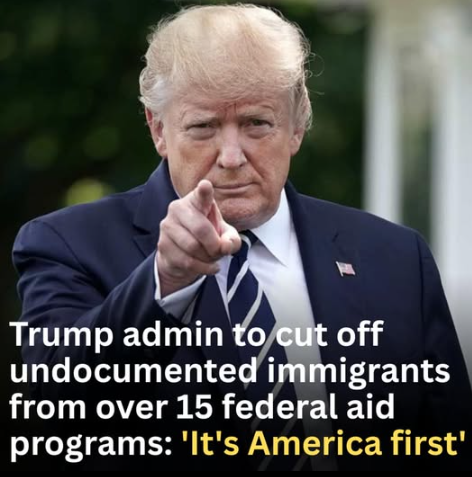
In mid-2025, the Trump administration announced a major shift in how federal agencies interpret eligibility for federal public benefits, effectively expanding the list of programs that undocumented immigrants — and in some cases other non-citizens — cannot access. Federal agencies like the Department of Health and Human Services (HHS) and the Department of Labor (DOL) issued guidance redefining what counts as a “federal public benefit,” so that a broader range of programs fall under restrictions that limit eligibility to U.S. citizens and “qualified aliens.” Economic Policy Institute+1
The administration frames this as enforcing existing law, protecting taxpayer resources, and ensuring benefits go only to Americans and lawful immigrants. Critics, however, see it as an aggressive reinterpretation of law that goes far beyond longstanding statutory rules and will cut off access to essential services for vulnerable people, including children. Economic Policy Institute+1
2. Legal and Policy Mechanism: PRWORA and “Federal Public Benefits”
At the heart of the changes is the Personal Responsibility and Work Opportunity Reconciliation Act (PRWORA) of 1996, a welfare reform law originally signed under President Clinton. PRWORA broadly restricts “federal public benefits” to U.S. citizens and certain “qualified aliens” (e.g., lawful permanent residents, refugees), while exempting others. Congress.gov
For decades, federal agencies interpreted PRWORA’s definition narrowly, meaning many community-level programs funded by federal grants — like Head Start, community health clinics, workforce training, and certain education programs — were not considered “federal public benefits” and therefore were accessible to undocumented immigrants. Economic Policy Institute
In July 2025, the Trump administration issued new guidance that:
-
Expands the definition of “federal public benefits” to include an additional 13 or more programs previously exempt, bringing the total number of classified benefits higher.
-
Requires federal grantees to verify immigration status before allowing participation in programs like workforce training, health services, and education.
-
Potentially adds more programs over time under this reinterpretation. KFF
The new list includes, among others:
-
Head Start early childhood education
-
Health Center Program (community health clinics)
-
Mental health and substance use programs
-
Workforce and job training programs
-
Title X family planning and other support services
-
Some educational benefits and workforce development programs KFF
Thus, the policy leaves undocumented immigrants — and even some lawfully present immigrants — barred from enrolling in or accessing a broader set of programs that many previously could. KFF
3. Administration Rationale: “America First” and Taxpayer Protection
The White House and Republican officials argue the policy is about enforcing the rule of law and protecting American taxpayers. In official statements and fact sheets, the administration has emphasized goals such as:
-
Preventing taxpayer dollars from going to individuals without legal status
-
Ensuring federal aid serves citizens and those legally entitled
-
Reducing incentives for illegal immigration
-
Redirecting scarce resources to U.S. citizens and lawful residents Economic Policy Institute+1
For example, the White House released a fact sheet asserting that undocumented immigrants cost the U.S. hundreds of billions in public spending and that cutting access will reduce those burdens and discourage illegal entry. The White House
Officials from HHS and the Department of Education have similarly claimed that allowing undocumented immigrants in certain programs diverted resources from Americans who need them. Economic Policy Institute
4. Scope of the Change: Programs Affected
While undocumented immigrants were already ineligible for many federal benefits (such as non-emergency Medicaid, SNAP, TANF, SSI, ACA subsidies, and most housing programs), the recent policy takes this further by reclassifying grants and supports that were previously exempt. Congress.gov
Before July 2025:
-
Federal law already barred undocumented immigrants from major means-tested benefits.
-
Some community-level programs funded with federal grants were still open to participants regardless of immigration status.
After July 2025 policy:
-
Agencies reinterpreted PRWORA to cover additional programs.
-
This affects low-income families’ access to education, health care, workforce development, and social support services.
-
Some agencies (like DOL) require documentation of work authorization for certain programs, putting new verification requirements on grantees. Economic Policy Institute
Important note: Some elements of these changes have been delayed or blocked by courts in certain states — for example, federal judges have temporarily halted the rule as it applies to Head Start and health center programs in parts of the country. KFF
5. Legal Challenges and Court Actions
Civil rights organizations, advocacy groups, states, and service providers have filed lawsuits challenging parts of the policy, arguing that:
-
The administration exceeded its authority by reinterpreting decades-old law without clear statutory authorization.
-
Doing so without proper notice and comment violates administrative procedure law.
-
It harms children and families, including U.S. citizens, by deterring them from seeking services. KFF
A federal judge in Seattle granted a block against excluding some immigrant families from Head Start, a longstanding early childhood education program. American Civil Liberties Union
States including Rhode Island, Washington, and others have obtained injunctions blocking parts of the policy. These legal battles are ongoing. Reddit
6. Human and Social Impact
On Immigrant Families
Limiting access to health care, education, workforce programs and other services could have wide human consequences:
-
Undocumented children could be cut off from early childhood education (Head Start) and community health services that benefit their development.
-
Families may avoid seeking care for fear of documentation requirements or enforcement action.
-
Even U.S. citizen children in mixed-status families could lose access if parents avoid engaging with programs. Economic Policy Institute
On Service Providers and Communities
Nonprofits, community health centers, schools, and local agencies are concerned about:
-
Increased administrative burdens to verify status
-
New compliance costs diverting funds from service delivery
-
Chilling effects, where eligible families avoid programs due to confusion or fear
-
Potential staff shortages and program funding losses if immigrant participation declines sharply. Senator Alex Padilla
7. Political and Public Reaction
Supporters
-
Conservatives and immigration restriction advocates generally hail the policy as fulfilling campaign promises to prioritize Americans first, enforce immigration laws, and reduce public spending on non-citizens.
-
Some Republican lawmakers describe it as correcting loopholes in PRWORA and restoring legal intent. Economic Policy Institute
Critics
-
Democratic lawmakers, immigrant advocacy groups, and many service providers condemn the changes as cruel, unnecessary, and harmful to public health and education.
-
Opponents argue it undermines community well-being and exacerbates inequalities. Senator Alex Padilla
Mixed Public Perception
Public opinion varies widely, with some Americans supporting strict eligibility rules and others emphasizing the humanitarian impacts.
8. Broader Context: Trump’s Wider Immigration Agenda
This policy is part of a broad suite of immigration actions advanced by the Trump administration — including border enforcement changes, deportation efforts, public-charge rule proposals, and executive orders aimed at limiting immigration and sanctuary cities. Economic Policy Institute
It fits into the “America First” framework emphasizing stricter borders, reduced immigration (both legal and illegal), and prioritizing U.S. citizens for public resources.
9. Summary
In sum:
-
The Trump administration expanded the definition of federal public benefits to exclude undocumented immigrants from a wider range of programs, including health care, education, and workforce supports. KFF
-
The change is based on reinterpretations of a 1996 law (PRWORA) and seeks to enforce “America First” priorities. Economic Policy Institute
-
It affects more than 15 programs that were previously exempt from immigration status verification, including Head Start and community health center funding. KFF
-
Legal challenges and court injunctions are already altering implementation in parts of the country. American Civil Liberties Union
-
The human, legal, and political debate remains intense, with significant implications for immigrant families, service providers, and broader American society.