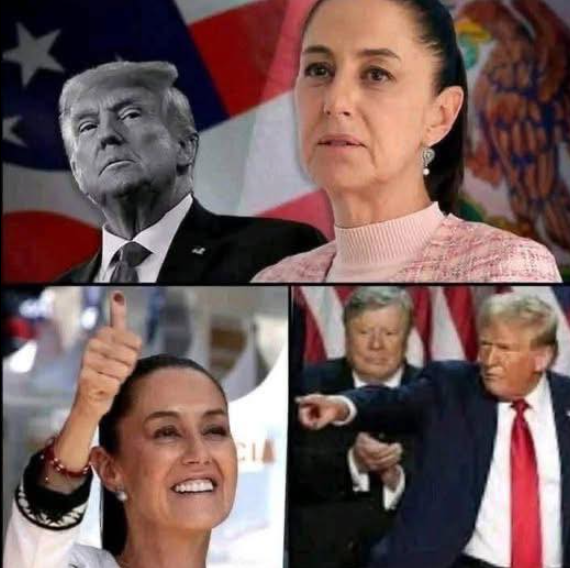
Mexico’s President Draws a Line in the Sand Against Trump
In late 2025, Mexico’s president, Claudia Sheinbaum, made one of the most assertive statements of her foreign policy tenure when she directly rebuffed actions and proposals linked to U.S. President Donald Trump — bluntly indicating that certain actions Trump floated “are not going to happen” and will not be tolerated by Mexico.Anadolu Ajansı
This moment is important because it highlights not just a diplomatic disagreement, but a conflict over sovereignty, national identity, and regional leadership in North America. The tensions touch on security policy, how to address drug trafficking, and broader questions about U.S.–Mexico relations — which have historically swung between cooperation and deep suspicion.
What Trump Suggested — and Why Sheinbaum Responded So Firmly
In the months leading up to these statements, Trump made comments indicating that the U.S. might consider a range of military or security actions related to Mexico’s domestic problems, including:
-
Authorization of U.S. strikes inside Mexico against drug cartels, which Trump said he was “okay with” if that’s what it took to protect American lives and curb drug flows.EL PAÍS English
-
Suggestions that U.S. military personnel could operate in Mexico to fight cartels — a proposal that Sheinbaum says she outright rejected.TPR
Trump’s remarks stem from his longstanding focus on border security, cartel violence, and the opioid crisis — especially fentanyl trafficking, which U.S. officials claim largely originates from Mexican cartels.EL PAÍS English
Pressing this issue so forcefully was likely intended to appeal to Trump’s political base in the U.S., where fighting drug abuse and crime remains a central theme of his messaging. But this proactive approach — even just rhetorically — touched a deeply sensitive nerve with Mexico’s leadership.
Sheinbaum’s Reaction: Sovereignty First
Sheinbaum was explicit: “Not going to happen.” She underscored that Mexico will not allow a foreign military intervention or unauthorized strikes on its territory.Anadolu Ajansı
At a press briefing, she emphasized that while Mexico welcomes cooperation with the U.S. (such as intelligence sharing), it will not accept the presence of foreign troops or military action on its soil.Latin Times
Her key points included:
-
Sovereignty is inviolable: Sheinbaum repeatedly argued that Mexico’s territorial autonomy cannot be compromised — a position that resonates strongly with the Mexican public due to historical experiences with past conflicts involving the U.S. (dating back to the Mexican-American War in the 19th century).TPR
-
Cooperation ≠ Intervention: Mexico is open to collaborative efforts like information exchange and joint strategy against organized crime, but not military operations led by the U.S. within its borders.Latin Times
-
Respectful diplomatic dialogue: Despite sharp disagreements, Sheinbaum has stressed that diplomatic communication with the U.S. remains active and respectful — but that doesn’t mean ceding decision-making authority over Mexican territory or policies.Anadolu Ajansı
Her most quoted reply during a public event was simple:
“No, President Trump. Our territory is inviolable, our sovereignty is inviolable, sovereignty is not for sale.”TPR
The Broader Context: What’s Really at Stake
This moment is about more than just a disagreement over tactics: it reflects larger geopolitical and domestic pressures on both sides.
1. Drug Violence and U.S. Security Concerns
Trump’s statements arise from the deep frustration in the United States with the continuing flow of fentanyl and other illegal drugs. President Trump has frequently pointed to Mexican cartels in speeches and policy proposals, including labeling them as major threats.EL PAÍS English
In Trump’s rhetoric, military intervention or aggressive direct action is floated as one tool to get results — even if it’s controversial or legally complex.
2. Mexico’s Political Landscape and Sovereignty
For Sheinbaum, defending Mexico’s autonomy is a powerful political stance:
-
Mexico has a strong historical memory of foreign intervention.
-
National sovereignty is a core theme across Mexican politics — cutting across party lines.
-
Strong resistance to any perceived U.S. intrusion can bolster domestic support.TPR
Sheinbaum’s defense of sovereignty also responds to public concerns in Mexico over drugs, security, and national dignity — positioning herself as a leader who will not bow to external pressure.
3. Diplomatic Balancing Act
Despite the firm language, Mexico has not severed diplomatic channels. Sheinbaum asserts that communication between the leaders is “very good” even when disagreements occur.Anadolu Ajansı
This suggests a dual strategy:
-
Resist overreach that threatens sovereignty
-
Maintain cooperation on shared issues like migration, trade, and security intelligence.
How This Impacts U.S.–Mexico Policy Going Forward
The standoff over military intervention and sovereignty has broader implications:
Bilateral Relations
These comments are likely to strain personal diplomacy between the two presidents — even as both sides acknowledge the need to talk. While Sheinbaum insists on mutual respect, Trump’s tough rhetoric may continue, especially if political pressures build in the U.S.
Domestic Politics in the U.S.
Trump’s base appreciates tough talk on security, and signaling a willingness to take extreme measures — even rhetorically — can be politically useful for him. But such proposals can escalate tensions with neighbors and allies, making cooperation more difficult.
Regional Stability
In Latin America, Mexico’s firm stance against foreign intervention resonates with other governments wary of U.S. involvement. For example, Sheinbaum has also called on the United Nations to prevent bloodshed in Venezuela amid heightened U.S. pressure there — emphasizing diplomacy over force.Reuters
Summary: What Sheinbaum Is Saying to Trump
At its core, Sheinbaum’s statement that Trump’s military intervention proposals “will not happen” means:
-
Mexico will not permit U.S. troops or strikes on Mexican soil without explicit invitation — and will not invite them.Latin Times
-
Cooperation is welcome, but only in ways that respect Mexican sovereignty.Latin Times
-
Diplomatic disagreement will be handled through official channels, not via public coercion or unilateral action.Anadolu Ajansı
This position is a strong reaffirmation of Mexico’s sovereignty and signals how Mexico intends to navigate U.S. pressure on security and other policy fronts through assertive diplomacy rather than capitulation.