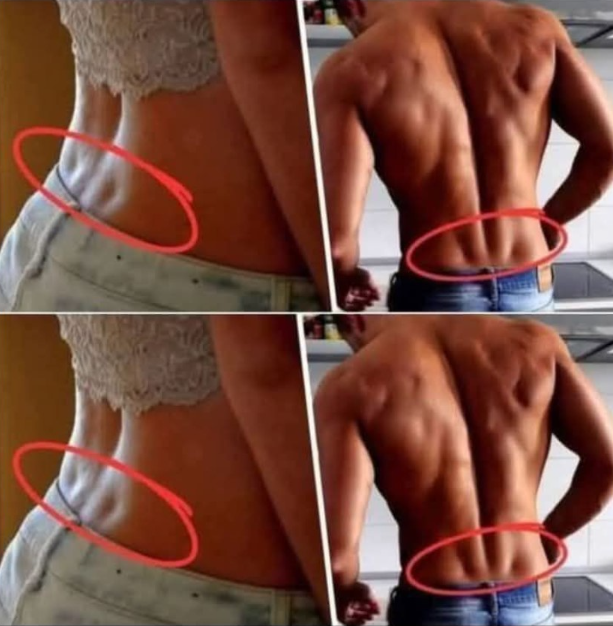
If You Have These Two Holes in Your Back, It Means…
For many people, those two small indentations on the lower back—often called “back dimples,” “Venus dimples,” or “Apollo dimples”—seem mysterious. They show up naturally on some bodies and not on others, and for generations people have linked them with everything from good health to physical attractiveness to special spiritual meanings. But what do they really indicate, and why do some people have them while others don’t? Let’s take a deeper look at the fascinating story behind these little marks and why they capture so much attention.
Back dimples are small, shallow depressions located just above the buttocks, on either side of the spine. They sit where the pelvis meets the spine, specifically around the sacroiliac joints. Unlike other features of the body that develop through exercise or diet, these dimples are mostly determined by genetics and bone structure. Some people are simply born with the kind of pelvis shape that creates a natural indentation in that area. They are not a sign of sickness, hidden problems, or special powers—but they can offer interesting insight into your unique anatomy.
In many cultures throughout history, these dimples have been associated with beauty. Classical European art, sculptures from the Renaissance, and even ancient depictions from Asia often show figures with these marks, especially on women, as symbols of harmony and elegance. Their nickname, “Venus dimples,” comes from the Roman goddess of love and beauty. Artists believed these small marks added a sense of grace and natural symmetry to the human form. Today, in the world of fitness, modeling, and photography, they are still often highlighted as an appealing feature because they emphasize the shape of the lower back and hips.
Interestingly, some people assume these dimples appear only on slim or athletic bodies, but that’s not true. While they may be more noticeable when body fat is low, many people of various shapes and sizes have them. Their visibility depends mostly on how the bones and ligaments of the pelvis are positioned, not on weight alone. This is why someone can gain or lose weight and still retain the same dimples—they don’t appear or disappear with lifestyle changes.
Genetics plays the biggest role. If one or both of your parents have the dimples, there’s a higher chance you might have them too. They’re similar to features like attached earlobes, dimples on the cheeks, or even the natural curl of your hair—simply part of what makes each body unique. They don’t signal anything unhealthy, nor do they predict anything about personality or behavior. They are simply a physical trait passed down through family lines.
Because these dimples sit over the sacroiliac joints, some people have speculated that they relate to flexibility or strong circulation in the lower back. While this sounds interesting, there is no scientific proof that having these dimples gives you better athletic performance, healthier muscles, or special advantages. Claims that they affect childbirth, physical endurance, or blood flow are mostly myths. What they do indicate is the natural shape of your pelvis and how your ligaments attach in that area.
Psychologically, however, the presence of back dimples can influence how a person feels about their appearance. For some, these marks boost confidence, especially if they’ve been admired by partners or friends. For others, they barely notice them. They can be completely hidden under clothing or visible depending on what someone wears, and many people go years before realizing they have them. It’s simply one of those subtle details that make the human body interesting.
In modern times, social media has turned these dimples into a trend. Fitness influencers highlight them in workout videos, models show them in photoshoots, and people online often celebrate them as a sign of natural beauty. At the same time, some people worry if they don’t have them, thinking they’re supposed to mean something important. But it’s worth repeating: having them or not having them does not reflect your health, strength, or attractiveness. It’s just another variation in human anatomy.
Some people wonder whether exercises can create back dimples. Because they’re mostly determined by bone structure, you can’t “build” them like a muscle, but strengthening the core, lower back, and glutes can enhance the area and make the dimples appear more defined if you naturally have them. Movements like bridges, deadlifts, planks, and hip thrusts can help tone the muscles nearby, giving your lower back a firmer, more sculpted shape. This doesn’t create dimples from scratch, but it can highlight the ones you already have.
There’s also a cultural side to the dimples. In some traditions, they’re thought to represent balance or good energy flow. In others, they’re seen as a sign of youthfulness or vitality. These ideas are symbolic rather than scientific, but they show how people across time and place have found meaning in small features of the body. Humans naturally look for patterns, and the appearance of these dimples has inspired stories, interpretations, and artistic praise for centuries.
What’s most important to know is that these dimples are normal, harmless, and nothing to worry about. They don’t indicate disease, they don’t predict future problems, and they don’t require treatment. They’re simply one of many natural variations that make bodies different and interesting. Some people have ankle dimples, cheek dimples, chin dimples, or shoulder dimples—the body carries many marks that reflect the way bones and tissues fit together.
So if you happen to have those two little holes in your lower back, it simply means your body carries a trait shared by many others throughout history, one admired in art, celebrated in modern culture, and rooted in the natural structure of your skeleton. They’re a reminder that every body has small details that make it unique. Whether they’re visible all the time, only when you bend or twist, or barely noticeable at all, they’re a perfectly normal part of human anatomy.
In the end, the meaning of these dimples depends on how you see them. Some love them, some ignore them, and some appreciate them as an interesting detail. Whatever your view, they are nothing more—and nothing less—than a natural mark shaped by your bones, your genes, and the beautiful diversity of the human form.