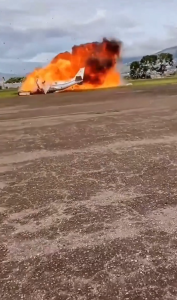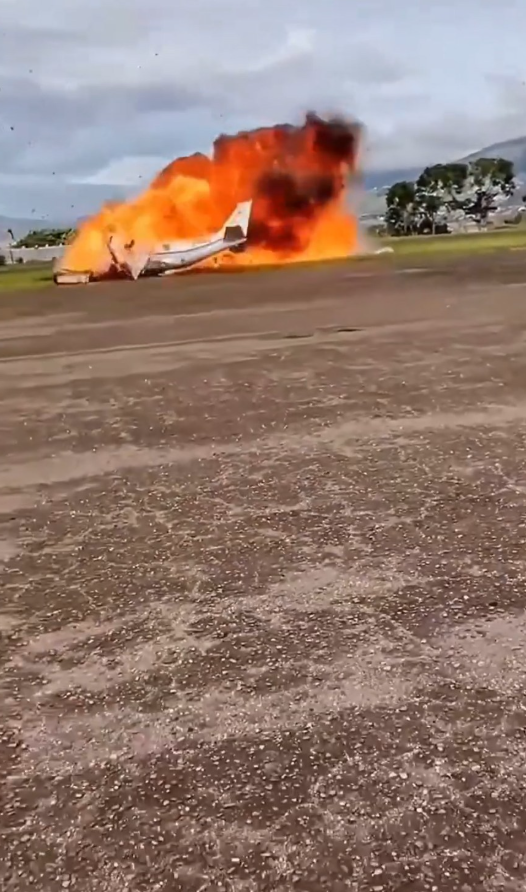
Twin-Engine Tragedy: Two Pilots Killed After Venezuela Plane Fails to Lift Off
The airfield at dawn is usually a place of quiet routine: engines humming, radio chatter drifting like static across the runway, ground crews moving with practiced rhythm. But on this morning in Venezuela, the calm was pierced by a tragedy that has shaken the aviation community and left an aching silence where two pilots once carried the sky in their hands.
Authorities confirmed that a twin-engine aircraft attempting an early-morning departure suffered a catastrophic failure during takeoff, resulting in a crash that claimed the lives of both pilots on board. No passengers were present, but the loss has rippled through colleagues, families, and regional aviation officials, who now face the somber task of understanding what went wrong.
A Routine Flight That Never Left the Ground
The aircraft had been scheduled for a short repositioning flight, the kind that veteran pilots execute almost reflexively. Witnesses reported that conditions were calm—light wind, clear visibility, and no immediate weather concerns. The twin-engine plane taxied normally, its engines producing the familiar low growl as it lined up on the runway.
According to early accounts, the takeoff roll began smoothly. But within seconds, something changed. Ground crew members noticed the aircraft struggling to gain speed. Others described an unusual shudder, a vibration visible even from a distance. Investigators will later try to determine whether this was mechanical, structural, or related to engine performance.
Despite the pilots’ attempts to abort, the plane reportedly veered slightly off center before running out of runway. What followed was brief and devastating: the sound of metal tearing, a spray of debris, and a plume of smoke rising against the pale morning sky.
Emergency crews responded immediately, but the damage had already been done. The pilots—both described as experienced, disciplined, and deeply respected—were pronounced dead at the scene.
Shock Throughout the Aviation Community
Within hours, word of the tragedy spread through airports, hangars, and pilot networks across Venezuela and beyond. Flying is a world held together by trust: trust in aircraft, in weather forecasts, in maintenance, and above all in the people who share the cockpit. When that trust is shaken by loss, the impact is deep.
Colleagues described the two pilots as meticulous professionals. One had spent decades flying a range of dual-engine aircraft, known for his calm demeanor even in turbulent skies. The other, younger but no less skilled, was seen as a rising star—dedicated to precision and passionate about every part of aviation, from preflight checks to landings executed with textbook ease.
“This wasn’t just losing pilots,” a fellow aviator shared quietly. “It was losing part of our family.”
The Investigation Begins
Within hours of the crash, investigators from Venezuela’s civil aviation authority arrived at the scene, cordoning off the wreckage as experts began documenting every piece of debris. Twin-engine aircraft are known for their redundancy and stability, so when one fails to leave the ground, investigators focus on several key questions:
• Engine performance: Did one engine fail, lose thrust, or misfire during the takeoff roll?
• Mechanical issues: Were there structural problems with the landing gear, control surfaces, or fuel system?
• Weight and balance: Was the aircraft loaded properly, even for a crew-only flight?
• Runway conditions: Did contaminants—oil, debris, uneven pavement—affect acceleration?
• Human factors: Did the pilots receive any unexpected warnings or indications before attempting to abort?
While speculation circulates in the media, investigators insist on patience. Aviation investigations unfold slowly and methodically, each step guided by data, flight logs, and physical evidence.
A Painful Scene for First Responders
Firefighters and medical teams who rushed to the crash site described a difficult operation. Though there was no large fuel-fed fire—something that sometimes happens in runway overruns—the impact forces alone were severe. The aircraft’s nose section suffered the worst damage, leaving responders fighting against both the wreckage and the weight of the moment.
One responder later said, “You train for every kind of emergency, but when you face the cockpit and realize the fate of the people inside, it hits differently.”
Community Mourning and Collective Memory
At the airfield, crews gathered in small groups throughout the day, speaking in hushed voices. Some spent time near the hangars, staring toward the runway as if replaying the morning’s events, wishing the outcome could shift even slightly in their minds.
Flowers appeared along the perimeter fence by afternoon. Coworkers placed notes and flight pins—those small symbols pilots often wear, now transformed into emblems of remembrance.
Family members of the two pilots, shielded from reporters, were escorted away by counselors and senior officials. Their grief marks the most painful dimension of the catastrophe—the suddenness, the lack of warning, the absence of final conversations.
Safety in Aviation: Fragile Yet Constantly Reinforced
Though modern aviation remains one of the safest forms of transportation in the world, incidents like this one remind people how much is demanded of every flight: engineering precision, environmental awareness, and human skill. A slight mechanical anomaly, a misreading of instruments, a subtle failure in thrust—any can break the delicate choreography required for takeoff.
This is why investigations are thorough and unhurried. Every tragedy becomes part of aviation’s evolving commitment to improvement. Every mistake, malfunction, or anomaly, once understood, strengthens the systems designed to prevent repetition.
Legacy of the Pilots
For those who knew the two aviators, this is the part that matters most—not theories, not debris fields, not technical data. Their legacy is found in thousands of flights completed safely, in students they mentored, in passengers who never knew the names of the pilots who carried them safely across the horizon.
One colleague said, “They didn’t fly for applause. They flew because they were born to.” Another added, “The sky was their work, their joy, and their calling. Losing them on the ground feels wrong in ways words can’t explain.”
A Final Moment of Stillness
As the sun set over the airfield, the wreckage remained on the runway, quiet and cordoned off. The smoke had cleared, the crowds had drifted away, and only investigators and a handful of officials remained. The wind moved gently through the broken fuselage—a small, haunting reminder of the vastness that aircraft are meant to rise into.
The tragedy of the failed takeoff now becomes part of aviation’s collective memory, a painful chapter written in loss. And while answers may eventually come, they will never fully close the emotional wound left by the deaths of two pilots who gave their lives to the craft they loved.