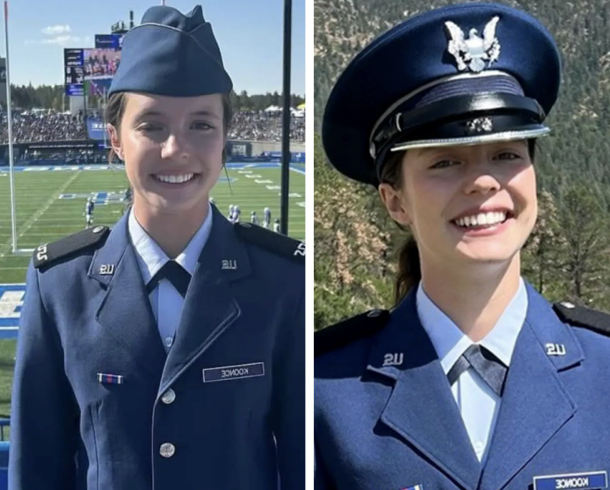
19-Year-Old Air Force Academy Cadet Found Dead in Her Dorm: A Tragic Loss That Shakes the Nation
The United States Air Force Academy in Colorado Springs, a place known for discipline, dreams, and leadership, was struck by heartbreak this week after a 19-year-old cadet was found dead in her dorm room. The cadet, whose name has not yet been officially released pending family notification, was a freshman in the rigorous military training program and had been widely described by her peers as “bright, kind, and deeply committed to service.”
The discovery was made early Monday morning after classmates reported that she hadn’t shown up for morning formation. Academy staff conducted a welfare check, only to find her unresponsive in her dorm room. Emergency personnel were called immediately, but she was pronounced dead at the scene.
While officials have stated that there is no immediate indication of foul play, the cause of death remains under investigation. The Air Force Office of Special Investigations (AFOSI) is leading the inquiry, alongside local authorities. The Academy has also confirmed that counseling and chaplain services are being provided to students, faculty, and staff affected by the devastating loss.
A Life Full of Promise
At just 19, the cadet was at the start of what many called a brilliant future. Born and raised in a small Midwestern town, she had dreamed of joining the Air Force since childhood. Friends say she was fascinated by aviation and driven by a deep sense of purpose. She excelled academically, graduated near the top of her high school class, and earned her appointment to the Academy — an honor achieved by fewer than 10% of applicants each year.
“She wanted to fly, to serve her country, and to make her parents proud,” said a close family friend. “She was so full of life and ambition. It’s just heartbreaking.”
Her social media posts paint the picture of a determined young woman balancing the demands of military life with the simple joys of youth — photos of sunrises over the campus, group hikes with fellow cadets, and inspirational quotes about perseverance.
The Demands of Academy Life
The Air Force Academy is one of the most challenging environments for young adults — combining military discipline, rigorous academics, and physical endurance. Freshman year, in particular, is notorious for its intensity. Cadets must adjust to strict schedules, constant evaluations, and immense pressure to excel.
Former cadets have spoken out in the past about the toll such demands can take on mental health. While many thrive in the environment, others struggle silently. In recent years, the Academy and the Department of Defense have placed increasing focus on mental health resources, suicide prevention programs, and peer support networks.
An anonymous classmate shared, “We’re trained to push through pain and stay strong, but sometimes people forget that strength also means asking for help. We’re all devastated — she was part of our family.”
Official Statement
In a press release issued late Monday afternoon, the Air Force Academy said:
“The U.S. Air Force Academy is deeply saddened by the death of one of our cadets. Our thoughts and prayers are with the cadet’s family, friends, and the entire Academy community during this difficult time. Support services are being made available to those affected by this tragic loss.”
The Academy also urged the public and media to respect the family’s privacy as investigations continue and loved ones begin to grieve.
A Pattern of Concern
Sadly, this is not the first time a young cadet has died unexpectedly at a U.S. military academy. Over the past decade, there have been several similar incidents at service academies across the country, including West Point and the Naval Academy.
While each case is unique, experts have noted that the combination of high stress, isolation, and limited free time can make cadet life emotionally taxing. In 2023, a Pentagon report acknowledged that suicide rates among military personnel and academy students had not decreased despite increased awareness and intervention efforts.
Dr. Karen Michaels, a military psychologist, explained, “These are environments that produce exceptional leaders, but they also put immense pressure on young people who are still developing emotionally. When tragedy strikes, it forces us to reexamine how we support our future officers — not just physically and intellectually, but mentally and spiritually.”
Remembering Her Legacy
In the days following her passing, the cadet’s dorm room has become an informal memorial. Fellow students have placed flowers, handwritten notes, and folded flags outside her door. The Academy’s chapel is expected to hold a remembrance service later this week, where classmates will share memories and honor her dedication to the Air Force’s core values: Integrity first, service before self, and excellence in all we do.
“She inspired everyone around her,” said one of her squadron mates. “She was always smiling, always lifting others up — even when she was tired. That’s how we’ll remember her.”
Back in her hometown, the local high school lowered its flag to half-staff. Her former teachers and friends expressed shock and sadness online, sharing tributes and photos of the young woman in her JROTC uniform, proudly holding the American flag.
The Broader Conversation
As the investigation continues, the tragedy has reignited conversations nationwide about the mental health challenges faced by young service members and cadets. Advocates are urging for expanded counseling access, anonymous reporting tools, and reduced stigma around seeking psychological help in military settings.
“Losses like this shake us to the core,” said retired Air Force Colonel James Harlan. “But they also remind us of the humanity behind the uniform. We need to ensure that every cadet knows it’s okay to struggle, it’s okay to reach out, and it’s okay to be vulnerable.”
For many, this heartbreaking incident is a painful wake-up call — a reminder that behind every polished uniform and salute lies a human being with fears, hopes, and fragile emotions.
Moving Forward
While the official cause of death has yet to be confirmed, the community remains united in grief and reflection. Counselors continue to visit dorms, commanding officers have encouraged cadets to look after one another, and chaplains are offering open-door support.
The Air Force Academy plans to hold a moment of silence during the next football game and include a tribute in the next graduation ceremony, ensuring that her name — and her sacrifice — will not be forgotten.
“She may have been young,” said Superintendent Lt. Gen. Richard Clark, “but her courage and commitment embodied everything we stand for. She will forever remain part of the Long Blue Line.”
As family, friends, and fellow cadets mourn her loss, one truth remains clear: her dream to serve her country lives on in those she inspired. The light she carried — bright, disciplined, and full of promise — will continue to shine in the hearts of those who knew her, reminding everyone that even the strongest among us sometimes need a helping hand.